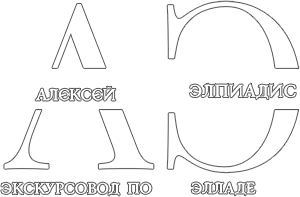
The modern Greek capital sometimes leaves visitors with mixed feelings. Reading reviews, you might think people had visited different cities. Some praise the cleanliness, the cosy, friendly atmosphere, the beautiful houses with sea views, the cafés, bars, restaurants and attentive staff. Others write about their trip as if filing reports from the front line, complaining about dirt, unsafe areas and unpleasant encounters. Why such opposite opinions?
The thing is, the city of the gods comes in many versions (and the gods, as we know, were very different too). You can stay with Athena — in elegant Kolonaki. You can choose seaside Glyfada — and find yourself under Poseidon's protection. You can wander by chance into the realm of Pan — noisy, anarchic, musical Exarchia. Or you can end up with Hades in Omonia… where, by the way, everything is included.
But let's take it step by step.

Solonos Street, named after the ancient Greek philosopher and lawgiver Solon, lets you see the many faces of Athens up close. The street starts in Omonia and ends in Kolonaki, and just a few kilometres separate two completely different worlds. The city changes gradually, almost imperceptibly: shop windows, faces, the smell of coffee, the quality of the pavement, even the tone of people's voices changes from one block to the next. In a way, Solonos is a short tour of Athenian contrasts without having to cross half the city.
Map Solonos Street Open
Omonia
Map Omonia Square Open
Omonia is the old heart of Athens, once the pulse of the city's business life. Until the late 1980s trade was booming here, almost every bus route crossed the square, and hotels hosted tourists from all over the world. Before the metro opened in 2004 it was the city's main transport hub: whatever you were doing in Athens, sooner or later you ended up right here.
Today Omonia has changed: little is left of the old business district except its history and its location. The area has become a kind of transit hub for migrants, and the tourist atmosphere has given way to a harder reality. There are still plenty of budget hotels here — and they often attract travellers… who may later be unpleasantly surprised by the neighbours, the noise, the free "evening show" under their windows and the general shabbiness of the place.
So if gritty street life, night-time noise and a very particular local colour are not your thing, stay elsewhere. After all, as we said, everything is included with Hades — but it isn't for everyone. Omonia can be convenient for transport connections, but as a temporary home it's an acquired taste.

Exarchia
Map Exarchia Square Open
Walking a little further up Solonos Street, you leave Omonia behind and find yourself behind the University of Athens. Turn left onto Hippokratous Street and you enter the most left-wing neighbourhood in Athens — legendary Exarchia. You can almost feel the change: the city noise becomes more "musical", and the walls start talking in graffiti.
Map Hippokratous Street Open
Here the South Asian street life of Omonia gives way to the Greek underground. The area is a stage for far-left political movements (forever young at heart), philosophical debates on the steps, night-time graffiti and morning frappé. Some of the "youth" here are well past sixty, but the spirit is lively and romantically revolutionary.
If you can meet Pan anywhere in Athens, it's here. Bearded, in a hoodie, with a guitar, he plays in a doorway, hides his flute in a backpack and invites you to an impromptu open-air philosophy party. And next to the flute, who knows, there might be a Molotov cocktail — just in case the philosophy reaches a dead end. Because the spirit of Exarchia is a mix of ancient freedom, modern protest and a touch of madness.
That said, Exarchia is not a horror story; it is character in concentrated form: there are excellent bookshops, small galleries, unpretentious cafés, bars "for locals" and conversations that start with the weather and end with how the world should be run. For a daytime walk the area is interesting and lively. Whether to stay here depends on how much you love noise, nightlife and surprises.
Kolonaki
Map Kolonaki Open

At the end of Solonos Street, at the foot of Mount Lycabettus, you reach Kolonaki — the part of Athens where Greeks really live. And not just any Greeks, but those who are doing well: with a good education, good shoes and a good relationship with the tax office. Here the city straightens its shoulders: the façades are well kept, the shop windows sparkle, cafés pause for effect before serving your espresso, and the air even seems a little cleaner — purely for aesthetic reasons.
Map Mount Lycabettus Open
This is Athena's territory — not only geographically but also mythologically. Everything is clean, well kept, noble — and slightly haughty, as befits the domain of the goddess of wisdom. People love Kolonaki for its "European" comfort: it's pleasant to live here, to stroll, to sit on a terrace and watch the city play at being orderly.
The two main shopping streets are Skoufa and Voukourestiou. Here shopping turns into therapy — though a course of treatment costs as much as a good holiday. The main thing is not to look at the price tags. Otherwise you may easily develop class solidarity with the residents of Exarchia and suddenly feel a new tolerance for Omonia.
Map Skoufa Street Open
Map Voukourestiou Street Open
Kolonaki also has a rich cultural life: museums, foundations, exhibitions, lectures, chamber events: people here know how to do things with style and substance, without raising their voices.

Here you will find the Museum of Cycladic Art. It is an astonishing world from some 5,000 years ago: minimalist figurines that look as if contemporary designers had invented them yesterday. Cycladic sculpture is a rare case where antiquity doesn't "gather dust" but feels completely modern.
Map Museum of Cycladic Art Open
The Benaki Museum. Its collection covers Greek art from prehistoric times to the present day, plus an extensive collection of Asian art. If you want to understand Greece beyond the postcard, the Benaki works like a very clever companion: calm, consistent and with an excellent memory.
Map Benaki Museum Open

The Byzantine and Christian Museum. It holds some 25,000 objects dating from the 3rd to the 19th century. Sculpture and painting, miniatures, ceramics and textiles, manuscripts and engravings, old books, frescoes and mosaics — together they tell a very long story in which Greece turns out to be not only ancient but also Byzantine and "post-ancient" — in other words, alive and many-layered.
Map Byzantine & Christian Museum Open
Kolonaki and Omonia are just a few kilometres apart, yet while in Kolonaki property costs €6,000–7,000 per square metre, in Omonia there are houses that have simply been abandoned. So the city of the gods is literally many cities: even its old Greek name, Athinai, is plural. And that's not a flaw but a feature: Athens is not "one" city but "several", layered on top of each other.
Syntagma, Plaka and Monastiraki

If you want to stay in the centre, the best choice is the Syntagma – Monastiraki – Plaka triangle, right next to the Acropolis on its north side, or anywhere south of the Acropolis. But first — the historic triangle to the north.
Map Syntagma Square Open

This is the historic triangle of the Greek capital. From the central Syntagma Square (Constitution Square) you can walk along Ermou (Hermes Street) to Monastiraki. Ermou is the city's main shopping street — fittingly, since Hermes, according to the myths, was the patron of merchants and thieves… the ancient Greeks clearly knew a thing or two. Along the way you'll find dozens of boutiques. Sights along the way include the Byzantine church of Kapnikarea on Ermou and, on Syntagma, the Parliament with its changing of the guard. And be sure to step into the metro…
Map Ermou Street Open
Map Kapnikarea Church Open
The historic triangle, stop by stop
The short overview above is the map; here is the walk itself, stop by stop, with the details most visitors pass by without noticing.
- Syntagma Square: the political heartThe name means "Constitution Square". In September 1843 the people of Athens and the army surrounded the royal palace and forced King Otto to grant Greece its first constitution. The palace itself, built in 1836–1843, has housed the Hellenic Parliament since 1934. Across the square, the Hotel Grande Bretagne has been hosting kings, film stars and spies since the 19th century, and its rooftop terrace has one of the finest Acropolis views in the city.
- The Tomb of the Unknown Soldier and the EvzonesBelow the Parliament, the relief of a dying hoplite keeps the memory of every Greek who fell for the country. The Evzones of the Presidential Guard change here every hour, on the hour; the grand ceremony with a military band takes place on Sundays at 11:00. Look closely at the uniform: tradition says the fustanella kilt has 400 pleats, one for each year of Ottoman rule, and each tsarouchi shoe with its pompom and iron nails weighs about 3 kg.
- Kapnikarea: the church that stopped a streetHalfway down Ermou the street suddenly splits around a tiny Byzantine church. It dates from the 11th century. In the 1830s the new city plan wanted it demolished to straighten Ermou; according to the story, it was saved by the intervention of King Ludwig I of Bavaria, Otto's father. So the most expensive street in Athens still bends politely around it.
- Monastiraki Square: three Athens in one viewStand in the middle of the square and turn around. Beside the Pantanassa church rises the Tzistarakis Mosque of 1759, a reminder of Ottoman Athens, now a museum of Greek folk ceramics. Behind it stand the Corinthian columns of Hadrian's Library (AD 132), and a few steps further the Ancient Agora with the Temple of Hephaestus, the best-preserved Doric temple in Greece. On Sundays, the antique dealers spill out around Avyssinias Square. Go up to any rooftop bar and the Acropolis seems to float right above your table.
- Plaka: the Tower of the Winds and AnafiotikaOn the way up to Plaka you pass the Roman Agora and the Tower of the Winds (1st century BC): a water clock, sundial and weathervane in one, with the eight winds carved on its sides. Higher up lies Anafiotika: whitewashed houses built in the 19th century by stonemasons from the Cycladic island of Anafi, who missed home so much that they rebuilt their island on the slope of the Acropolis. Finish at the Choragic Monument of Lysicrates (334 BC), one of the best-preserved ancient monuments in Athens.
Which corner of the triangle to stay in
Best for first-timers
The easiest place to arrive: metro Line 3 and the X95 bus come here straight from the airport. Grand hotels, the National Garden next door, and it is calmer at night than Monastiraki.
Best for nightlife and views
The liveliest corner: rooftop bars facing the Acropolis, street food and the flea market. The price is noise until late, so ask for a room away from the square.
Best for romance and quiet
The most picturesque and peaceful of the three: car-free lanes, tavernas under bougainvillea, the Acropolis around the corner. Rooms are often small and taxis can't always reach the door.
MapTomb of the Unknown SoldierOpen
MapAnafiotikaOpen
The new catacombs of Athens.


I won't claim that the Athens metro is the most beautiful in the world (tastes differ, after all), but conceptually it may well be the most unusual one. During its construction (completed in 2004) a huge number of ancient finds were discovered. And a clever decision was made: instead of sending everything off to museum storerooms, the stations themselves became mini archaeological museums, displaying the finds right where they were discovered.
Map Syntagma Metro Station Open

The most interesting station is Syntagma. Besides ancient amphorae, mosaics and gravestones, there is a whole wall showing the city's historical layers: the entire history of the Greek capital in a few metres. There's even a real ancient Greek lying there (a tomb with remains from the 4th century BC). The poor man never suspected he would end up on display in a metro station. In short — the genuine "new catacombs of Athens".

Monastiraki
Map Monastiraki Square Open

Monastiraki (where the last metro photo was taken) is home to the city's flea market. The name of the area comes from the monastery (moni) dedicated to the Virgin Pantanassa (Queen of All) — one of the oldest churches in the city, standing where Athinas and Ermou streets meet, right on Monastiraki Square. The irony is that right next to the ancient church, souvenirs, antiques, leather sandals, vinyl records and an "almost genuine Spartan helmet" all get along perfectly.
Map Panagia Pantanassa Church Open

Today the Monastiraki market on Ifestou (Hephaestus) Street attracts crowds of visitors from all over the world, mostly for its souvenirs. You'll also find antiques here — antique furniture, for example. The market is open from 7 am to 7 pm. The best time to visit is the morning: fewer crowds, more finds and a better chance to see the city "at work", not just as a backdrop for photos.
Map Ifestou Street — Monastiraki Flea Market Open
Plaka
Map Plaka Open

Next comes Plaka — the old town of the Greek capital. It lies between Ermou Street and the Acropolis. The area is also called the "neighbourhood of the gods", because it sits right at the foot of the Acropolis. You'll find yourself in a maze of narrow lanes with medieval churches, ancient ruins and houses built in the neoclassical style. Plaka also has a huge number of tavernas where you can eat well. The main thing is not to rush: Plaka doesn't like people in a hurry — it reveals itself to those who walk slowly and keep their eyes open.

Adrianou Street (named after the Roman emperor Hadrian) in Plaka is the oldest street in Athens and, as excavations have shown, has kept its course since ancient Greek times. It's a nice thought: you're walking the same way people walked two and a half thousand years ago. Signs and menus change, but the route stubbornly stays the same.
Map Adrianou Street Open
Map Acropolis of Athens Open
Makrygianni, Veikou and Koukaki (south of the Acropolis)

Makrygianni
Map Makrygianni Open

Makrygianni lies south of the Acropolis and is one of the most historically important areas of Athens. It is home to major sights such as the new Acropolis Museum and many ancient monuments. Makrygianni is known for its narrow streets, traditional houses and beautiful views of the Acropolis. The area is ideal for walking, especially in the evening, when the stone and neoclassical façades glow in soft light. Plus, it's convenient: you live "right next to the stage", yet slightly away from the main tourist flow.
Map Acropolis Museum Open
Veikou and Koukaki
Map Koukaki Open
Map Veikou Street Open

While Makrygianni and Plaka remain upmarket, expensive areas with heavy tourist traffic, Veikou and Koukaki are attractive alternatives for those who want to stay close to the historic centre (10–20 minutes' walk to the Acropolis) without overpaying for accommodation. This is "normal city life": lots of small cafés, everything you need nearby, pleasant streets — and everything important within easy reach. And they feel very different from Omonia.
The Athens Riviera
(a summer option — in winter it's rather dull there)

However, if you don't like the heat (and in summer the centre gets to 35 °C and above), it's better to stay on the Athens Riviera and, in the evening after my tour of the city centre, relax in the clear blue waters of the Aegean Sea. On the Riviera Athens has a different rhythm: the air is lighter, the sky is wider, and the city no longer weighs down on you with its architecture.
The most pleasant neighbourhoods are along the coast. The water is cleaner, you can swim, and it's not as hot in summer thanks to the sea breeze. You can come into the centre for a guided tour of the Acropolis or explore on your own by bus or tram. The seaside neighbourhoods are Palaio Faliro, Glyfada, Voula and Vouliagmeni (all with beaches, restaurants and sea-view hotels). The coast is also great for shopping, especially in Glyfada.
Map Palaio Faliro Open
Map Glyfada Open
Map Voula Open
Map Vouliagmeni Open
Along the coast: from Neo Faliro to Vouliagmeni
The Riviera begins where the city meets the sea at Faliro Bay and runs south towards Cape Sounion. The tram follows the shore from Syntagma down to Voula, so you can hop from one beach to the next without a car, and the sunsets over the Saronic Gulf come free with the ticket.
Stavros Niarchos Foundation Cultural Center
Renzo Piano's building houses the National Library and the Greek National Opera inside a large park with a long canal. Entry to the park is free. Climb to the rooftop "Lighthouse" at sunset for a view from the Acropolis to the sea.
Flisvos Marina and the battleship Averof
A seafront promenade with cafés, yachts and a cinema under the stars in summer. Moored here is the armoured cruiser Georgios Averof, launched in 1910, flagship of the Greek fleet in the Balkan Wars and now a floating museum.
Beaches and the big marina
Between Faliro and Glyfada lie long organised beaches with sunbeds and beach bars, and the Alimos marina, the starting point for many sailing trips around the Saronic islands. A good place for a swim close to the city.
Lake Vouliagmeni
A brackish lake under a limestone cliff, fed by underground springs. The water stays warm all year (roughly 22–29 °C), so you can swim even in winter. Entrance is paid; there are sunbeds and a café.
MapStavros Niarchos Foundation Cultural CenterOpen
MapFlisvos Marina and Battleship AverofOpen
MapLake VouliagmeniOpen


While Voula and Vouliagmeni are mainly residential and beach areas, Glyfada has a completely different energy: plenty of stylish clubs and restaurants, expensive villas, boutiques and a lively evening street scene. The yacht marina near Glyfada has four piers, each 130 to 300 metres long. Glyfada is also where the shipping magnate Aristotle Onassis and his family once had their home. Metaxa Street in Glyfada has many interesting shops: a true shopping paradise, with a sea view. All in all, the Athens Riviera is the perfect compromise for those who want Greece and comfort without suffocating in the city centre in July.