How to use this guide
In Athens, museums are not an add-on but a whole layer of the city. So that you don't drown in endless lists, below are 30 museums grouped by theme: from the essential antiquities to contemporary exhibitions, from city life and music to the sea and technology.
This guide will help you:
- Choose museums by interest: each category has its own theme
- Plan your visits: museums are grouped logically and by area
- Know what to look for: the highlights of every collection
- Find each museum on the map: an interactive map for every entry
- Check the official websites for up-to-date information
Antiquity, with no compromises
If you have one or two days for museums, start here: the Acropolis Museum, the National Archaeological Museum and the inscriptions of the Epigraphic Museum, then the Agora and Kerameikos, to see ancient Athens not in theory but on the very ground where it happened.
1) Acropolis Museum

The most important museum in Athens, built by Bernard Tschumi and opened in 2009 directly above an excavated Byzantine and ancient neighbourhood, which you see through the glass floors as you walk in. Everything here was found on the Acropolis and its slopes, and the building is designed so that the sculptures stand in natural daylight, just as they once did on the hill.
What not to miss:
- The glass floors at the entrance: streets, houses and baths of ancient Athens right under your feet
- The Archaic Gallery: the painted Korai maidens with traces of original colour, the Moschophoros (Calf-Bearer) and the Rampin Horseman
- The five original Caryatids from the Erechtheion, cleaned with lasers so that their braids and folds look freshly carved
- The Parthenon Gallery on the top floor: the full 160-metre frieze laid out at exactly the same orientation as the temple, which you see through the glass walls; the missing pieces in London are shown as white casts
- The restaurant terrace on the second floor with a direct view of the Parthenon, open to museum visitors
- Family-friendly: activity backpacks and trails for children
Tip from a local guide: visit the museum after the Acropolis itself, not before. Having seen the temples, you will recognise every fragment.
MapAcropolis Museum Open map ↗
2) National Archaeological Museum
The largest museum in Greece and one of the great museums of the world. Its collections cover the whole of Greek antiquity, from the Neolithic to Roman times, and almost every object you have seen in a history textbook is here. Plan at least two to three hours.
Highlights of the collection:
- Mycenaean gold from the royal tombs of Mycenae, including the famous gold funerary mask known as the "Mask of Agamemnon"
- The Antikythera Mechanism, a 2,000-year-old astronomical calculator often called the first computer, found in a shipwreck together with the bronze Antikythera Youth
- Great bronzes: the Zeus (or Poseidon) of Artemision and the galloping Jockey of Artemision, both rescued from the sea
- Wall paintings from Akrotiri on Santorini, buried by the volcanic eruption of the 17th century BC
- Cycladic figurines, including the famous harp player, and the marble kouroi of the Archaic period
- Classical grave stelae, Roman portraits, Egyptian antiquities and everyday objects: pottery, jewellery, weapons
Good to know: the museum is about a 15-minute walk from Omonia; the shady garden café is a pleasant break between halls.
MapNational Archaeological Museum Open map ↗
3) Epigraphic Museum

A museum for those who want to read history "first-hand". It holds the largest collection of ancient Greek inscriptions in the world, more than 14,000 texts carved on stone and bronze, from the 8th century BC to late antiquity. It is quiet, rarely crowded and stands right next to the National Archaeological Museum.
What you will see:
- Decrees of the Athenian Assembly: the actual laws voted by citizens of the first democracy, opening with "It was decided by the Council and the People"
- Fragments of the Athenian tribute lists, recording the payments of the allied cities of the Delian League
- Treaties and alliances between city-states: ancient diplomacy carved in marble
- Grave inscriptions telling the life stories of ordinary Athenians
- Sacred laws, dedications and accounts of temples, including inventories of offerings
Recommended for history students, philologists and true lovers of antiquity. Combine it with the National Archaeological Museum next door.
MapEpigraphic Museum (Athens) Open map ↗
4) Museum of the Ancient Agora (Stoa of Attalos)
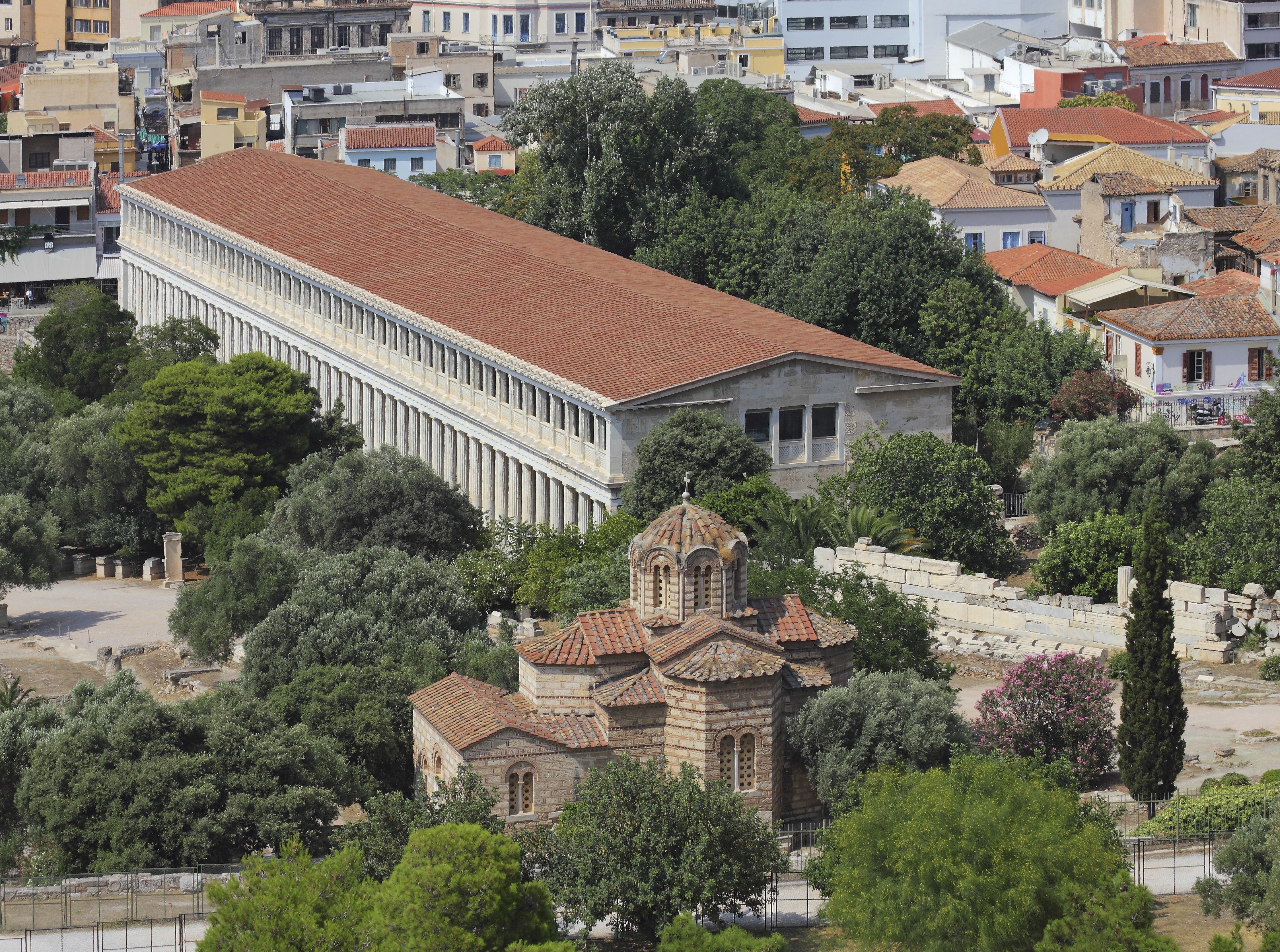
The museum is housed in the Stoa of Attalos, a two-storey colonnade donated to Athens in the 2nd century BC by King Attalos II of Pergamon. It was rebuilt in 1953–1956 by the American School of Classical Studies to its original dimensions, so this is the place to feel what an ancient public building was really like. The museum tells the story of the Agora, the heart of Athenian democracy, where Socrates talked and citizens voted.
The exhibition tells about:
- Democracy in action: ostraka (pottery shards) inscribed with the names of politicians to be exiled, including Themistocles and Aristides
- The kleroterion, a stone allotment machine used to choose jurors at random
- Official weights and measures, bronze ballots and a water clock that timed speeches in court
- Everyday life: toys, cooking pots, lamps and tools of the ancient Athenians
- Sculpture from the Agora, displayed under the colonnade with a view over the whole site and the Temple of Hephaestus
The museum is included in the Ancient Agora ticket. Walk up to the Temple of Hephaestus, the best-preserved Doric temple in Greece.
MapStoa of Attalos / Ancient Agora Museum Open map ↗
5) Kerameikos Archaeological Museum

A quiet, atmospheric museum on the site of the most important cemetery of ancient Athens. The area was named after the potters (kerameis) who worked here, which is where the word "ceramics" comes from. Around the museum you walk along the Street of Tombs, past the Dipylon and the Sacred Gate, the main gates of the ancient city.
The collection includes:
- Funerary stelae with moving family scenes, among them the stele of the young horseman Dexileos, killed in 394 BC
- Monumental kouroi and sphinxes found in the city walls by the Sacred Gate
- Geometric vases from the 8th century BC, some of the earliest masterpieces of Greek painting
- Burial offerings: perfume flasks, toys, jewellery and lekythoi (oil vessels) painted with white ground
- Remains of the Themistoclean city wall of 478 BC and the road to Plato's Academy
A green, peaceful place, rarely crowded: in spring you will see tortoises among the ancient tombs.
MapKerameikos Archaeological Museum Open map ↗
Kolonaki, private foundations and beauty with substance
These are the elegant museums: the Benaki venues, Cycladic art, the National Gallery and the outstanding Goulandris private collection. Come here not at a sprint but at leisure, for the pleasure of quality and quiet contemplation.
6) Benaki Museum of Greek Culture

Founded in 1930 by Antonis Benakis in his family's elegant mansion opposite the National Garden, this museum tells the story of Greek culture from prehistory to the 20th century through one remarkable private collection. It is the perfect place to see how ancient, Byzantine and modern Greece connect.
The floors take you through the ages:
- Ground floor: prehistoric, classical and Roman art, including fine gold jewellery
- First floor: Byzantine icons, among them two early works by El Greco painted before he left Crete
- Second floor: the Ottoman period and Greek folk art: costumes, embroidery and two complete reception rooms from mansions of Kozani and Siatista
- Third floor: the Greek War of Independence of 1821 and the making of the modern state, with portraits of its heroes and Lord Byron
- Temporary exhibitions and a rooftop café with a view of the National Garden and Lycabettus
The rooftop café is one of the most pleasant breaks in central Athens, even if you are short of time.
MapBenaki Museum (Koumbari) Open map ↗
7) Benaki Museum, Pireos 138

The contemporary venue of the Benaki Museum, set in a former industrial building on Pireos Street. Its huge, light-filled halls host some of the most interesting temporary exhibitions in Athens: photography, architecture, design, fashion and contemporary art.
What to expect:
- Photography: retrospectives of Greek and international photographers, drawing on the Benaki's vast photographic archive
- Architecture and design exhibitions, from Greek modernism to young designers
- Fashion and textiles, past and present
- Installations and multimedia art in the large central atrium
- Talks, workshops and concerts, plus a museum shop and café
Check the programme before you go: the venue is open only when an exhibition is running. It is a short walk from Kerameikos metro and the Gazi district.
MapBenaki Museum / Pireos 138 Open map ↗
8) Benaki Museum of Islamic Art
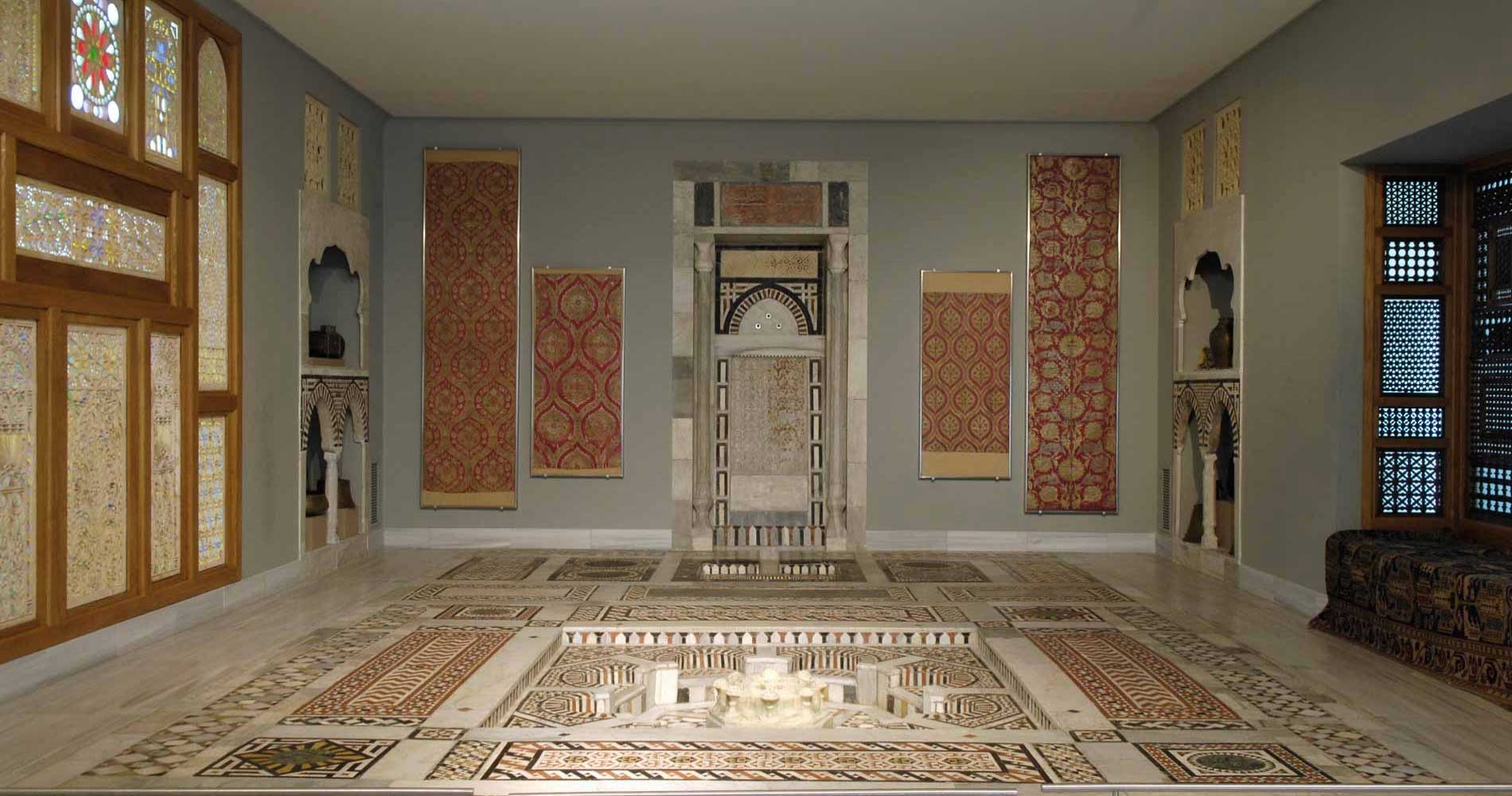
One of the finest collections of Islamic art in Europe, displayed in two neoclassical mansions between Psirri and Kerameikos. About 8,000 objects cover thirteen centuries of Islamic culture, from Spain and North Africa to Iran and India.
The collection includes:
- Ceramics and glass, from early Islamic lustreware to Ottoman Iznik tiles
- Textiles and carpets of extraordinary fineness
- Metalwork: inlaid brass, arms and armour, jewellery
- Manuscripts and calligraphy, including illuminated Korans and scientific texts
- A complete 17th-century marble reception room from a mansion in Cairo
- In the basement, a section of the ancient Themistoclean city wall is visible
Go up to the café on the top floor: it looks straight out over Kerameikos and the Acropolis.
MapBenaki Museum of Islamic Art Open map ↗
9) Museum of Cycladic Art

A private museum founded in 1986 by Nicholas and Dolly Goulandris, holding one of the most complete collections of Cycladic art in the world. The minimalist marble figurines, carved some 5,000 years ago, look astonishingly modern: they inspired Picasso, Modigliani and Brancusi.
Collections of the museum:
- Cycladic art (3200–2000 BC): the famous marble figures with folded arms, including the rare seated figure raising a cup
- Ancient Greek art: painted vases, bronzes and glass from the Bronze Age to Roman times
- Ancient Cypriot art from the Thanos Zintilis collection
- "Scenes from Daily Life in Antiquity": an engaging floor for families
- Temporary exhibitions in the neoclassical Stathatos Mansion by Ernst Ziller, often of international level
The museum shop is one of the best in Athens for quality replicas, and the café in the atrium is an oasis in Kolonaki.
MapMuseum of Cycladic Art Open map ↗
14) National Gallery – Alexandros Soutsos Museum

The largest art museum in Greece, reopened in 2021 after a complete renovation and expansion. It is the best place to discover Greek painting, which most visitors have never heard of, from the post-Byzantine icon painters to the modernists, alongside a selection of European masters.
The collection includes:
- El Greco: works by the Cretan-born master, including "The Concert of Angels"
- 19th-century Greek painting: Nikolaos Gyzis, Nikiforos Lytras and Georgios Iakovidis of the "Munich School", and seascapes of the Aegean
- Greek modernism: Konstantinos Parthenis, Nikos Hadjikyriakos-Ghika, Yannis Tsarouchis, Yannis Moralis
- European art: works by Picasso, Mondrian and earlier Italian, Flemish and Dutch painters
- Sculpture, including works by Yannoulis Chalepas, and major temporary exhibitions
A great choice for a hot afternoon: spacious, air-conditioned and rarely crowded, with a rooftop café.
MapNational Gallery Athens Open map ↗
16) Basil & Elise Goulandris Foundation

A private museum that opened in 2019 in a renovated building in Pangrati, showing one of the finest collections of modern art in Greece, assembled over decades by the shipowner Basil Goulandris and his wife Elise. It feels like a small, perfect European museum: you can see it all in about an hour and a half.
The collection includes works by:
- Impressionists and Post-Impressionists: Van Gogh, Cézanne, Monet, Degas, Gauguin
- 20th-century masters: Picasso, Braque, Chagall, Miró, Giacometti
- Greek artists of the 20th century: Yannis Moralis, Nikos Hadjikyriakos-Ghika, Yannis Tsarouchis
- Temporary exhibitions of Greek and international artists
- An elegant café-restaurant in the garden courtyard
Remarkable to find a Van Gogh and a Cézanne in a quiet residential street of Athens: an ideal plan B on a rainy day.
MapGoulandris Foundation (Athens) Open map ↗
When you want "Athens now"
This is less about masterpieces than about the spirit of our own time. If you need a change of pace after the ancient galleries, EMST and the Herakleidon offer one, honestly and without pretension.
15) EMST — National Museum of Contemporary Art

The museum occupies the former FIX brewery on Syngrou Avenue, an icon of Greek interwar industrial architecture, transformed into a large contemporary art space. It is the main showcase of contemporary art in Greece, presenting both Greek and international artists.
What you will find:
- The permanent collection: Greek and international art from the 1960s to today, including video, installation and performance
- Major temporary exhibitions, often in collaboration with international institutions
- Site-specific installations created for the building's vast industrial spaces
- Video and media art, one of the strongest parts of the collection
- A rooftop terrace with a panoramic view of the Acropolis, Philopappos Hill and the sea
It is right next to Syngrou-Fix metro station and a few minutes' walk from the Acropolis Museum and Koukaki.
MapEMST (National Museum of Contemporary Art) Open map ↗
27) Herakleidon Museum
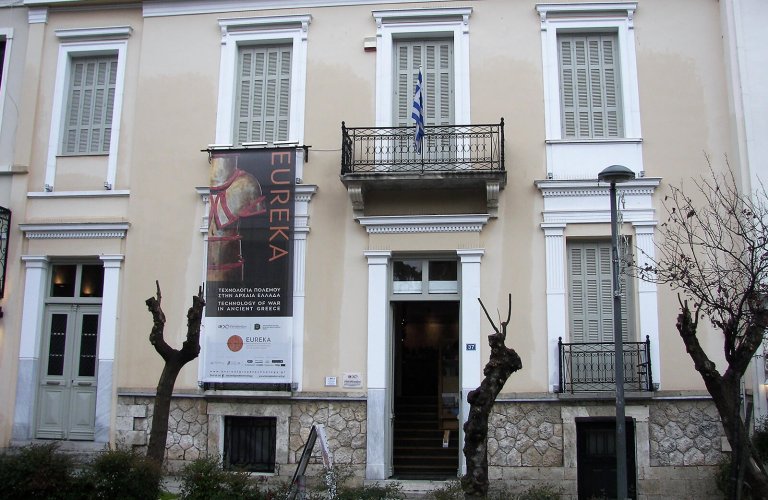
A private museum in two neoclassical buildings in Thissio, dedicated to the meeting point of art, science and mathematics. It is best known for one of the largest collections in the world of works by M. C. Escher, the master of impossible staircases and endless loops.
What the museum offers:
- M. C. Escher: lithographs, woodcuts and drawings, from early Italian landscapes to the famous tessellations and impossible figures
- Victor Vasarely and op art: optical games of colour and form
- Ancient Greek science: exhibitions on mathematics, astronomy and the technology of the ancient world
- Visual illusions and perspective: how our brain constructs space
- Educational programmes for children and students
Combine it with a walk along the pedestrian Apostolou Pavlou street and a coffee with an Acropolis view in Thissio.
MapHerakleidon Museum Open map ↗
Greece does not end with the Parthenon
Byzantium is the second great pillar of Greek history: a thousand years of empire, faith and art. This museum is a must even for those who came "only for antiquity": it gives Athens back its depth and the continuity of time.
10) Byzantine and Christian Museum

One of the most important museums of Byzantine art in the world, set in the Villa Ilissia, built in the 1840s for the eccentric Duchess of Plaisance. Most of the exhibition lies in modern underground halls around a garden. Its 25,000 objects cover the period from early Christianity to the post-Byzantine era.
The collection includes:
- Icons from the early Byzantine period to the Cretan school, including masterpieces of the 14th century
- Frescoes and mosaics rescued from ruined churches across Greece
- Manuscripts and miniatures, richly illuminated codices
- Church treasures: vestments embroidered with gold, chalices, crosses and the famous Epitaphios of Thessaloniki
- Architectural sculpture: early Christian capitals, reliefs and a reconstructed basilica
Even if you came "only for antiquity", don't skip it: Byzantium is the second great chapter of Greek history. The garden café is a lovely quiet spot.
MapByzantine & Christian Museum Open map ↗
Modern Greece: revolution, institutions, money and memory
These museums explain why modern Greece is the way it is: the birth of the state, wars, the economy, the evolution of the city and the fate of its communities.
11) War Museum
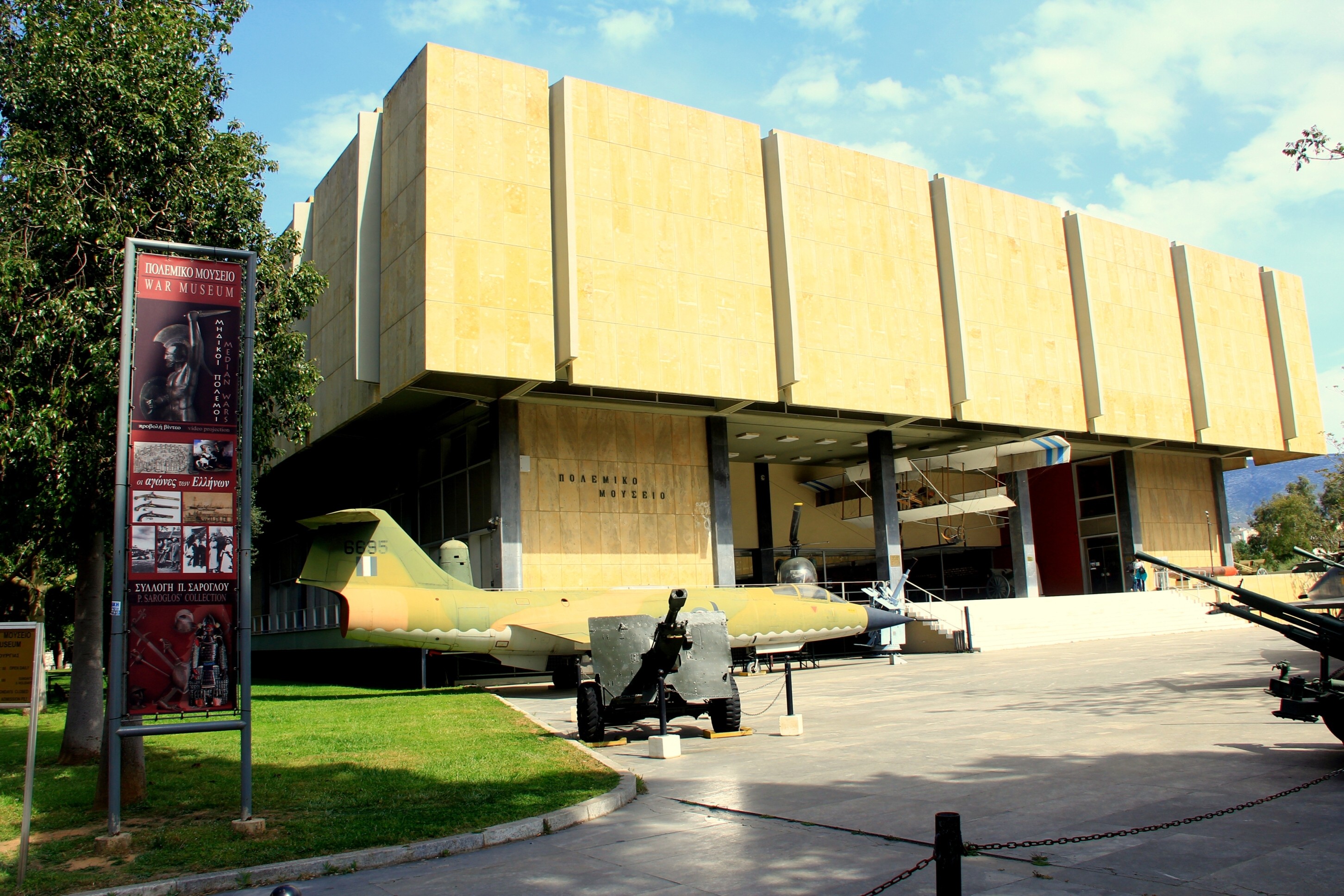
A museum dedicated to the military history of Greece from antiquity to the present day, opened in 1975. It explains, through weapons, uniforms, maps and dioramas, how a small country fought to win and keep its independence.
The exhibition includes:
- Ancient warfare: hoplite helmets, swords and models of battles such as Marathon and Salamis
- Byzantine, medieval and Ottoman arms
- The War of Independence of 1821: weapons and portraits of the heroes of the revolution
- The Balkan Wars, the First and Second World Wars, including the Greek resistance of 1940–1941
- Aircraft, artillery and vehicles displayed in the courtyard, free to see from outside
Children love the aircraft in the courtyard. The museum sits next to the Byzantine Museum, so you can easily combine the two.
MapWar Museum Athens Open map ↗
12) Numismatic Museum of Athens

The museum is housed in the Iliou Melathron ("Palace of Troy"), the luxurious mansion that Ernst Ziller built in 1878–1880 for Heinrich Schliemann, the excavator of Troy and Mycenae. It holds one of the largest coin collections in the world, around 500,000 objects, and tells the story of the Mediterranean through money.
The collection includes:
- Ancient Greek coins: the Athenian silver "owls", coins of Alexander the Great and the city-states
- Roman and Byzantine coins, including gold solidi of Constantinople
- Medieval and Ottoman coins, from the Crusader states to the Venetian possessions
- Modern Greek money: from the first phoenix of 1828 to the drachma and the euro
- Medals, seals and weights
Even if coins are not your passion, come for the house: frescoed ceilings, mosaic floors with Trojan motifs and a lovely garden café.
MapNumismatic Museum of Athens Open map ↗
13) National Historical Museum (Old Parliament)

The museum is housed in the Old Parliament building, where the Greek Parliament sat from 1875 to 1932; the bronze equestrian statue of General Kolokotronis stands in front. The exhibition covers Greek history from the fall of Constantinople in 1453 to the Second World War, with a focus on the War of Independence.
The collection includes:
- Personal belongings of the heroes of 1821: weapons, flags and the helmet and sword of Lord Byron
- Paintings and engravings of key moments in modern Greek history
- Documents and manuscripts: declarations, treaties and constitutions
- Uniforms and weapons from the revolution and later wars
- The old chamber of Parliament, preserved and still used for events
A must for those interested in the Greek Revolution and philhellenism. It is right in the centre, between Syntagma and Omonia.
MapNational Historical Museum (Old Parliament) Open map ↗
17) Athens City Museum

The museum occupies the Vouros mansion, where the first King of Greece, Otto, and Queen Amalia lived from 1836 to 1842 while the royal palace on Syntagma was being built. It tells the story of Athens in the 19th and 20th centuries, when a small town of a few thousand people became a European capital.
The collection includes:
- A large model of Athens in 1842, showing the town as Otto found it
- Paintings and engravings of Athens by European travellers and Greek artists
- Royal rooms with period furniture and objects of Otto and Amalia
- Old photographs of the city
- Maps and documents showing how the modern city was planned and grew
Small and personal: an hour here makes the walk around Syntagma and Plaka much more meaningful.
MapAthens City Museum Open map ↗
19) Jewish Museum of Greece

A museum dedicated to the history and culture of the Jewish communities of Greece, present in the country for more than 2,300 years, from the Greek-speaking Romaniotes to the Sephardic Jews who arrived from Spain after 1492. Special attention is given to the Holocaust, which destroyed most of Greek Jewry, above all in Thessaloniki.
The collection includes:
- Religious objects: Torah scrolls and finials, Hanukkah lamps, Kiddush cups
- The reconstructed interior of the old synagogue of Patras
- Traditional costumes and jewellery of the communities of Thessaloniki, Ioannina, Corfu and Rhodes
- Documents, photographs and personal belongings of the victims of the Holocaust
- Archive material: testimonies and memories of survivors
A compact, moving museum in Plaka, close to the Acropolis Museum.
MapJewish Museum of Greece Open map ↗
How Greeks live: daily life, music, school and song
For those who want more than the great eras: everyday culture, traditions, the sound of the country and life on a human scale.
18) Museum of Modern Greek Culture
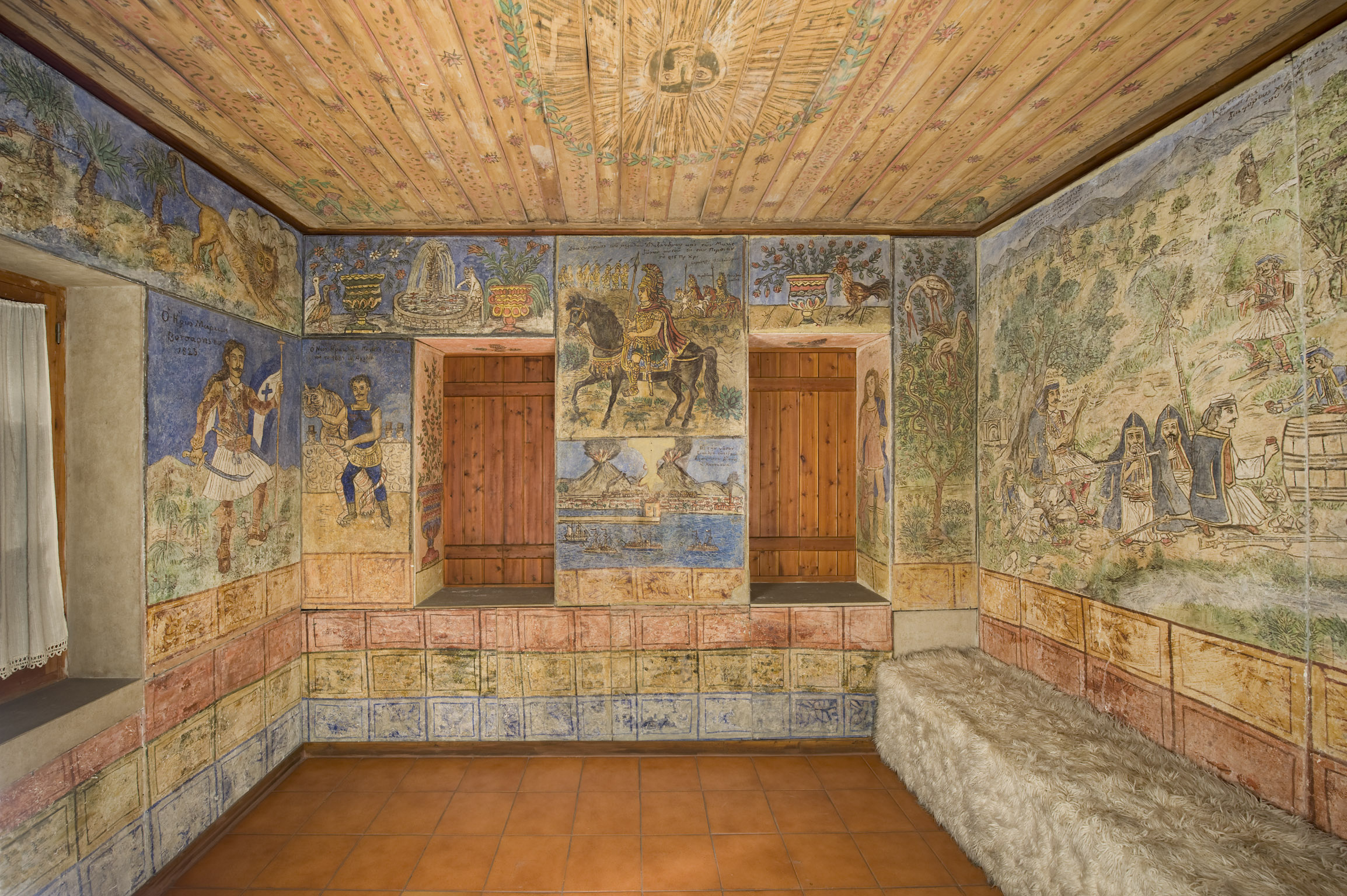
A museum complex of traditional buildings in Plaka and Monastiraki, dedicated to everyday life and folk culture in Greece from the 18th to the 20th century. It grew out of the former Museum of Greek Folk Art and shows how Greeks lived, dressed, worked and celebrated.
The exhibition includes:
- Traditional costumes from every region of Greece, with remarkable embroidery and silver jewellery
- Folk art: weaving, embroidery, woodcarving and metalwork
- Household objects: furniture, utensils and tools
- Reconstructed traditional interiors
- Shadow-puppet theatre (Karagiozis) and temporary exhibitions on regional traditions
Part of the museum is in the 18th-century Tzistarakis Mosque on Monastiraki Square, devoted to Greek folk ceramics.
MapMuseum of Modern Greek Culture (MNEP) Open map ↗
28) Museum of Greek Folk Musical Instruments
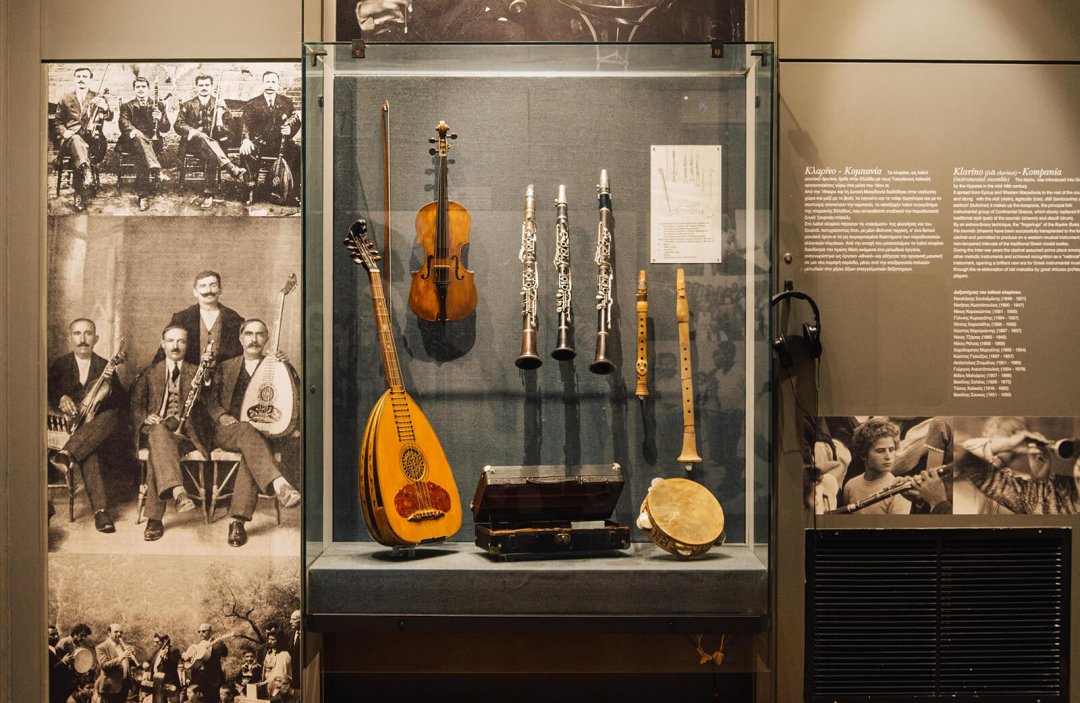
A small but very atmospheric museum in an 1842 mansion in Plaka, based on the collection of the musicologist Fivos Anoyanakis. It presents the musical traditions of every region of Greece, and you can listen to each instrument on headphones next to the display case.
The collection includes:
- String instruments: the Cretan lyra, laouto, bouzouki and baglamas
- Wind instruments: zournas, floyera shepherd's flutes, bagpipes (tsabouna and gaida)
- Percussion: daouli, toumbeleki, bells and clappers
- Rare and unique instruments from the islands and the mountains
- Recordings of traditional music to listen to throughout the museum
In summer, concerts are held in the shady garden. Entry is free.
MapMuseum of Greek Folk Musical Instruments Open map ↗
29) Maria Callas Museum

Opened in 2023 by the City of Athens, the museum is dedicated to the life and art of the great soprano Maria Callas, who studied and began her career in Athens during the war years. It uses modern multimedia to create an immersive experience.
The exhibition includes:
- Personal belongings of the singer: letters, jewellery, accessories
- Photographs and archive material from her years in Athens and her world career
- Audio and video recordings of her performances, to listen to with headphones
- Interactive displays on her famous roles: Norma, Tosca, Medea, Violetta
- The story of "La Divina": from a shy girl at the Athens Conservatory to the stages of La Scala and the Met
Ideal for opera lovers: allow about an hour, ideally with headphones on.
MapMaria Callas Museum Athens Open map ↗
30) Museum of School Life and Education
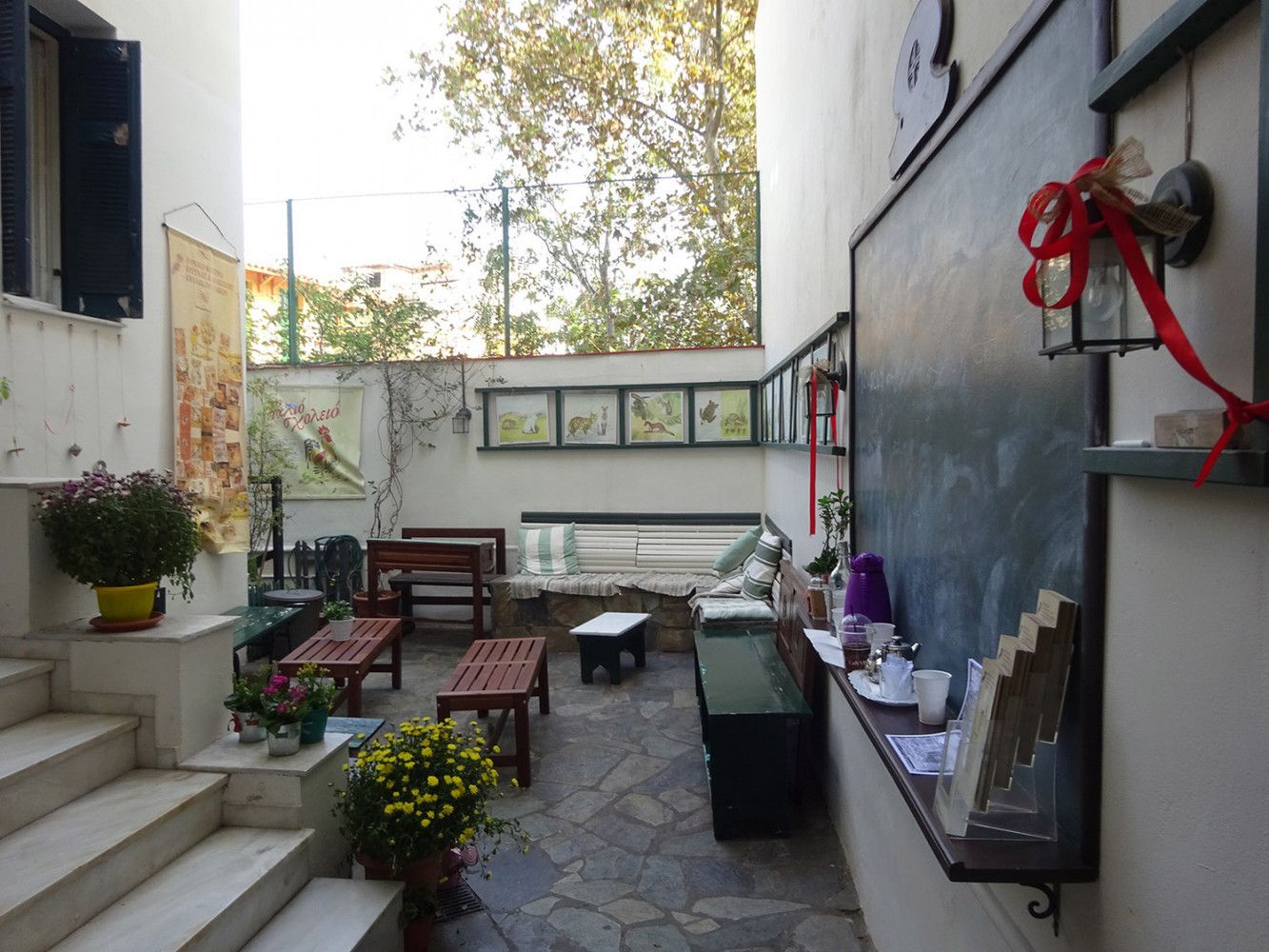
A small museum in Plaka dedicated to the history of education in Greece. Reconstructed classrooms from different eras create a warm atmosphere of nostalgia, especially for Greek visitors.
The exhibition includes:
- Reconstructed classrooms of the 19th and 20th centuries with old desks
- Schoolbooks and notebooks from different periods
- Writing tools: from slates and inkwells to modern pens
- School uniforms and accessories
- Photographs of school life through the decades
A charming 30-minute stop during a walk through Plaka; children enjoy sitting at the old desks.
MapMuseum of School Life & Education Open map ↗
To balance the big museums
Everything that combines easily with walks and family time: ancient technology, illusions, sport, cars, the sea and a museum ship. Plus natural history, if you want a complete change of subject.
20) Kotsanas Museum of Ancient Greek Technology

A unique museum of working reconstructions of ancient Greek inventions, made by Kostas Kotsanas after years of studying ancient texts. It shows that the Greeks had automata, computers and robots more than 2,000 years ago, and many models can be seen in action.
The exhibition includes:
- The Antikythera Mechanism, the ancient analogue computer, reconstructed so you can see how it works
- Robots and automata: Philo's robotic servant that pours wine and Heron's self-moving theatre
- Measuring instruments: sundials, water clocks, an odometer
- War machines: catapults, ballistas, siege engines
- Everyday mechanisms: pumps, presses, cranes and the first vending machine (it sold holy water)
Excellent for families and teenagers. Ask for a guided demonstration of the models.
MapKotsanas Museum of Ancient Greek Technology Open map ↗
21) Museum of Illusions Athens

An interactive museum about optical illusions, perception and the brain. A great place for families, a rainy day and unusual photos, on the edge of Monastiraki and Psirri.
The exhibition includes:
- Optical illusions: holograms, anaglyphs and stereograms
- Illusion rooms: the Ames room, where people seem to change size, the Infinity room and the Rotating tunnel
- Interactive exhibits: puzzles and perception games
- Scientific explanations: how our brain and eyes work
- Photo spots designed for unusual pictures
Allow about an hour; mornings on weekdays are the least crowded.
MapMuseum of Illusions Athens Open map ↗
22) Athens Olympic Museum

A modern museum in Marousi dedicated to the Olympic movement from Olympia in 776 BC to the present day, with special attention to the two Olympic Games held in Athens, in 1896 and 2004.
The exhibition includes:
- The history of the Games: from ancient Olympia to the modern revival
- Athens 2004: torches, medals and uniforms
- Interactive exhibits and sports simulators
- Video installations: documentaries and interviews with athletes
- Olympic memorabilia: mascots, posters, souvenirs
Combine it with a visit to the Olympic Stadium (OAKA) nearby or with the Panathenaic Stadium in the centre, where the first modern Games were held in 1896.
MapAthens Olympic Museum Open map ↗
23) Hellenic Motor Museum

A museum on several floors of a building in central Athens, presenting the private collection of Theodore Charagionis: more than a hundred classic and rare cars that trace the history of the automobile from its first steps to the 1980s.
The collection includes:
- Early automobiles from the beginning of the 20th century, such as a Ford Model N
- Classic cars of the 1920s–1970s: elegant tourers, limousines and sports cars
- Rare and unique models, including a BMW 328 Coupé
- Racing cars and sports legends
- Motorcycles from different eras
A great alternative for car enthusiasts and families on a rainy day.
MapHellenic Motor Museum Open map ↗
24) Hellenic Maritime Museum, Piraeus

A museum dedicated to the maritime history of Greece, a nation of sailors since the time of Odysseus. It stands on Zea marina in Piraeus, and a section of the ancient Themistoclean wall is incorporated into the building itself.
The collection includes:
- Ship models: from ancient triremes to modern merchant ships
- Navigation instruments: sextants, compasses, chronometers
- Sea charts and atlases of different eras
- The War of Independence at sea: the fireships of Kanaris and Miaoulis and the flags of the island fleets
- Uniforms, paintings and engravings, and the conning tower of the submarine Papanikolis in the courtyard
Combine it with a stroll around Zea marina and Mikrolimano with its fish tavernas.
MapHellenic Maritime Museum Open map ↗
25) Floating museum: the cruiser Georgios Averof

A legendary armoured cruiser that served in the Greek navy from 1911 to 1952 and was the flagship of the fleet in the Balkan Wars. Today it is the only surviving armoured cruiser of its type in the world, moored as a museum at the Trocadero marina in Palaio Faliro.
On board you can see:
- The bridge and chart room
- The admiral's quarters and officers' wardroom
- The ship's chapel and sick bay
- The gun turrets and decks
- The engine and boiler rooms
Nearby, in the same park, you can also visit a replica of the ancient trireme Olympias. Easy to combine with the SNFCC and a walk along the Faliro seafront.
MapBattleship Averof Museum Open map ↗
26) Goulandris Museum of Natural History, Kifissia

A museum in the green northern suburb of Kifissia dedicated to the nature of Greece and the world, founded in 1964 by Angelos and Niki Goulandris. It is a pioneer of environmental education in Greece.
The exhibition includes:
- Geology and palaeontology: minerals, rocks and fossils
- Botany: a large herbarium of Greek flora
- Zoology: mammals, birds, insects and marine life
- Ecology: the protection of the environment and endangered species of Greece
- Interactive exhibits for children in the modern GAIA Centre
Make a half-day trip of it: Kifissia, with its mansions, cafés and shops, is a pleasant change from the centre.