
No tickets needed!
• Corinth Canal — free entry
• Monastery of St. Patapios — free entry
This is one of the advantages of this route — no ticket queues and no additional entry fees.
The perfect route for your first experience of Greece beyond Athens — or for those who appreciate beauty without a marathon. In 4–5 hours you'll see an engineering marvel, a classic resort town, and a mountain sanctuary with a view that stays in your memory for a long time.
Three stops — three different impressions: Corinth Canal, where you can see two seas in a single glance; Loutraki — a resort at the foot of the mountains along the gulf; and Monastery of St. Patapios at 700 meters altitude — with a panorama that makes you want to just stand and stare.
↓ Below — breakdown by stops with travel times
This is a private tour — after each stop you'll have free time for photos and exploring on your own.
A scenic serpentine road leads to the Monastery of St. Patapios — about 15–20 minutes, not a rally, but the views are worth it.
The difference in time (4–5 hours) is your free time at each stop. You set the pace — it doesn't affect the tour price.

The road to the Corinth Canal takes about an hour along a comfortable highway. But this is not just a transfer — it's a journey through key moments of Greek history. To the left — the Saronic Gulf with the silhouette of Salamis island. It was here in 480 BC that the Greek fleet under Themistocles destroyed the armada of Persian King Xerxes. Three hundred Greek triremes against a thousand Persian ships — a victory that changed the course of world history. Without Salamis, there would have been no Plato, no Aristotle, nor the Greece we are going to see.

As we approach the canal, we pass through places where, according to myth, Procrustes once lived — a bandit who laid travelers on his bed and "adjusted" them to fit: cutting the legs of the tall ones, stretching the short ones. He lived on the border of Attica and Corinthia — exactly where we are driving. Theseus killed him the same way — laid him on his own bed.
The philosophical meaning of the myth runs deeper than it seems: Procrustes is a metaphor for standardization. Anyone who tries to force living reality into rigid frameworks will sooner or later end up on their own bed of standards. The Greeks knew how to package wisdom into stories — and this story remains relevant to this day.
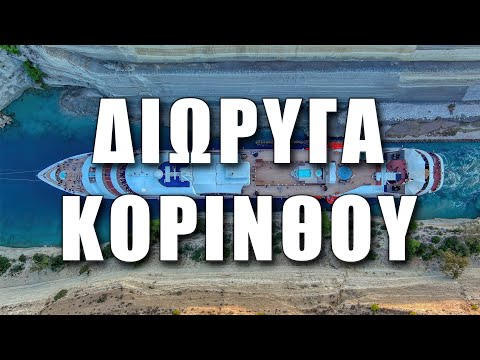

The Corinth Canal is a dream 2,500 years in the making. Tyrant Periander first conceived it in the 7th century BC but retreated before the scale of the task. Julius Caesar planned construction, Caligula sent engineers to survey, and Nero in 67 AD personally thrust a golden shovel into the ground and ordered 6,000 Jewish prisoners to begin work. But the emperor was killed a year later and the project was abandoned. For the next 18 centuries, ships sailed around the Peloponnese — an extra 700 kilometers. The modern canal was cut by French engineers in 1881–1893 and remains one of the narrowest navigable canals in the world: just 25 meters wide with a depth of 8 meters.
The canal cuts through the Corinthian isthmus for 6.3 kilometers, and the sheer limestone walls plunge 80 meters down — a sight both majestic and dizzying. Today the canal handles about 11,000 vessels per year, but large container ships and tankers cannot fit — its economic significance has given way to tourism. However, you can bungee jump from the bridge at 80 meters or sail through on a boat between walls that seem to close in overhead.
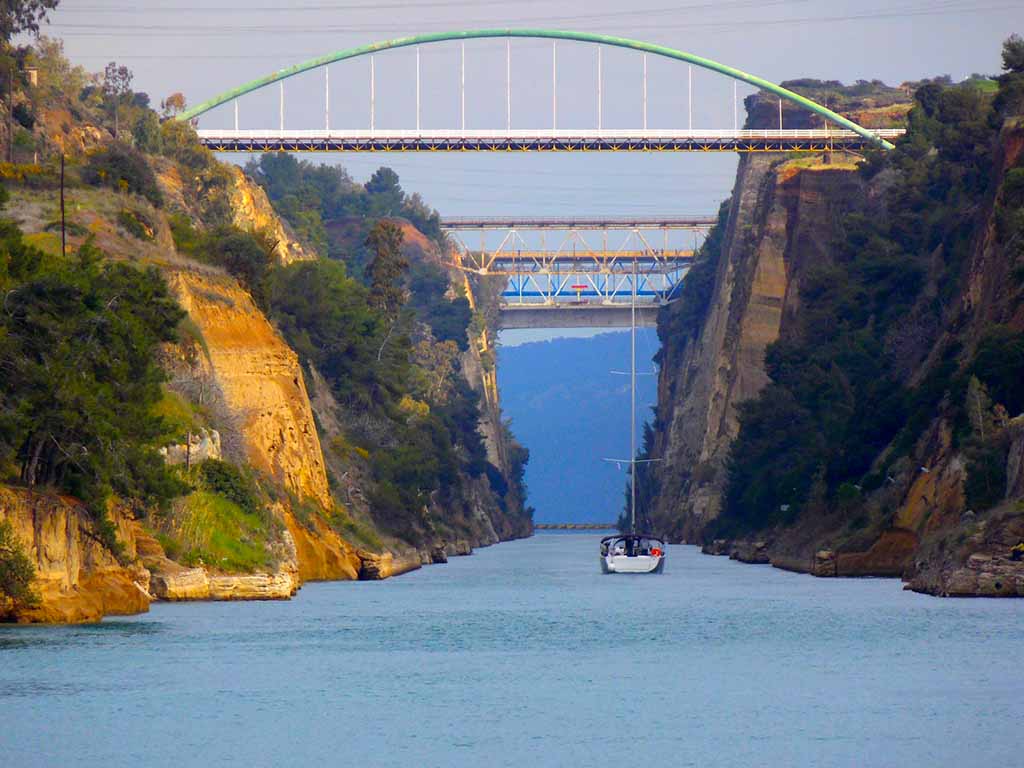
We'll stop at the pedestrian bridge — the only place where you can stand calmly over the abyss and take in the scale of what you see. Below your feet — 80 meters of void, the turquoise water of the canal and, if you're lucky, a passing yacht that looks like a toy from this height. Walls of golden limestone stretch into the distance in perfectly parallel lines, and on the horizon the waters of two seas merge — the Aegean and the Ionian. This is that iconic "postcard" view of Greece, but no photograph conveys the feeling of standing on the edge and feeling the wind from the gorge. There will be time here to take photos, breathe the sea air, and simply stand in silence above this engineering marvel.
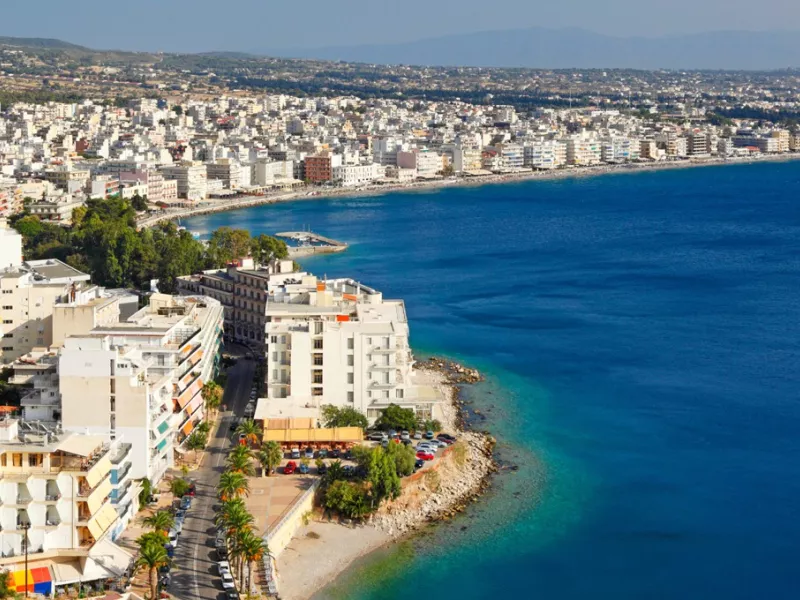
Loutraki — the name comes from the Greek "loutra" (λουτρά), meaning "baths." And for good reason: thermal springs have been flowing here since antiquity. Ancient Greeks believed the mineral-rich hot waters possessed healing powers — and came here to treat everything from rheumatism to heartbreak. Romans built a bathhouse complex, remnants of which archaeologists still uncover. The modern resort grew around those same springs: water rises from 700 meters depth at 30–37°C, rich in chlorides and sodium.
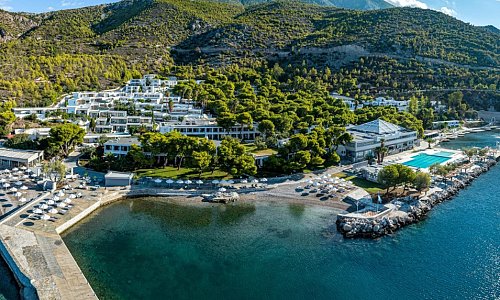
"Loutraki" mineral water is famous well beyond Greece — it's exported to dozens of countries. But locals know: the best-tasting water comes from the free drinking fountains along the promenade. The promenade itself stretches for several kilometers along the Corinthian Gulf — with palm trees, cafés, and views of the mountains on the opposite shore. It's the perfect spot for a short stroll and a cup of Greek coffee before the mountain ascent to the monastery.
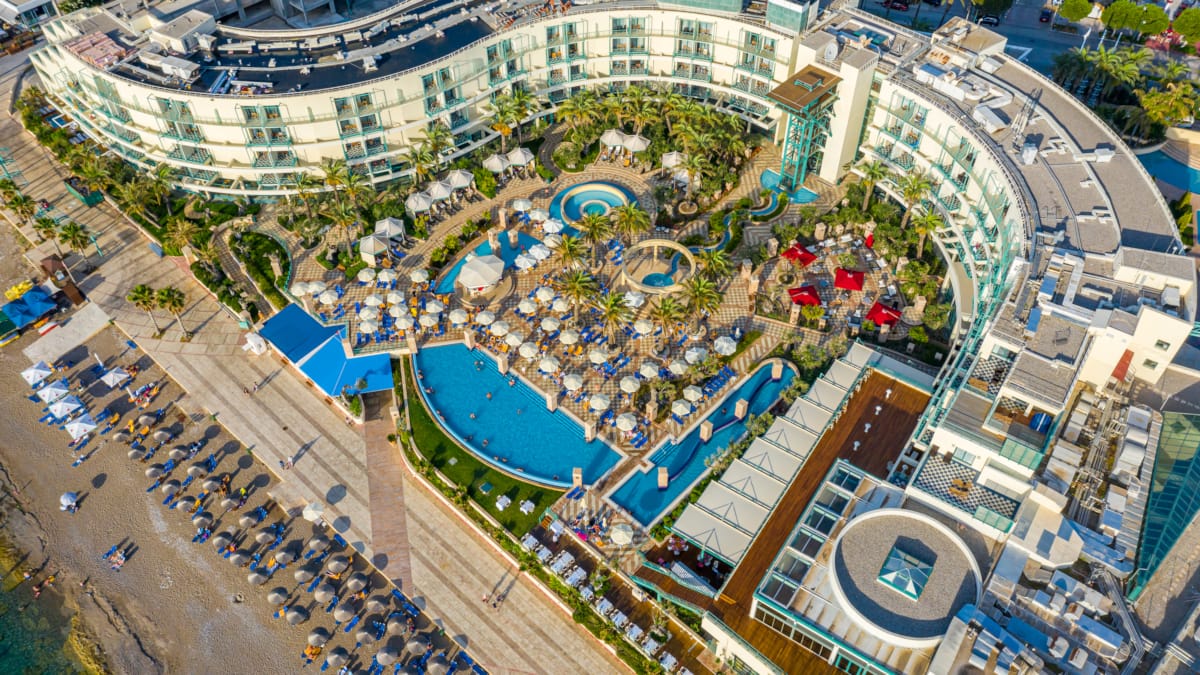
Loutraki is home to Greece's largest casino — Club Hotel Casino Loutraki. But the town's appeal lies not in gambling but in the atmosphere of an authentic Greek resort: no tourist crowds, with tavernas cooking for locals, and that special Mediterranean rhythm of life where nobody rushes anywhere. Here you can see retirees playing backgammon in the square, fishermen mending nets in the harbor, and families with children on the evening "volta" — the traditional promenade stroll.
.JPG)
The Gerania mountain range rises above the town, reaching 1,350 meters. That's where the road leads to the Monastery of St. Patapios — the next stop on our route. The serpentine ascent takes about 30 minutes, but the views become increasingly breathtaking with every turn: the Corinthian Gulf recedes below, and endless mountain panoramas open up ahead.
Then — the ascent to the Monastery of St. Patapios — 30 minutes along a scenic serpentine road
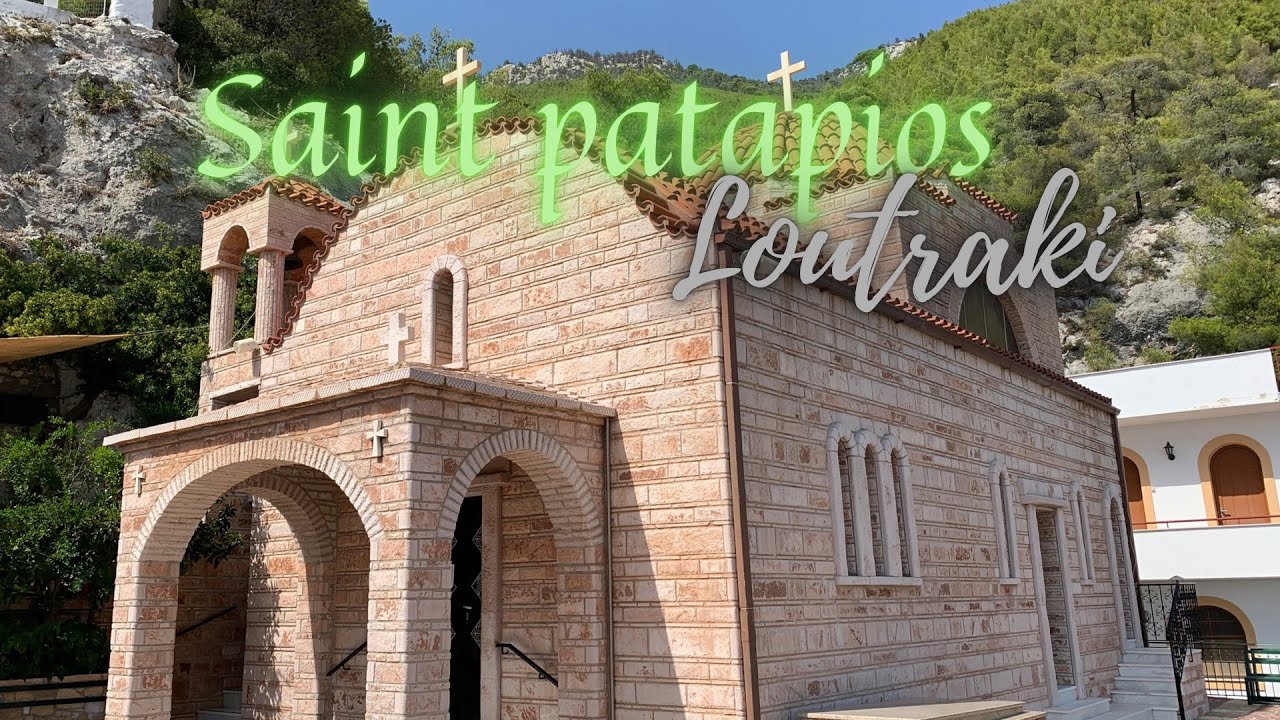
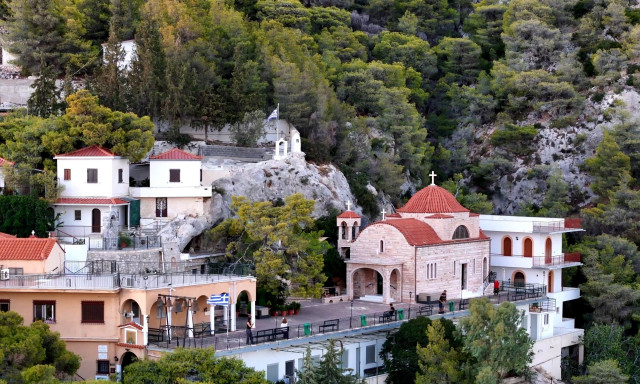
The Monastery of St. Patapios is an active women's monastery clinging to a cliff at 700 meters above sea level. Founded in 1952 around a cave where the Venerable Patapios of Egypt practiced asceticism in the 10th century. The cave itself with 13th-century frescoes is preserved in its original state — a narrow passage leads to where the incorrupt relics of the saint were discovered.

The monastery's greatest treasure is the panorama. From the terrace, you can see the entire Corinthian isthmus: to the left — the Corinthian Gulf, to the right — the Saronic, and between them a narrow strip of land with a thread of canal. On clear days you can see Athens, the islands of the Saronic Gulf, and the mountains of the Peloponnese. This is one of those views that cannot be captured in a photograph — you only grasp the scale standing at the edge of the cliff.

The monastery is a place of pilgrimage but also welcomes regular tourists. The nuns offer guests loukoumi and cold water, and the monastery shop sells honey, herbal teas, and hand-painted icons. The dress code is relaxed: women are offered skirts at the entrance, men just need long trousers. The atmosphere is serene — after the bustle of Athens, this place feels like another dimension.

The road to the monastery is an experience in itself. The serpentine climbs from Loutraki through pine forests and emerges onto open slopes with breathtaking views. On the way back we descend the same road — but the views are completely different, because you're looking down at the gulf and the town at the foot of the mountains.
Then — return to Athens — approximately 1.5 hours via highway
In short:
No tickets needed!
• Corinth Canal — free entry
• Monastery of St. Patapios — free entry
This is one of the advantages of this route — no ticket queues and no additional entry fees.
I narrate not only at the sites themselves but also on the way to them — providing the full historical context so you understand the connections between events and eras.
At the sites, as a legally licensed guide, I enter with you and explain everything on the spot. After the tour — free time for photos and independent exploration.
Since this is a half-day tour (4–5 hours), lunch is not originally included. But if you wish, we can set aside time for a snack in Loutraki — there are cafés and tavernas on the promenade with views of the Corinthian Gulf.
Yes. The format is easily adapted: pauses, changing locations, views, "history without boredom."
No special preparation needed. The pace can be kept relaxed, with stops along the way.
My prices are quite reasonable. Finding out is easy: just click the button that works best for you
just remember that roaming charges can sting
Click on a photo to view full size
