
Everything is included!
• The Corinth Canal — free entry
• Mega Spilaio Monastery — free entry
• The Rack Railway — ticket included in the tour price
I purchase the train tickets in advance — you need not worry about a thing.
The rack railway through the Vouraikos Gorge — the crowning highlight of this tour. An 1896 train clings to sheer cliffs, plunges into tunnels and teeters over chasms. Nothing quite like it.
On the way to the train: The Corinth Canal — a man-made rift between two seas; Mega Spilaio Monastery — one of the oldest in Greece (362 AD) with a miraculous wax icon; Kalavryta — the mountain town where the Greek Revolution began. Just don't linger too long at Kalavryta's tavernas — or you'll miss the train!
This is a private full-day tour — after each stop you will have free time for photographs and exploring on your own.
A scenic switchback road winds up to Mega Spilaio Monastery for 30–40 minutes through pine forests — the views along the way are magnificent. In Kalavryta, lunch at a mountain taverna overlooking the Helmos range.
The one-hour range (7–8) reflects your free time at each stop. You set the pace — and the total duration has no bearing on the price.

Road to the Corinth Canal — approximately one hour along the motorway. But this is not merely a transfer — it is a journey through the key landmarks of Greek history. To the left — the Saronic Gulf with the silhouette of the island of Salamis. It was here in 480 BC that the Greek fleet under Themistocles routed the armada of the Persian King Xerxes. Threethree hundred Greek triremes against a thousand Persian ships — a victory that changed the course of world history. Had it not been for Salamis, there would have been no Plato, no Aristotle, no Greece as we know it.

Near the canal we pass the lands where, according to myth, Procrustes — the brigand who laid travellers on his bed and "fitted" them to its length: cutting the tall short and stretching the small. He lived on the border of Attica and Corinthia — precisely where we are driving. Theseus vanquished him by his own method — stretching him upon his own bed.
The philosophical subtext runs deeper than it first appears: Procrustes is a metaphor for standardisation. Anyone who tries to force living reality into rigid frameworks sooner or later finds themselves trapped by their own standards. The Greeks had a gift for packaging wisdom in stories — and this one remains as relevant as ever.
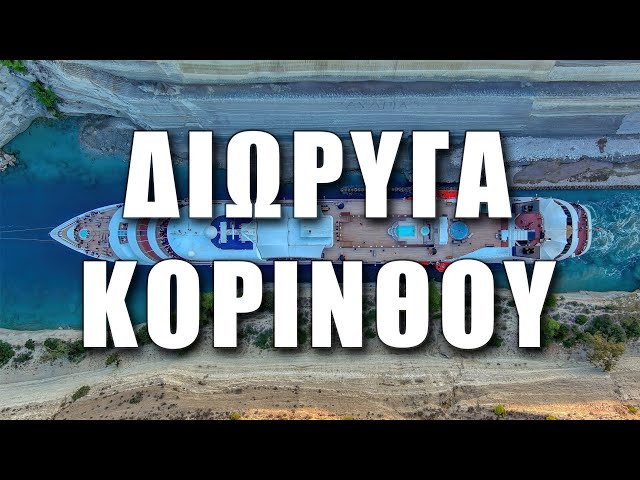

The Corinth Canal — a dream 2,500 years in the making. First conceived by the tyrant Periander in the 7th century BC, but he recoiled before the scale of the undertaking. Julius Caesar planned its construction, Caligula dispatched engineers to survey the route, and Nero in 67 AD personally drove a golden spade into the earth and ordered 6,000 Jewish prisoners to begin the works. But the emperor was assassinated a year later, and the project was abandoned. For 18 centuries ships sailed around the Peloponnese — 700 extra kilometres. French engineers cut the modern canal in 1881–1893, and it remains one of the narrowest navigable canals in the world.
The canal slices through the Isthmus of Corinth for 6.3 kilometres, with sheer limestone walls plunging 80 metres — a spectacle at once majestic and vertiginous. Today the canal handles some 11,000 vessels a year, but large container ships and tankers cannot fit — its economic significance has given way to its tourist appeal. You can bungee jump from the bridge at a height of 80 metres, or cruise by boat between walls that seem to close in above you.
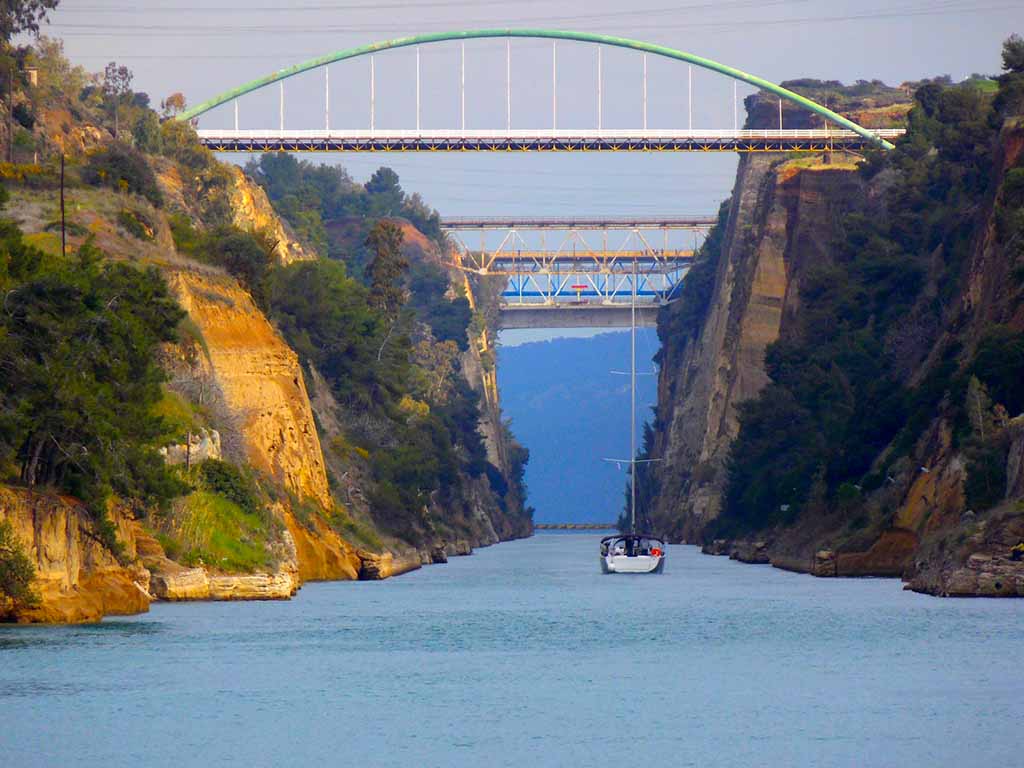
We stop at the pedestrian bridge — the only spot where you can stand above the abyss in tranquillity and take in the full scale of the spectacle. Beneath your feet — 80 metres of void and turquoise water and, if fortune favours, a yacht gliding below that from this height looks like a toy. Walls of golden limestone stretch into the distance in perfectly parallel lines, and on the horizon the waters of two seas — the Aegean and the Ionian — merge. This is the quintessential postcard view of Greece, yet no photograph captures the sensation, of standing on the edge with the wind rising from the gorge. There will be time to take photographs, breathe the sea air, and stand in silence above this marvel of engineering.
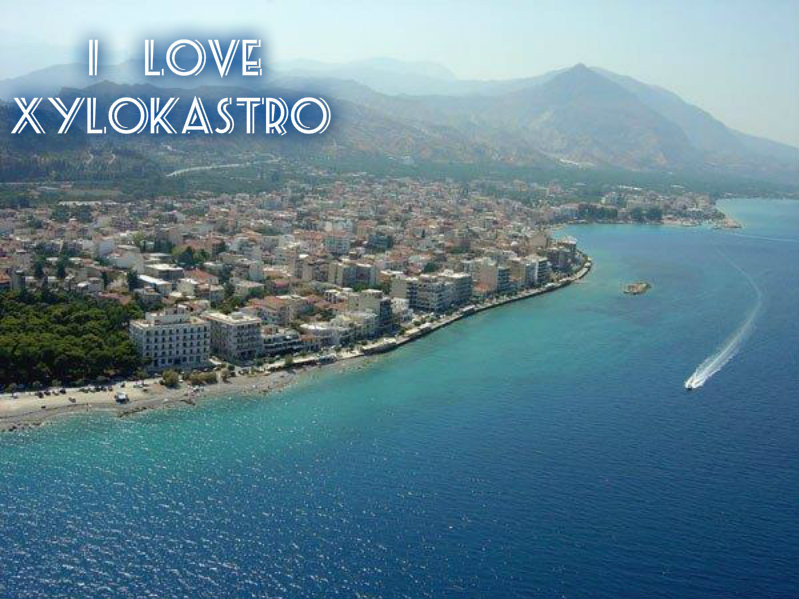
From the Corinth Canal we head west along the northern coast of the Peloponnese. The first 40 minutes follow a comfortable motorway with views of the Corinthian Gulf. To the right — the turquoise waters of the gulf and the mountains of mainland Greece on the opposite shore, to the left — the green slopes of the Peloponnese. This road connects Athens with Patras — the third largest city in Greece.
Then another 40 minutes climbing through a stunning mountain switchback towards the monastery. The road winds upward through pine forests and gorges, with each turn revealing ever more dramatic views of the valley below — a journey that is itself part of the experience.
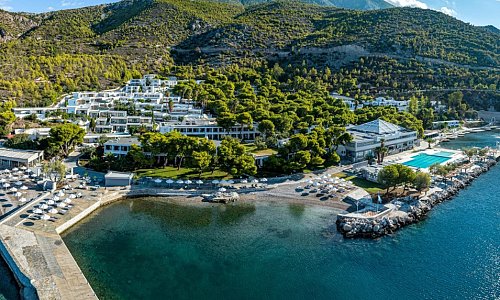
We drive through Achaea — one of the oldest regions of Greece. It was here in antiquity that the Achaean League held sway — a federation of city-states, that was once the dominant political force of Greece. Modern Achaea is a land of vineyards, olive groves and small fishing villages along the coast. The Corinthian Gulf narrows to the west, and the opposite shore seems ever closer.
We arrive at Mega Spilaio — one of the most ancient sanctuaries in all of Greece
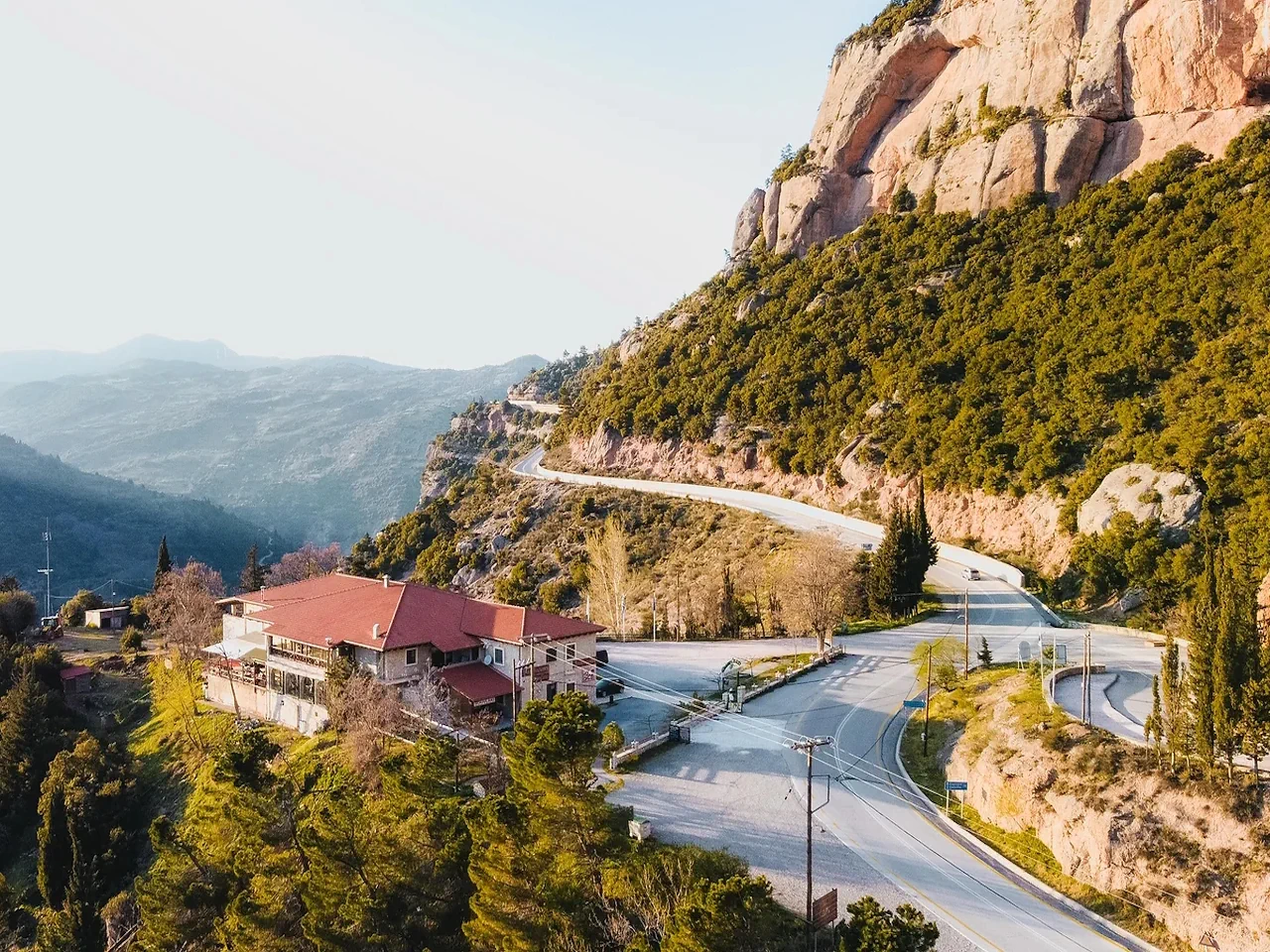
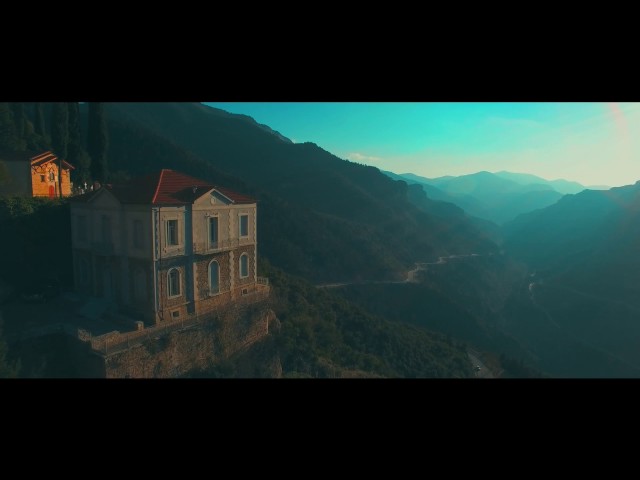
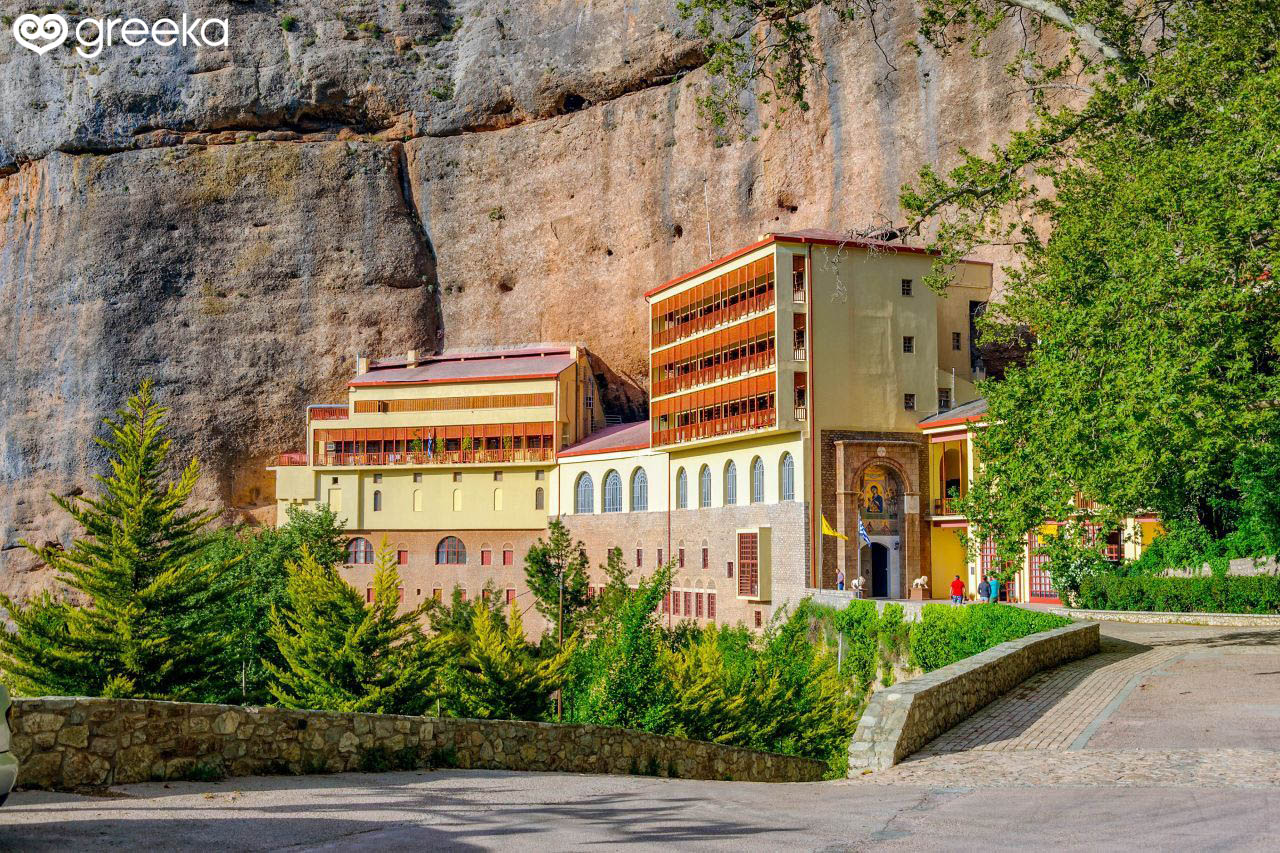
Mega Spilaio Monastery (Μέγα Σπήλαιο — "The Great Cave") — one of the oldest and most revered monasteries in Greece. Founded in 362 AD by the monk-brothers Symeon and Theodore of Thessaloniki. According to tradition, the Virgin Mary appeared to both of them in a dream and bade them go to Achaea to find Her icon. The monastery is built on the cliffs of Mount Helmos at 940 metres; its eight-storey structure rises from a natural cave nearly 30 metres deep.

The monastery's principal treasure — the unique wax icon of the Virgin Megaspiliotissa (of the Great Cave). According to tradition, it was fashioned by the Evangelist Luke himself, who preached in these lands. The icon is not painted — it is carved from wax and mastic, approximately 45×45 cm. Over 17 centuries the monastery has endured five devastating fires (in 840, 1285, 1400, 1640, and 1934), yet each time the icon miraculously survived unscathed.
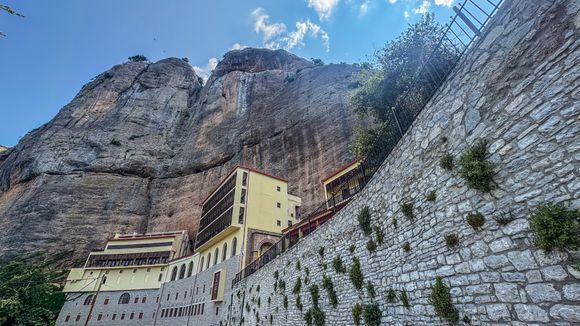
Role in the Greek Revolution — Mega Spilaio served as one of the centres of preparation for the 1821 uprising against Ottoman rule. Many of its monks were members of the clandestine the Filiki Eteria. Archbishop Germanos of Patras rallied his forces here before the start of the War of Independence. The monastery museum houses relics of the revolution: battle standards, weapons, and rare documents. The library holds over 3,000 volumes, including illuminated manuscripts and rare Gospels.
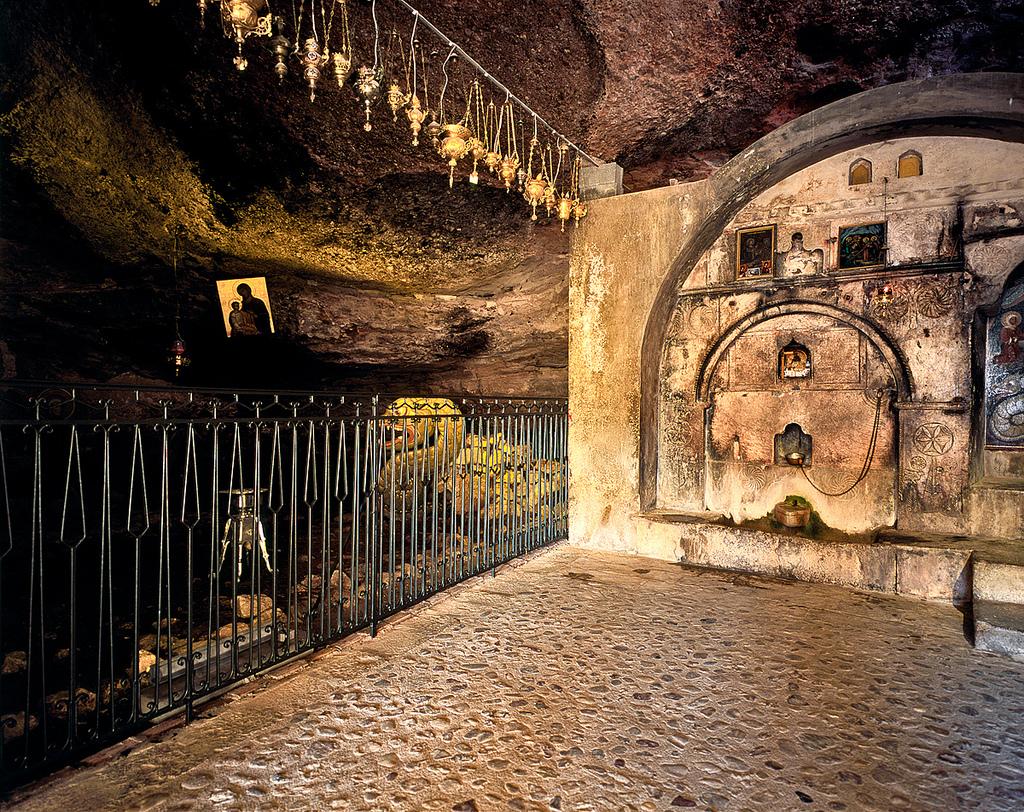
The cave and the spring — deep within the monastery lies the very cave, where the brothers discovered the icon. According to legend, they were led here by a pious shepherdess named Euphrosyne, to whom the Virgin Mary appeared in a dream. When they entered the cavern, a great serpent lay coiled at the entrance, but a bolt of lightning burst from the icon and struck the creature down. Inside the cave a spring flows with remarkably pure water — the monks say it possesses healing properties. The relics of many saints are also kept here.
Then — Kalavryta — 15 minutes along a mountain road to the town that symbolises the Greek Revolution
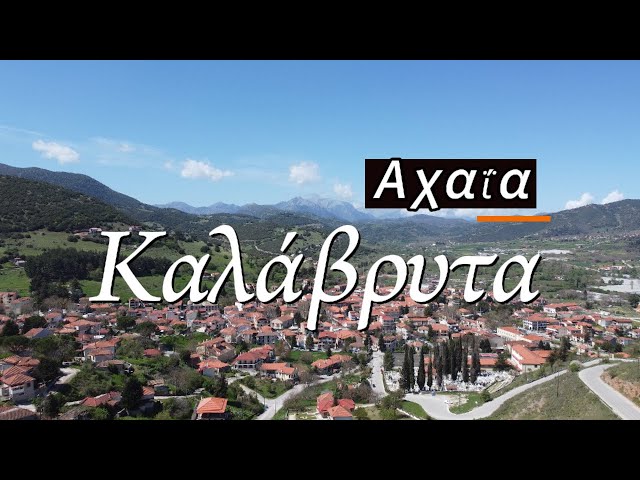

The tragedy of 1943 — 13 December, in reprisal for partisan activity, German occupying forces executed nearly the entire male population — more than 700 men and boys over the age of twelve. The town was razed to the ground. The clock on the metropolitan church bell tower is stopped at 14:34 — the moment the executions began. On Kapi Hill, where the massacre took place, stands a white cross and memorial. «The Greek Khatyn" — as Kalavryta has been called ever since.

Modern Kalavryta — a charming mountain town of cobbled lanes, traditional tavernas and views of the snow-capped peaks of Helmos. In winter it draws skiers — a ski resort operates just 13 km away. In summer it is the perfect escape from the Athens heat. The tavernas serve local mountain dishes: pan-fried cheese, charcoal-grilled meats, and mountain honey.
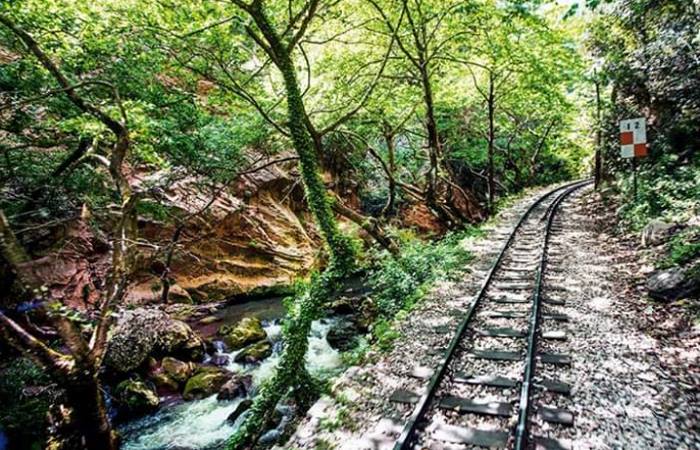
Free time in Kalavryta — you will have 1.5–2 hours to stroll through town and lunch at local tavernas. Kalavryta is renowned for its mountain cuisine: pan-fried cheese, charcoal-grilled meats, home-made sausages, local honey and wine. After lunch we head to the station — and one of the most scenic parts of the journey begins: the descent on the rack railway through the Vouraikos Gorge to the coast.
Then — the rack railway — approximately one hour through the Vouraikos Gorge to the sea
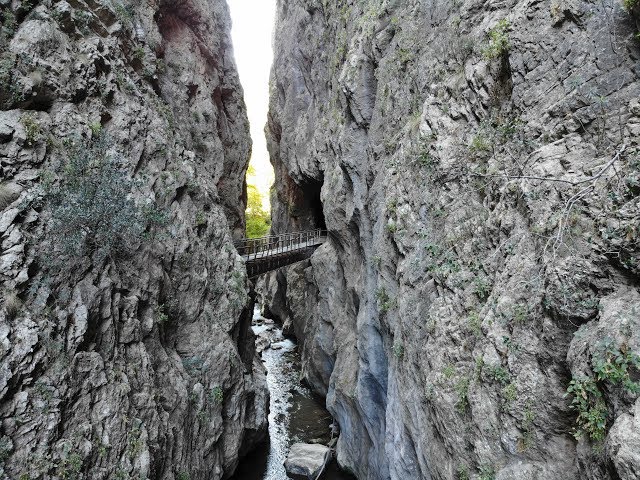
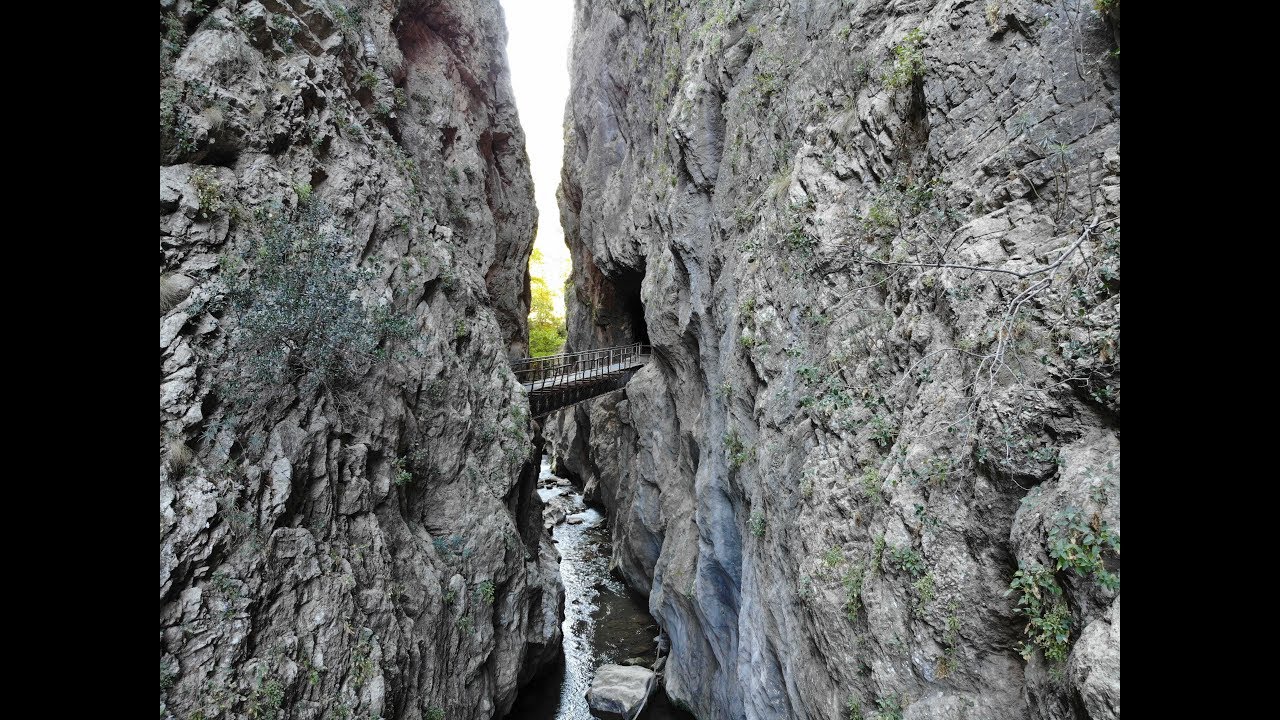
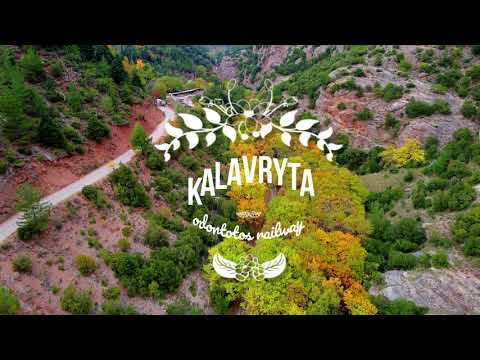
The Vouraikos Gorge — the line follows the river of the same name through one of the most spectacular gorges in Greece. Sheer cliffs rise hundreds of metres, the train plunges into tunnels, emerges onto bridges spanning chasms, hugs the edge of the precipice. The river shifts from right to left — over the course of an hour the line crosses it several times. It is every model-railway enthusiast's dream brought to life at full scale.
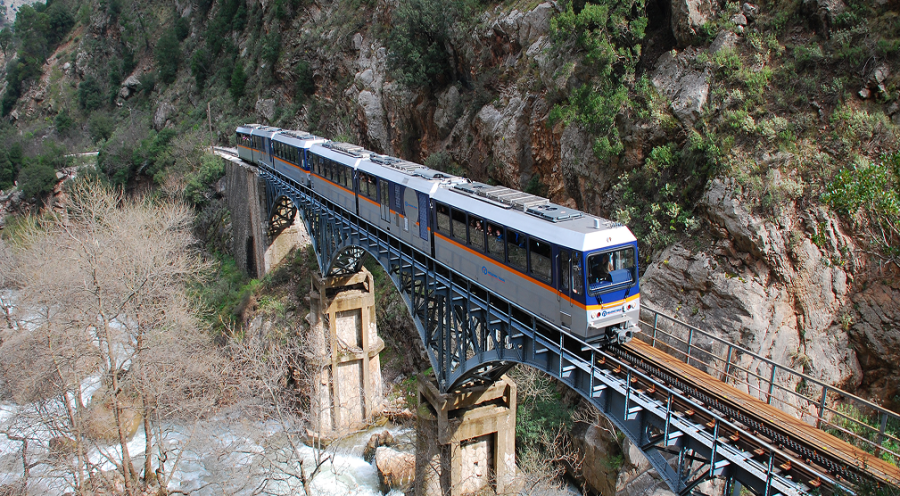
The ride takes about an hour — and every minute is filled with wonder. The train moves slowly enough to savour every detail: limestone cliffs, groves of plane trees and oleanders, and waterfalls after the rains. Midway there is a stop at the village of Kato Zachlorou — from here you can walk to Mega Spilaio Monastery. But we travel in the other direction — from Kalavryta downhill, towards the sea.
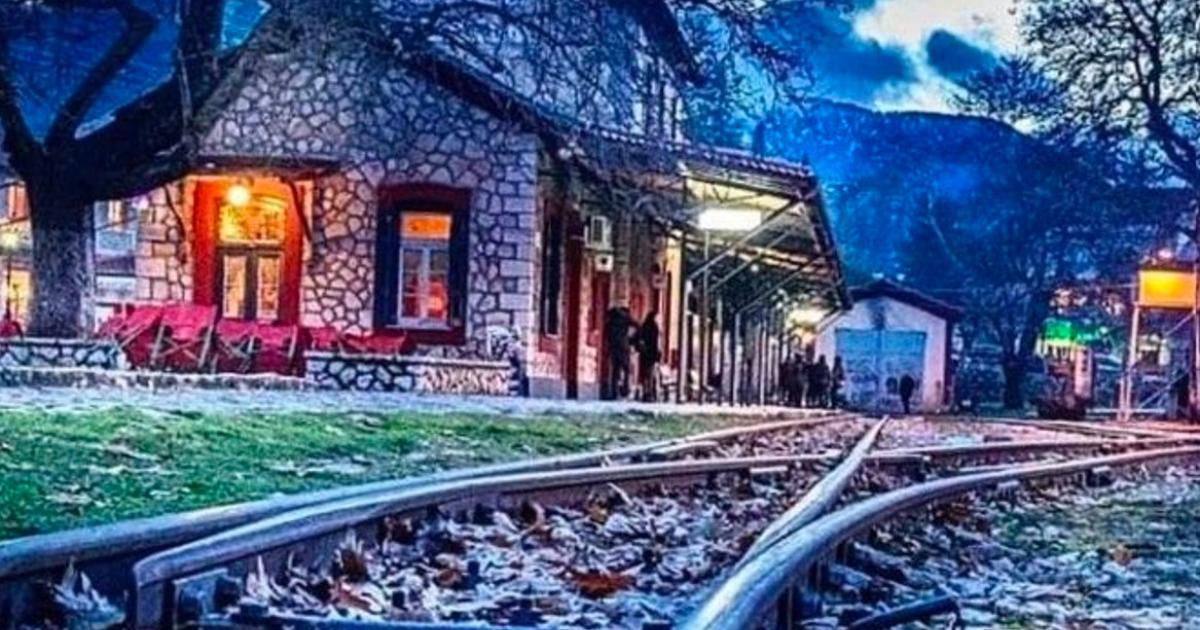
Diakofto — the terminus on the coast of the Corinthian Gulf. Here, by the depot, stands the 1896 steam locomotive "Moutzouris" — a monument to the era when this line was built. While you enjoy the train ride, I drive down to the foot of the range and meet you at the station. From here — approximately 1.5 hours along the motorway along the coast back to Athens. But the impressions of this day will endure: from the turquoise water of the canal to the mountain monasteries and the train teetering over the abyss.
Then — the return to Athens — approximately 1.5 hours along the motorway
Short and clear:
Everything is included!
• The Corinth Canal — free entry
• Mega Spilaio Monastery — free entry
• The Rack Railway — ticket included in the tour price
I purchase the train tickets in advance — you need not worry about a thing.
I narrate not only at the sites themselves, but also on the road between them — providing the full historical context so you can appreciate how events and epochs connect.
At each site, as a licensed official guide, I enter with you and deliver the commentary in person. Afterwards — free time for photographs and exploring at your own pace.
In Kalavryta you will have 1.5–2 hours of free time before the train ride. You can enjoy lunch at one of the mountain tavernas overlooking the snow-capped peaks of Helmos — plenty to choose from! Local cuisine: pan-fried cheese, charcoal-grilled meats, mountain honey. Lunch is not included and is optional.
Absolutely! The rack railway is a thrill for children and adults alike. Tunnels, bridges over chasms, mountains flashing past — like stepping into an adventure film. The ever-changing scenery and narrative bring history to life without a hint of tedium.
No special fitness is required. The pace can be kept gentle, with stops whenever you wish.
My rates are very reasonable. To enquire, simply tap the option that suits you best
do bear in mind that roaming charges can bite
Click on a photo to view full size
.JPG)
