• Delphi (site + museum) — €20
• Children under 18 — free
• EU citizens under 25 — also free
• EU seniors (67+) — 50% discount
• Others — full price
• As a licensed guide, my entry is free — you don't need to pay for me!
Two and a half hours of scenic driving through the heartland of Boeotia — and you find yourself on the slopes of Mount Parnassus, in a place where the fates of nations were decided three thousand years ago. ✨
What awaits you: the mountain town of Arachova, perched high on Parnassus with breathtaking views; the Castalian Spring, whose waters have been revered for millennia as a source of inspiration and renewal; the Sacred Way and the Temple of Apollo, where the legendary Pythia once delivered her enigmatic prophecies; and the Delphi Museum with its celebrated Charioteer — a masterpiece of 5th-century BC bronze casting that alone makes the journey worthwhile.
The drive from Athens to Delphi takes 2 hours through Boeotia. The tour of the site and museum lasts about 3 hours. Return trip — 2.5–3 hours. With a stop in Arachova along the way. Admission to Delphi — €20; visitors under 18 enter free of charge.
↓ Below — a detailed itinerary with travel times
This is a private, fully personalised tour — after each excursion you'll have free time for photos and exploring on your own.
In Arachova, unlike group tours where the bus barely slows down, you will have time for coffee with a view of Parnassus and an unhurried photo session. And in Delphi, after the guided tour, you'll enjoy ample free time for a leisurely lunch at a traditional taverna overlooking the valley.
The two-hour range (8–10) reflects your free time at each stop. You set the pace — and the total duration has no bearing on the price.
Detailed descriptions of each tour stop follow below.
Enjoy the virtual journey!
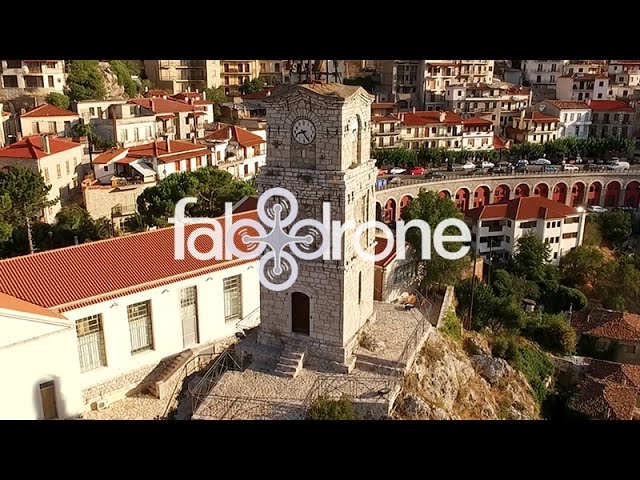

The road from Athens to Delphi threads through the ancient region of Boeotia and takes approximately 2.5–3 hours. Along the way, we pause for a comfort break and a photographic stop in Arachova.
Arachova is a strikingly picturesque mountain village cascading down the southern slopes of Parnassus. It occupies one of the most dramatic settings in all of Greece — a place where snow-dusted peaks meet Mediterranean warmth, and the panoramic views are simply unforgettable.
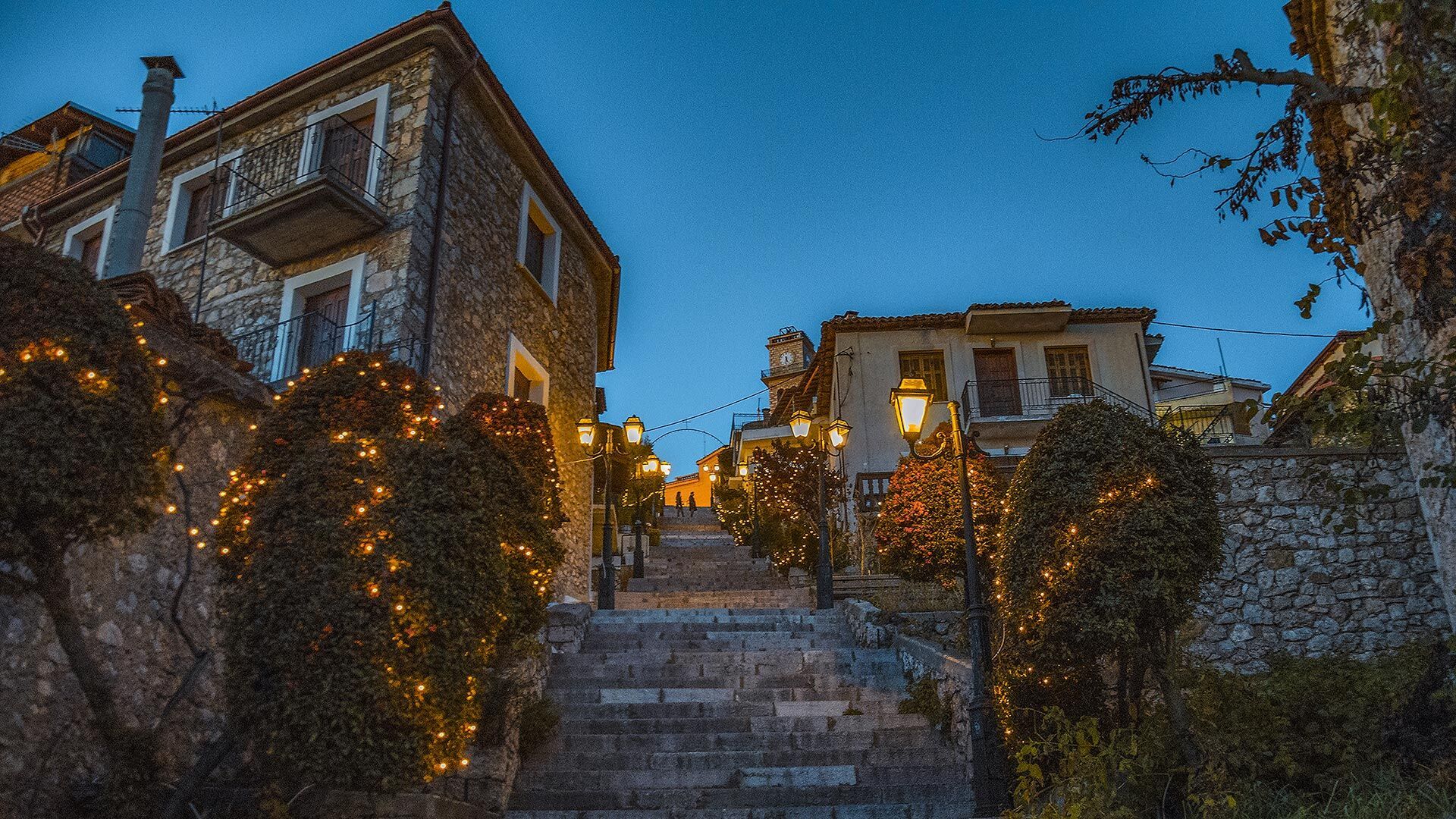
The stop in Arachova is an essential part of the experience: this is where you will capture the most memorable photographs of your trip, enjoy a quiet moment of rest, and absorb the timeless atmosphere of the Greek highlands.
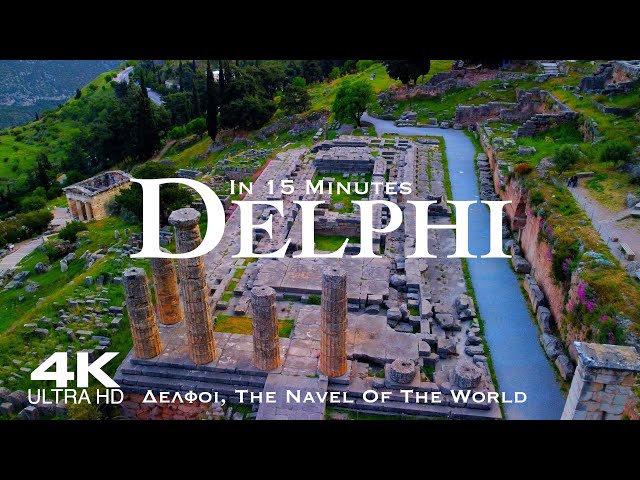
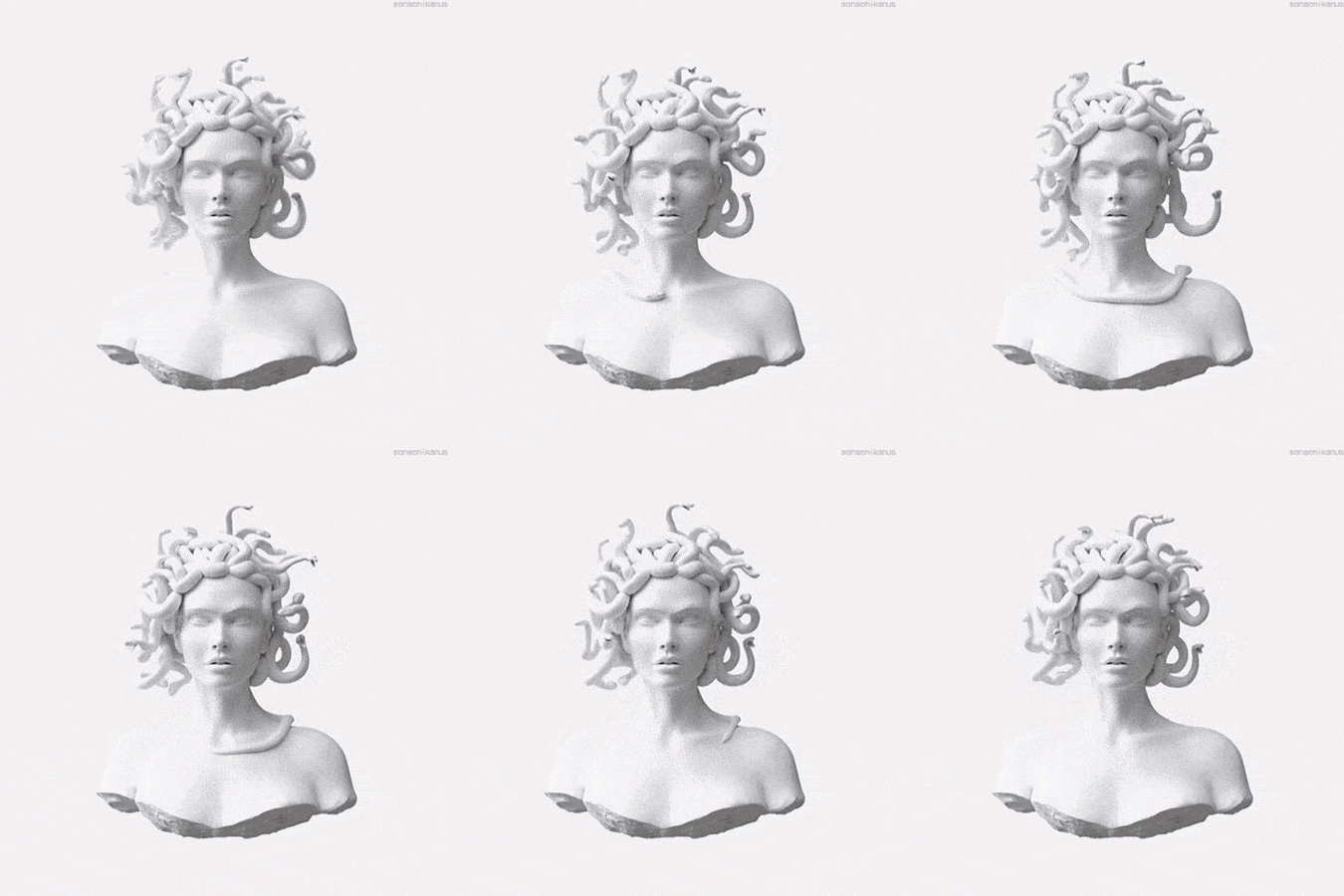
People have always yearned to know their future. It is an immutable law of human nature — as is the inability to make wise use of that knowledge once they have it.
The Pythia — the most influential woman in all of antiquity. Not a queen, not a general — a priestess. The sanctuary maintained two Pythias at any given time, with a third held in reserve. She prepared for each prophecy with a three-day fast and ritual bathing in the Castalian Spring. Before each consultation, she would don magnificent robes, place a laurel wreath upon her head, drink from the Kassotis Spring and chew a leaf of sacred laurel.
Kings and generals hung on her every word. Croesus of Lydia asked the Pythia whether he should wage war against Persia. Her response became one of the most famous riddles in all of history: "If you cross the river Halys, you will destroy a great empire." Croesus marched to war — and destroyed an empire indeed. His own.

Overcome by intoxicating vapours rising from a fissure in the rock, the Pythia would fall into a trance and prophesy. She uttered incoherent words — the priests then shaped them into verse and delivered them in deliberately vague, ambiguous phrases. Hence the expression "speaks like a Pythia" — cryptic, enigmatic, and yet strangely compelling.
Modern geologists have since confirmed that two fault lines do indeed intersect beneath the Temple of Apollo, releasing ethylene and methane gases. So the Pythia's ecstasy had a perfectly rational explanation. But does that make Delphi any less mysterious?
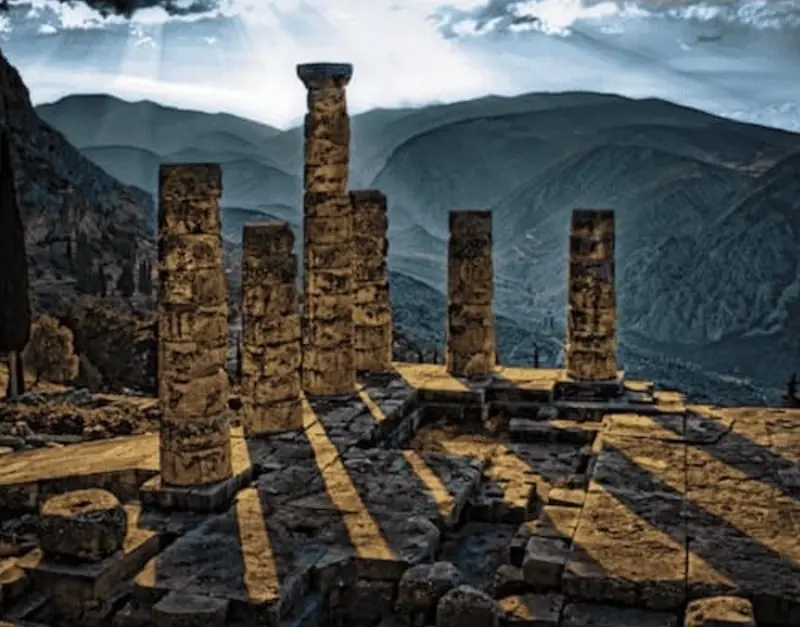
According to myth, the young god Apollo journeyed here to slay Python — a monstrous serpent born of Gaia. Python guarded the primordial oracle of the Earth Goddess. Apollo felled the beast with his arrows and founded his own sanctuary upon this very ground. The name "Delphi" derives from the word delphis — meaning womb — for this was considered the womb of the world.
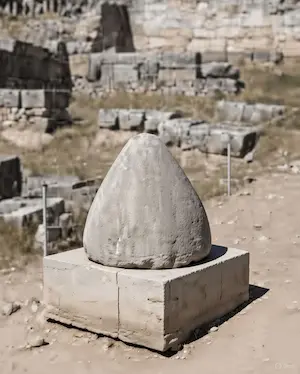
Here too stood the "Navel of the Earth" — the Omphalos. Zeus, wishing to determine the exact centre of the world, released two eagles from opposite ends of the cosmos, and they met precisely here, in Delphi. Then again, every great civilisation has fancied itself the centre of creation. We Greeks are certainly no exception.
The historical reality of Delphi is no less remarkable than its myths. The sanctuary flourished for over a thousand years — from the 8th century BC to the 4th century AD. In that time, Delphi evolved from a religious centre into the diplomatic capital of the Hellenic world. Peace treaties were signed here, sacred truces proclaimed for the Pythian Games, and rival city-states entrusted their treasuries to its sacred ground.
The Delphic Amphictyony — a league of twelve tribes — was one of the earliest international organisations in the history of civilisation. One might call it a forerunner of the United Nations — only three millennia ahead of its time. The oracle was ultimately silenced by the Roman Emperor Theodosius I in 394 AD, when he outlawed pagan worship. And yet, the spell of this place endures.

The tour begins at the Castalian Spring. The waters of this ancient mountain spring still issue from the rock face to this day and, according to legend, possess the power of renewal. For centuries, poets revered it as a wellspring of divine inspiration.
Having drunk from these storied waters, we proceed to the archaeological site itself.
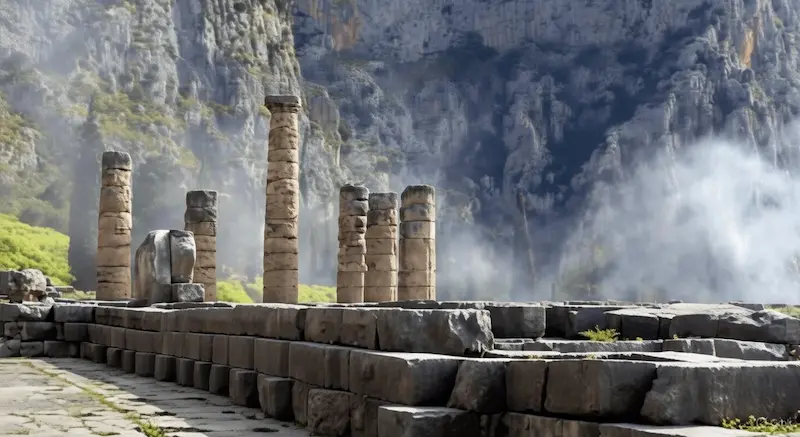
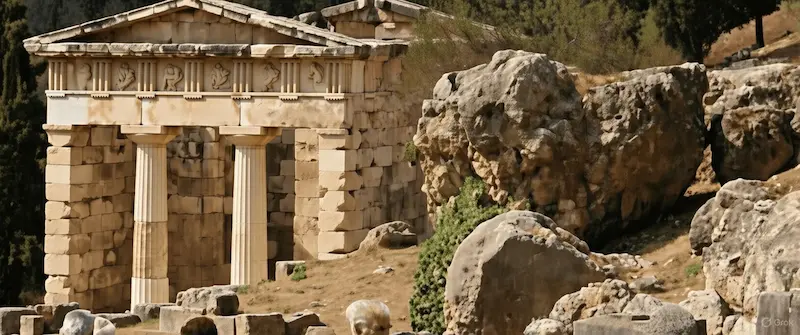
The Sacred Way served as the ancient world's grandest exhibition — a processional avenue lined with treasuries that rival city-states erected to display their wealth and glory before all of Greece. Many of these monuments were built to commemorate pivotal events in Hellenic history — so rather than merely telling you the story of Greece, I shall walk you through it.
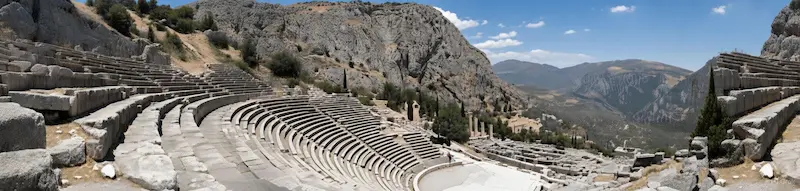
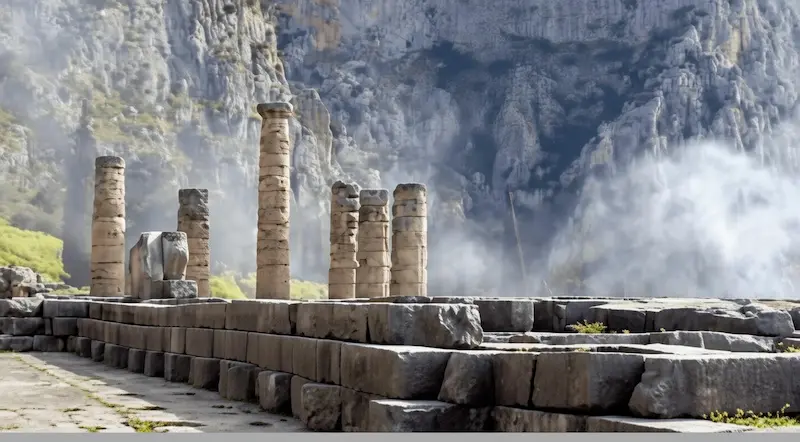
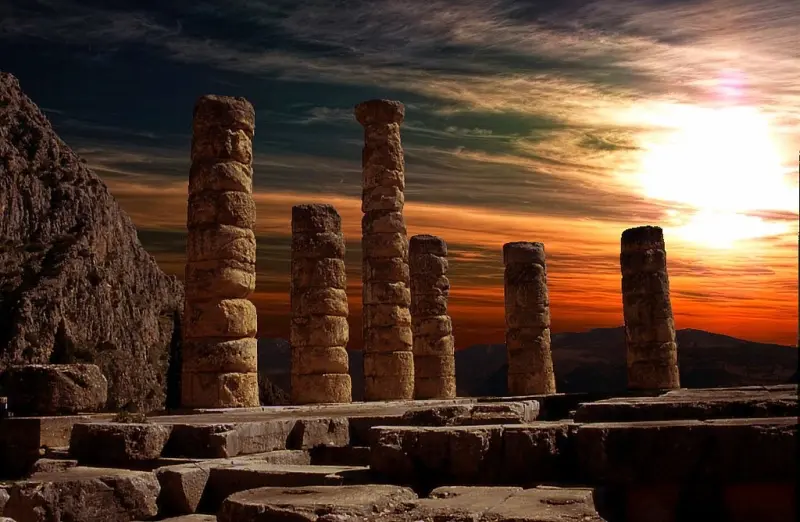
The Temple of Apollo — the very sanctum where the Pythia sat upon her tripod and delivered her oracles. Its walls once bore the inscribed maxims of Greece's most revered sages, including the celebrated "Know thyself" and "Nothing in excess." Set amphitheatrically among the sheer Phaedriades cliffs, commanding a sweeping panorama of the valley below, the temple commands a presence that has awed visitors for three millennia.
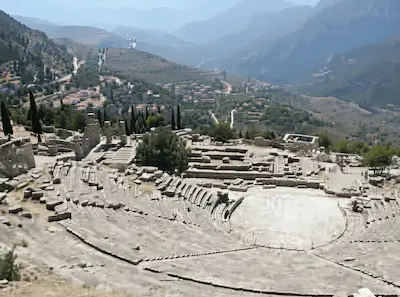
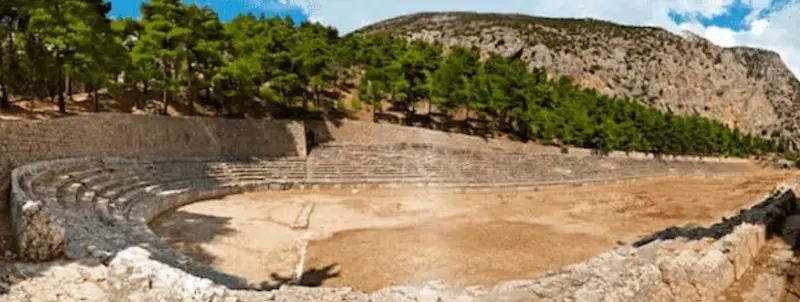
Higher still, the theatre and stadium await. The Delphi theatre, seating 5,000, continues to astound visitors with its extraordinary acoustics. And the stadium, perched at the very summit of the sanctuary, once hosted the Pythian Games — the most prestigious athletic competition in the ancient world after the Olympics.
If you have even the slightest appreciation for history, Delphi is a place you simply must experience in person.
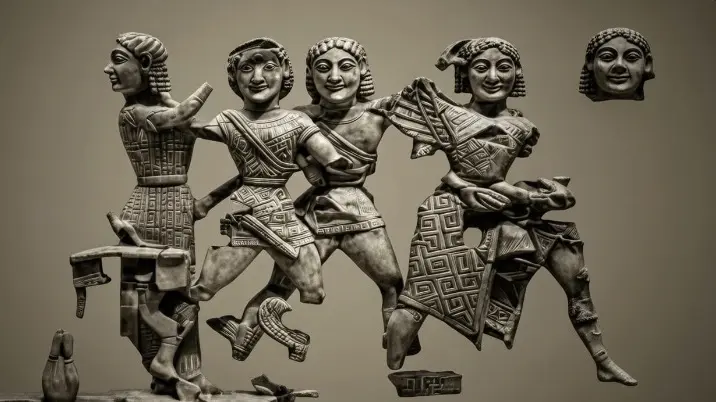
The Delphi Archaeological Museum ranks among the most significant in the world for the sheer quality of its holdings. Fortunately, Greece has never followed the practice of stripping provincial sites to fill a single centralised repository.
Civilisation in antiquity was inherently decentralised, and modern Greece honours that legacy by keeping artefacts as close to their origins as possible.
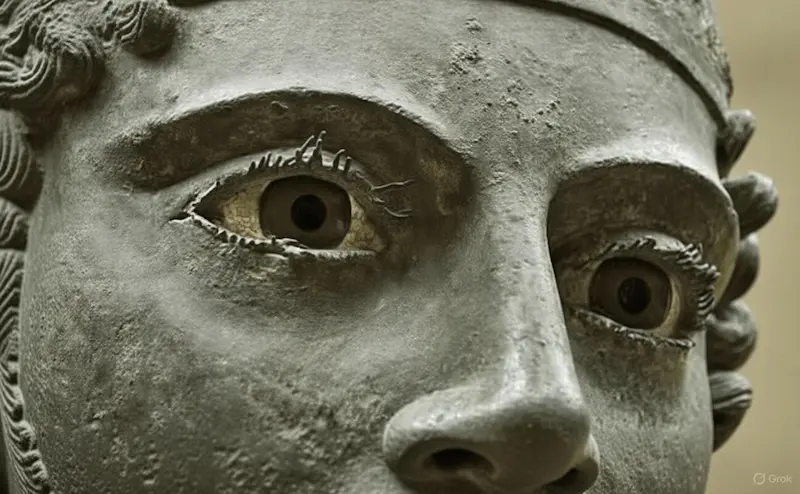
The museum houses priceless treasures: exquisite gold jewellery, monumental bronze statues, intricately carved treasury reliefs and fragments of temple pediments. Each hall is an immersion into the era when Delphi stood as the spiritual heart of the ancient world.
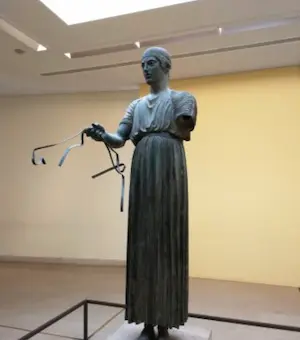
The crown jewel of the collection is the Charioteer of Delphi — a 5th-century BC bronze of such serene perfection that it could hold its own in any museum on earth. And yet here it stands, on Parnassus, exactly where it has always belonged.
You can read more about this magnificent statue on Wikipedia.
Concise and practical — everything you need to know before setting out for Delphi.
• Delphi (site + museum) — €20
• Children under 18 — free
• EU citizens under 25 — also free
• EU seniors (67+) — 50% discount
• Others — full price
• As a licensed guide, my entry is free — you don't need to pay for me!
The drive from Athens to Delphi takes 2–2.5 hours + a rest stop and a photo stop in Arachova.
Yes, you can. Delphi is a fascinating place for children, especially the story of the Pythia and the Oracle. Transfers are comfortable with stops. Children under 18 enter free with proof of age.
Arachova is a spectacularly beautiful mountain village on Mount Parnassus. The stop here is a highlight in its own right — the perfect place for photographs against a mountain backdrop and a leisurely coffee overlooking the valley.
My rates are very reasonable. To enquire, simply tap the option that suits you best
just bear in mind that roaming charges may apply
Click any photograph to view it at full size