الجولات في أثينا واليونان

Алексей Элпиадис гид экскурсовод Афины Греция

Алексей Элпиадис гид экскурсовод Афины Греция

Суббота, 14 февраля 2026 13:47

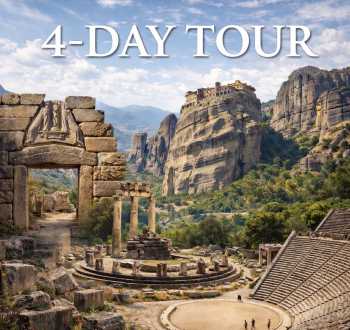
Grand Golden Ring of Hellas

Greece • 4 Days • from Athens

All of Greece in Four Days

Argolida, Olympia, Delphi and Meteora — four days, three thousand years of Greek history in one journey.

All of Greece in Four Days

Argolida · Olympia · Delphi · Meteora

4 Days / 3 Nights · Private tour from Athens

Tour Programme Overview

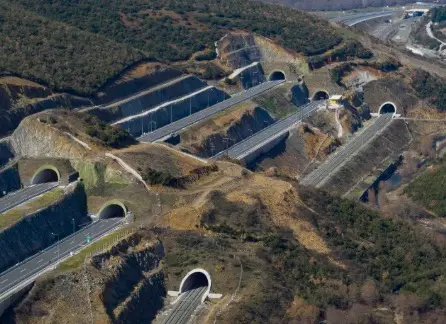
Corinth Canal

Corinth Canal — an artificial gorge 25 metres wide that separates the Peloponnese from the Greek mainland. The first stop on the tour.

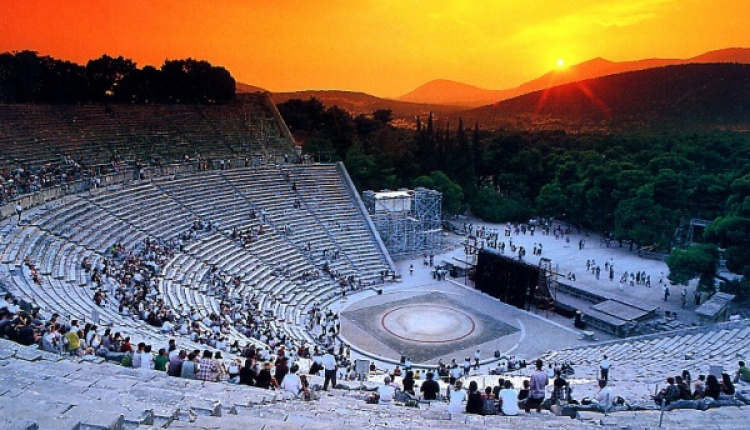
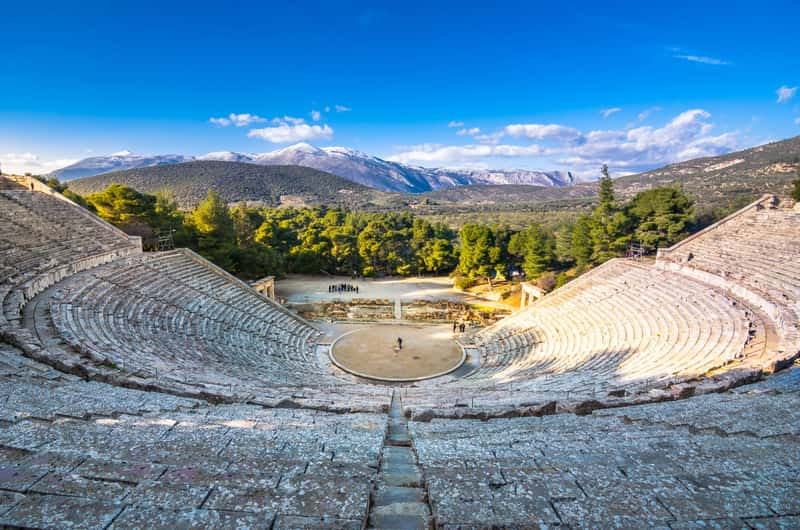
Theatre of Epidaurus

Epidaurus — an ancient theatre with perfect acoustics seating 14,000, where a whisper can be heard in the very last row.

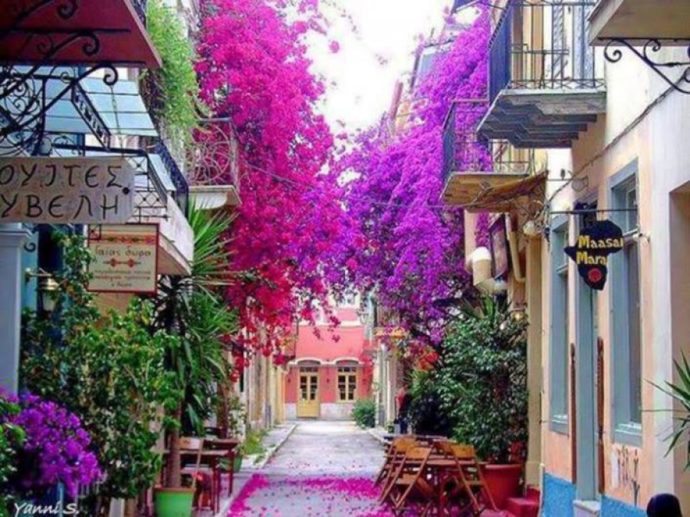
Nafplio — first capital of Greece

Nafplio — first capital of modern Greece, the Venetian fortress of Palamidi and a waterfront promenade overlooking the tiny island of Bourtzi.

Mycenae — Lion Gate

Mycenae — the citadel of Agamemnon with the Lion Gate, the Treasury of Atreus and the cradle of Mycenaean civilisation.
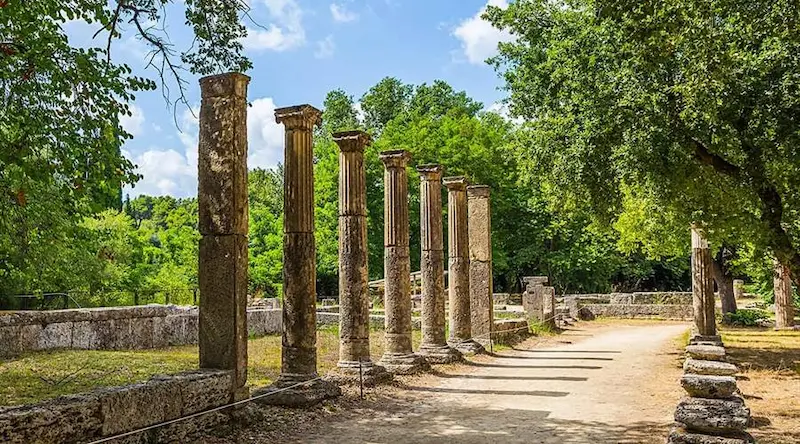
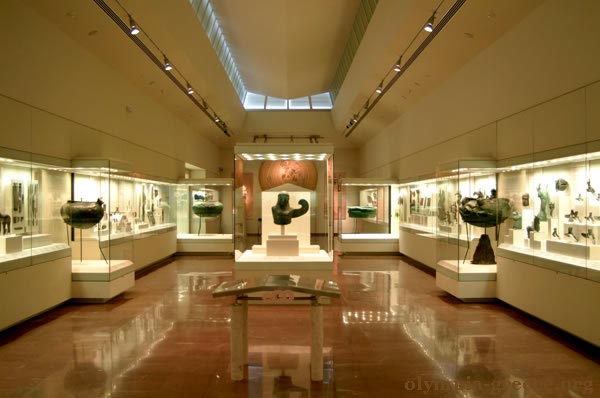
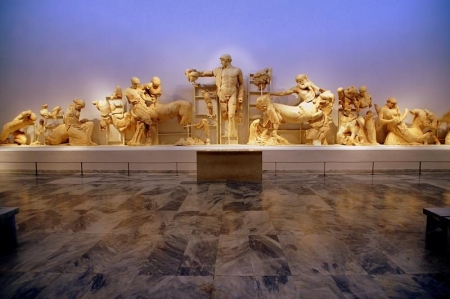
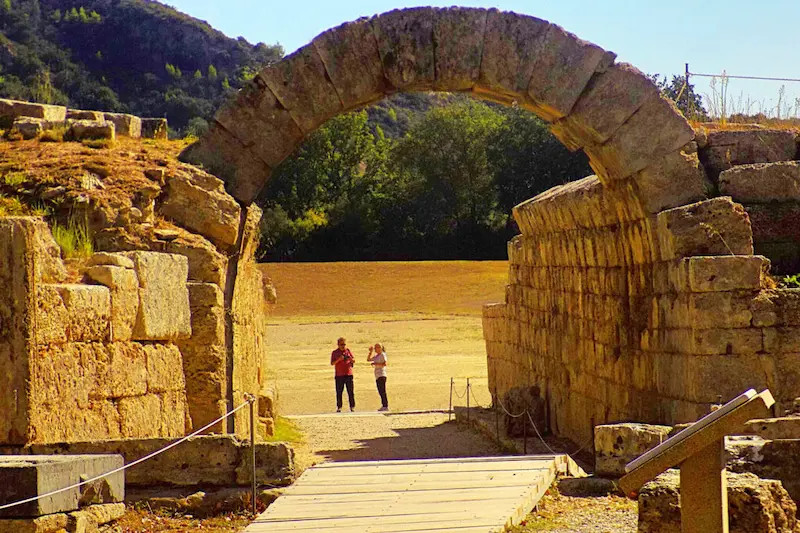
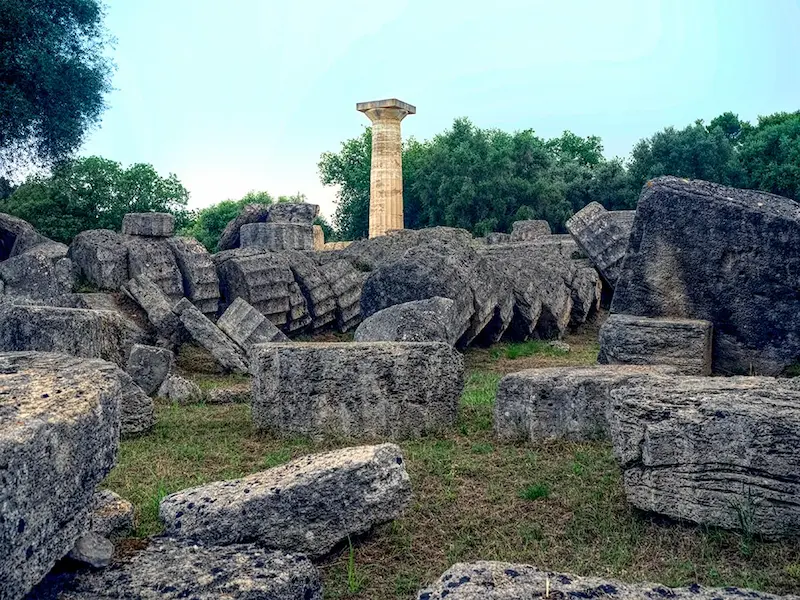
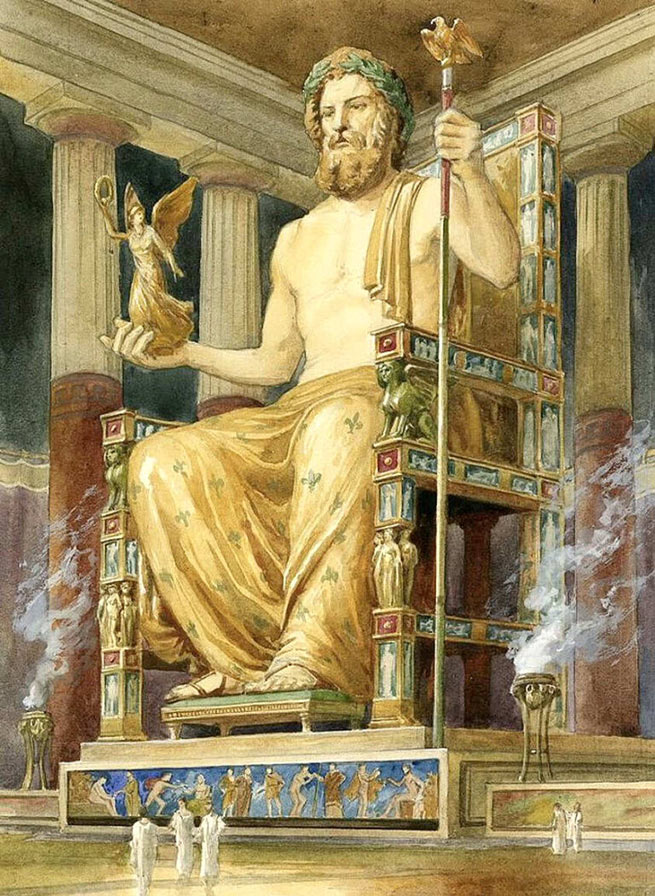
Ancient Olympia

Olympia — birthplace of the Olympic Games. Ruins of the Temple of Zeus, the stadium and the site where the Olympic flame is lit.
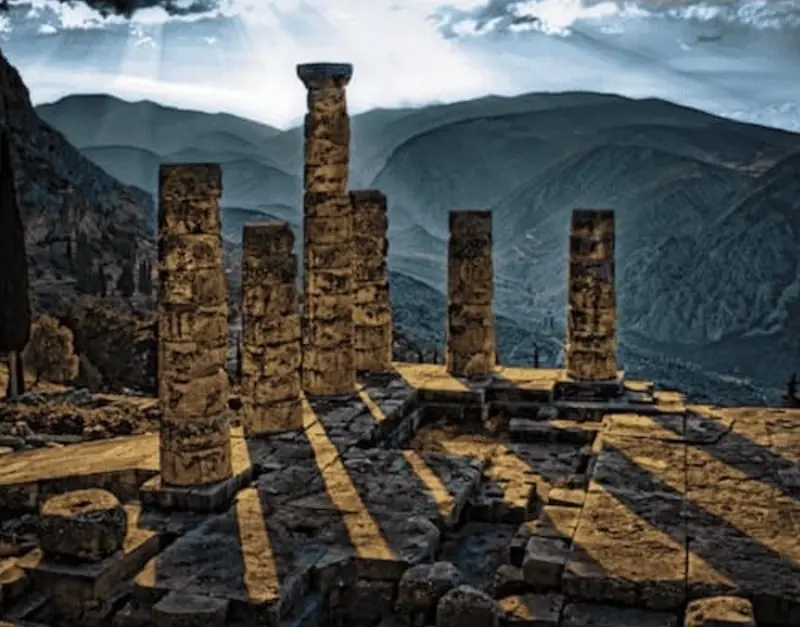
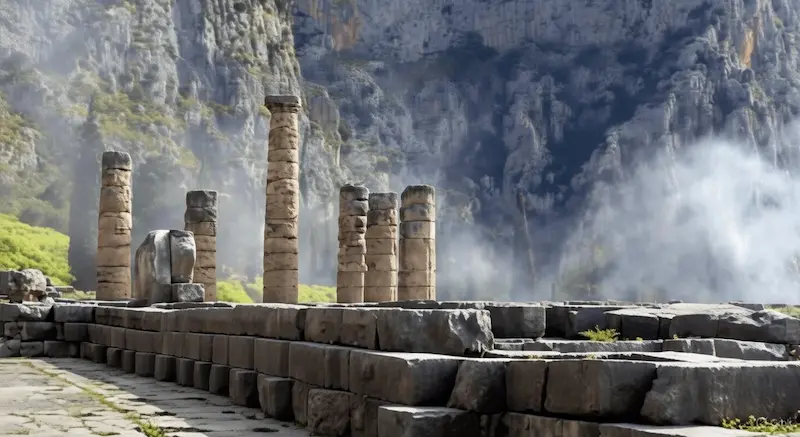
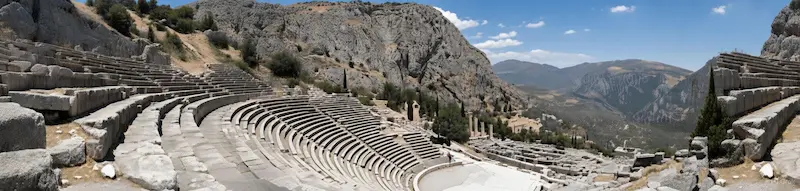
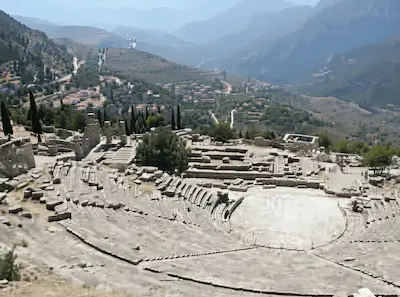
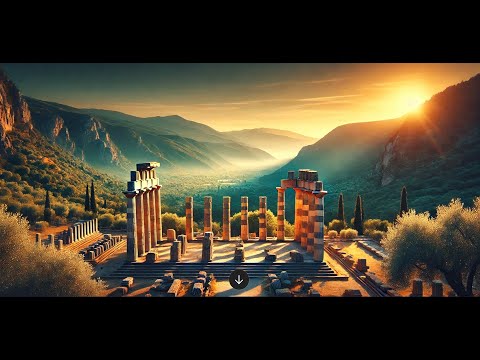
Delphi — Sanctuary of Apollo

Delphi — the sacred slope of Parnassus, where the Oracle of Apollo decided the fate of kings and entire nations.

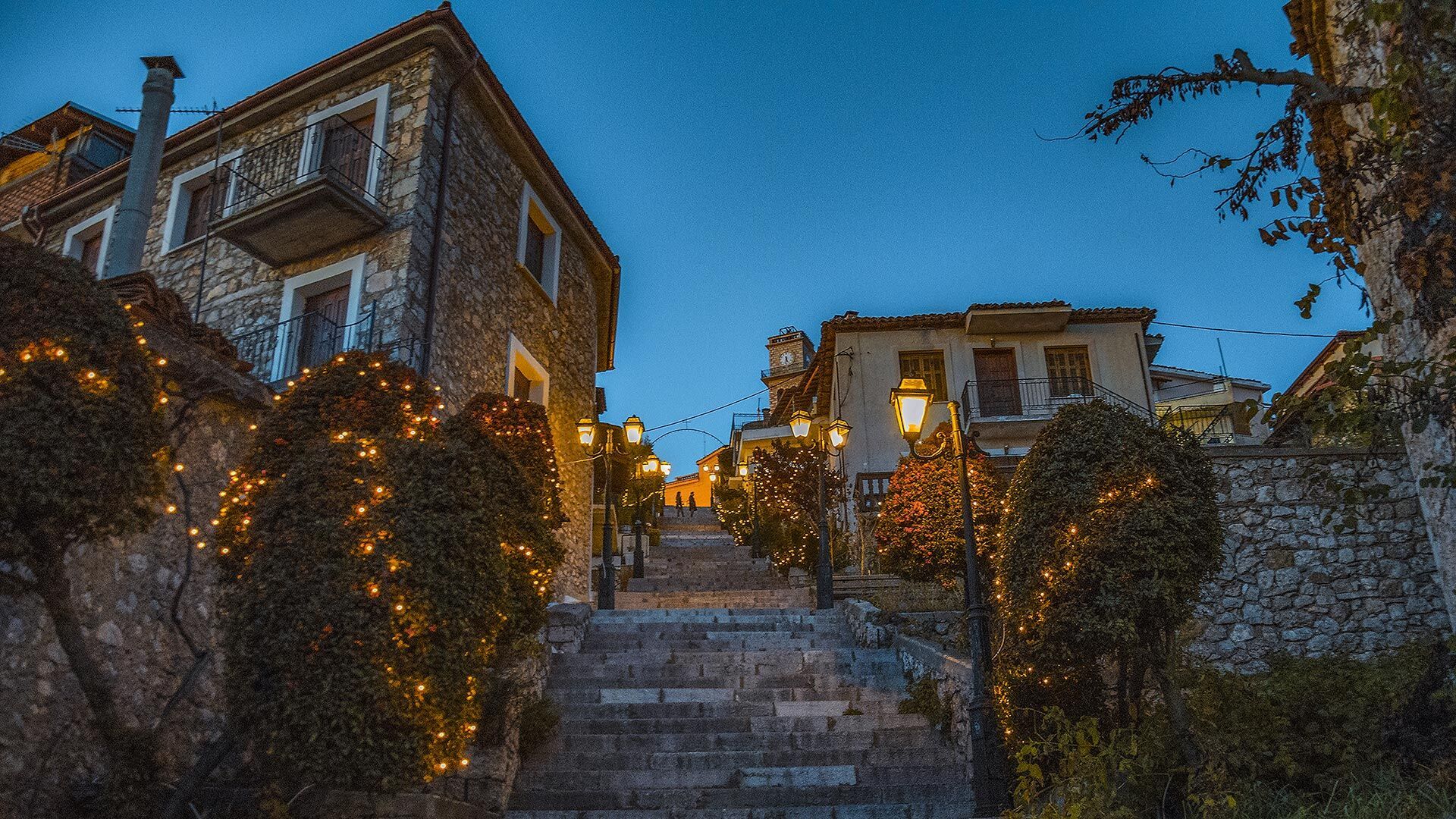
Kalambaka at night

Overnight beneath the rocks — in the evening Kalambaka transforms: illuminated Meteora rocks float in the darkness above the town. A taverna, local wine, silence — half the impressions of the tour.
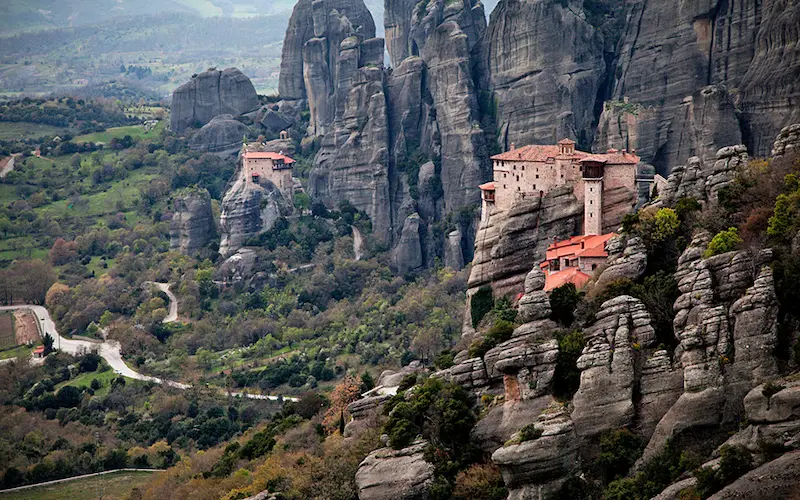
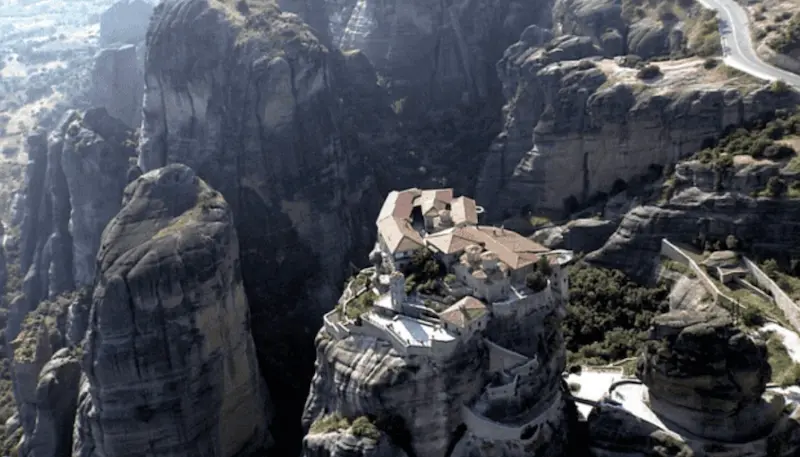
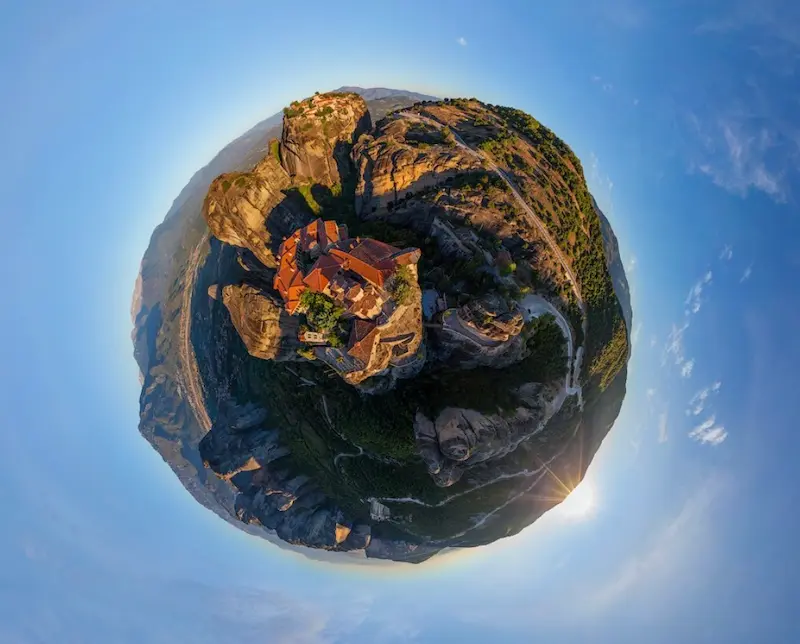
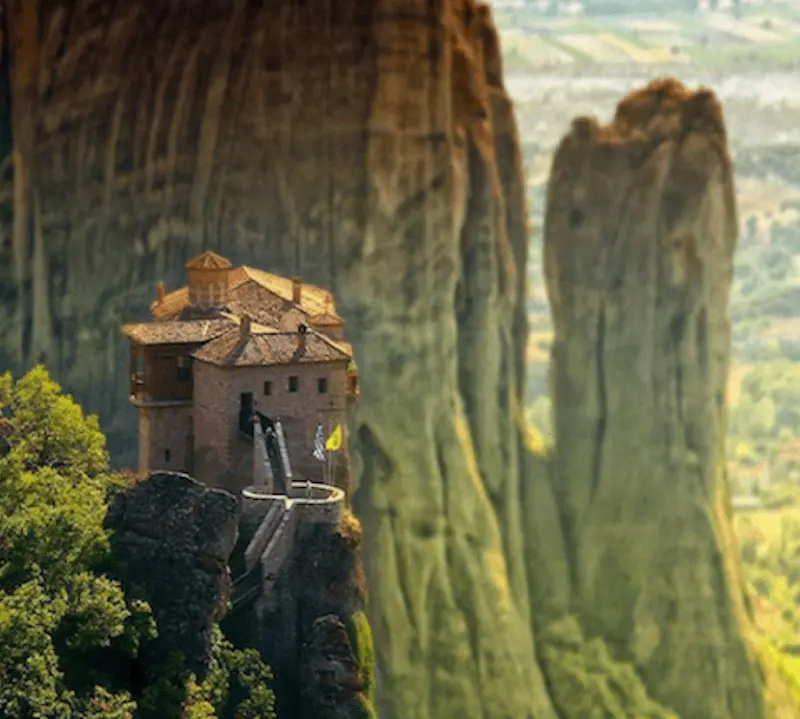
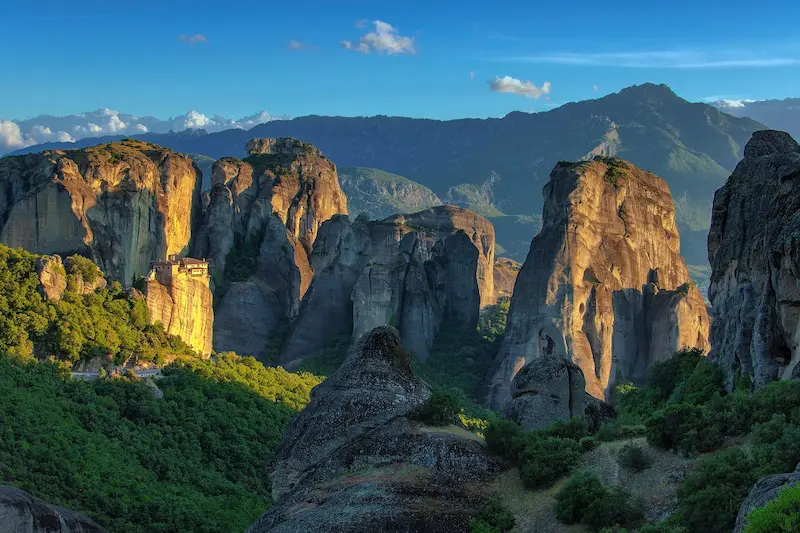
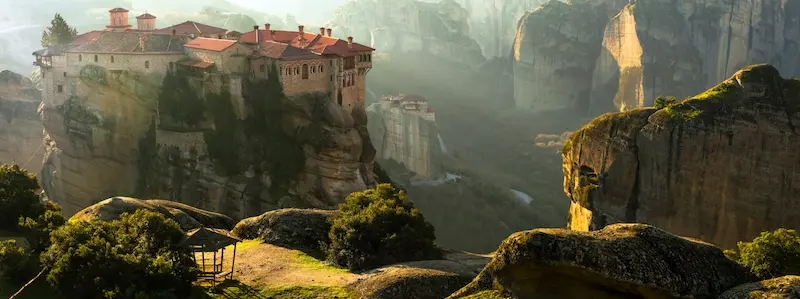
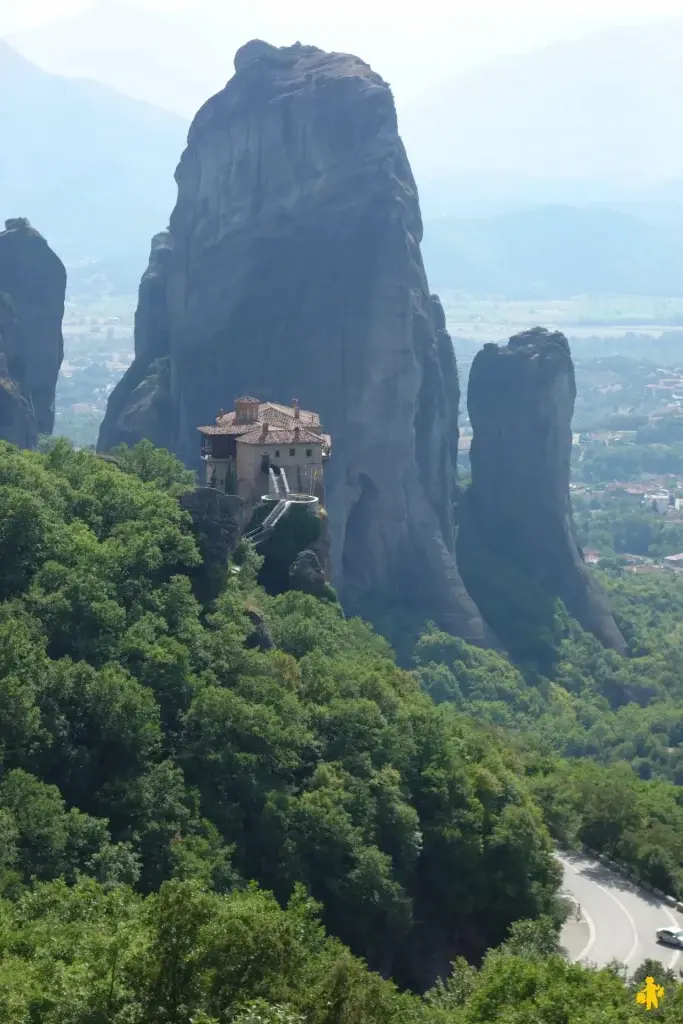
Meteora monasteries

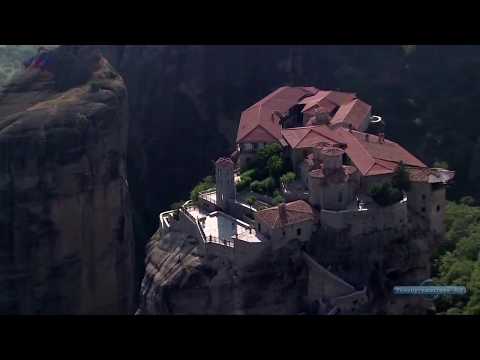
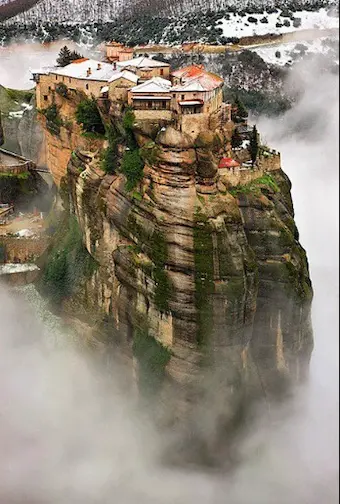
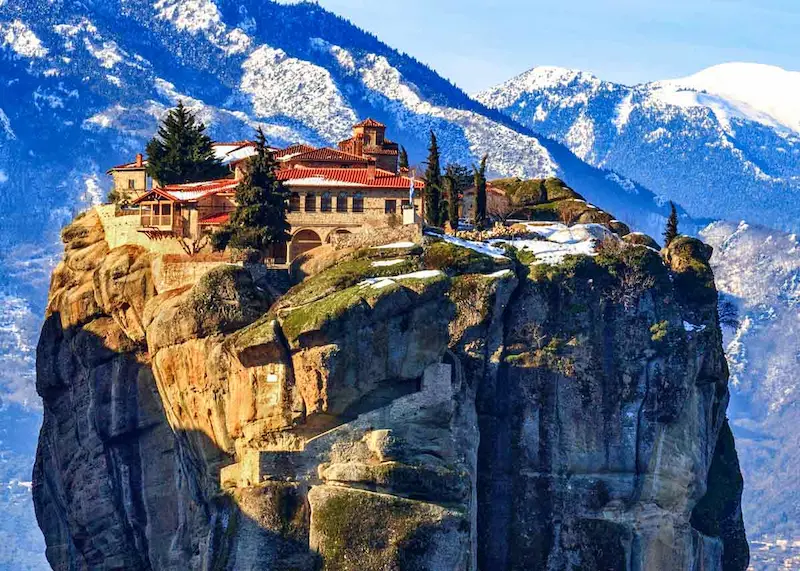
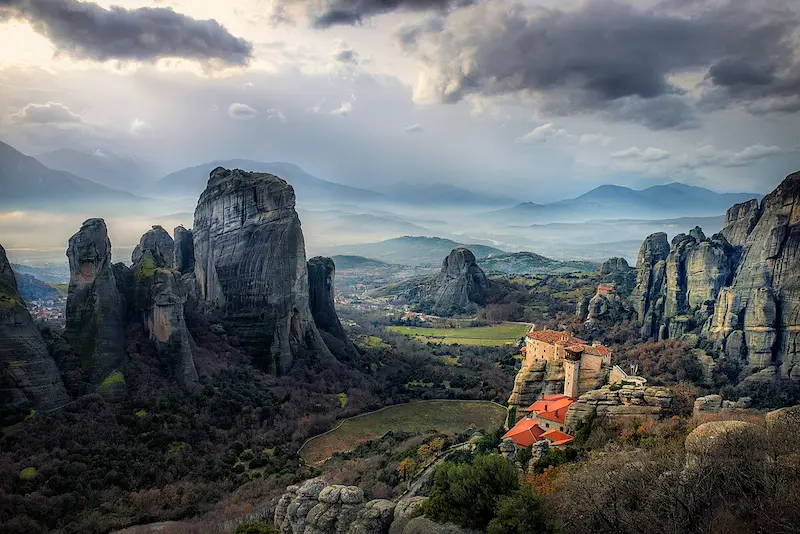
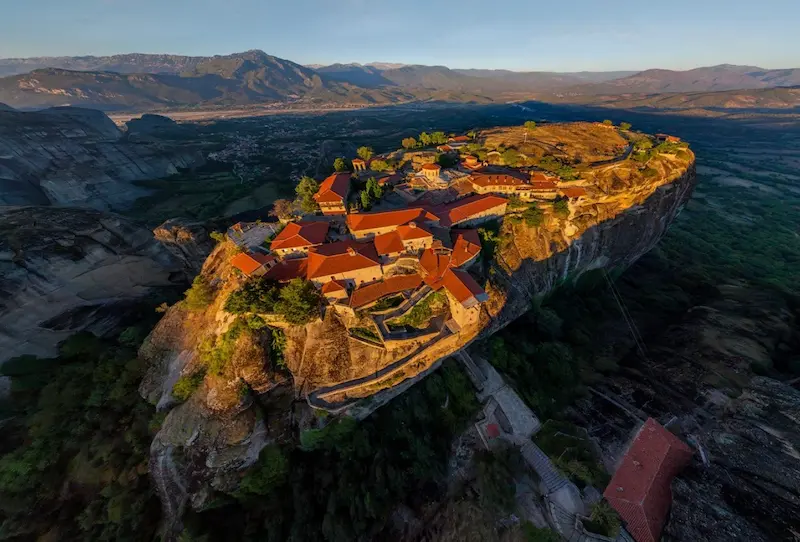
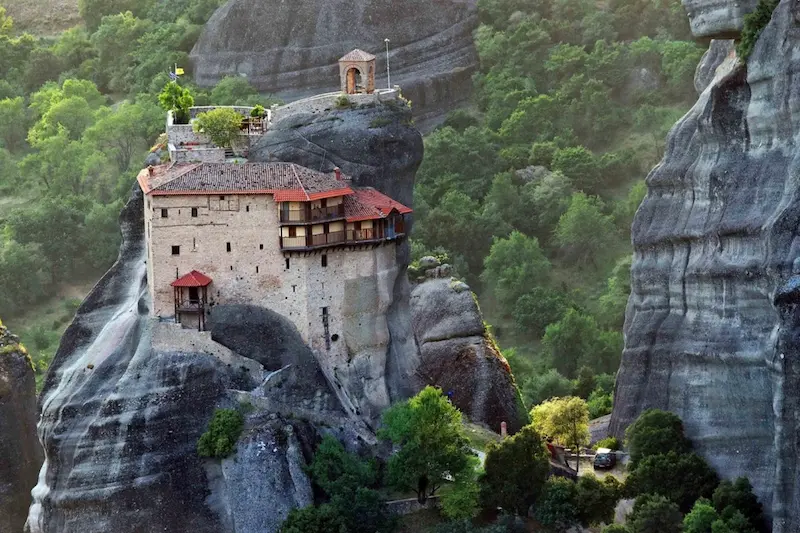
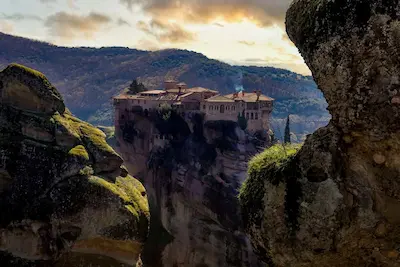
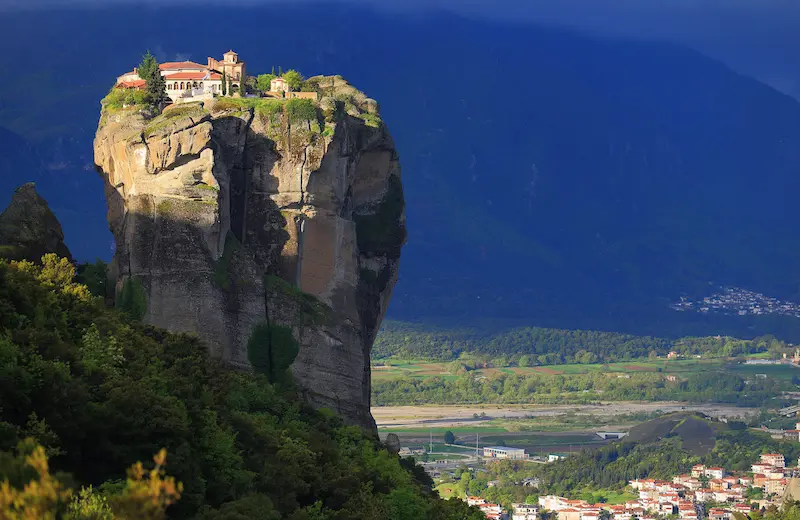
Meteora — six floating monasteries atop 400-metre-high rocks, between sky and earth.
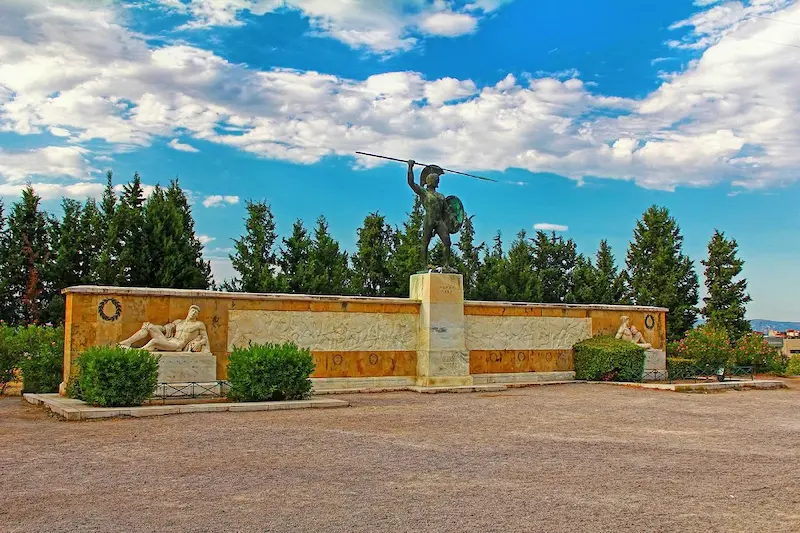
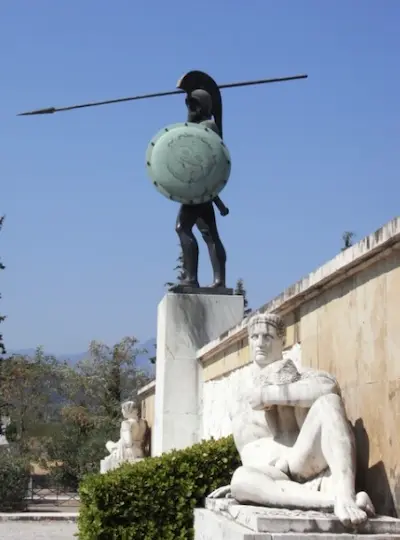
Thermopylae — monument to Leonidas

Thermopylae — the pass where 300 Spartans held off the army of Xerxes for three days.

Tour Format

4-day / 3-night road trip. I pick you up from your hotel in Athens — and bring you back. All logistics are on me: route, boutique hotel overnights, car for the entire programme.

🚗 Up to 4 people — Škoda Superb, a large sedan with a spacious cabin. Critically important on long tours.

🚐 Up to 7 people — Mercedes Viano.

🚌 Mehr als 7 — I will arrange a minibus.

We will discuss details by message — write to me in any way convenient:

Please mention in your message: how many people you are (children count too!) and which dates work for you. I will reply promptly with a ready quote.
Day 1 — Argolida
Corinth Canal · Epidaurus · Nafplio · Mycenae
Day 2 — Olympia
Ancient Olympia · Rio-Antirrio · Delphi
Day 3 — Delphi
Archaeological Site · Museum · Kalambaka
Day 4 — Meteora
Monasteries · Thermopylae · Return

Why Four Days

  • Sleep on site — be there first thing in the morning
    Every evening we sleep within walking distance of the next sights. A leisurely breakfast — and in 10–15 minutes we stroll through historical parks before the crowds arrive.
  • No marathon drives
    The route is planned so that no drive lasts more than 2–2.5 hours. None of that "6 hours in the car, 2 hours on site" — here it is the other way round.
Tour Route
☀️ Day 1 — Argolida
1
Athens → Corinth Canal
Drive ~ 1 hour
Stop: Photos on the bridge above the 80-metre canal chasm
2
Epidaurus
Drive ~ 45 min
Tour: Ancient theatre with perfect acoustics, Sanctuary of Asclepius
3
Nafplio
Drive ~ 30 min from Epidaurus
Walk: First capital of Greece, Palamidi Fortress, waterfront, Lunch at a seaside taverna
4
Mycenae
Drive ~ 30 min from Nafplio
Tour: Lion Gate, Citadel of Agamemnon, Treasury of Atreus
5
Mycenae → Olympia
Drive ~ 2.5 hours
Overnight: A cosy hotel near Ancient Olympia
🌿 Day 2 — Olympia
1
Ancient Olympia
On site ~ 3 hours
Tour: Stadium, Temple of Zeus, Olympic Flame site, archaeological museum
2
Lunch in Olympia
Taverna in the village — unhurried, properly
3
Rio-Antirrio Bridge → Delphi
Drive ~ 2.5 hours
En route: The longest cable-stayed bridge in Europe across the Gulf of Corinth
4
Overnight in Delphi
Overnight: Hotel overlooking the olive valley and the Gulf of Corinth. In the morning — Delphi is a short walk away
☀️ Day 3 — Delphi
1
Delphi
On site ~ 3–4 hours
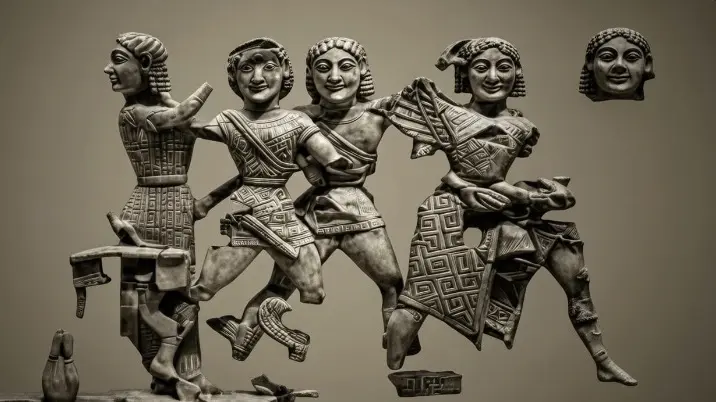
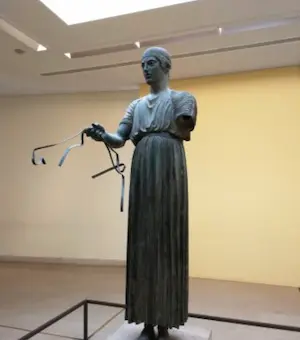
Tour: Sanctuary of Apollo, temple, theatre, stadium, Delphi Museum with the bronze Charioteer
2
Lunch in Delphi
Taverna overlooking the valley
3
Delphi → Kalambaka
Drive ~ 2 hours
Overnight: At the foot of Meteora — hotel with views of illuminated rocks. Evening at a taverna, local wine
🏔️ Day 4 — Meteora
1
Meteora
On site ~ 3–4 hours
Tour: 2–3 monasteries + viewpoints. Morning without crowds — day-trippers are still on their way
2
Meteora → Thermopylae
Drive ~ 1 hour
Stop: Monument to Leonidas and the 300 Spartans
3
Thermopylae → Kamena Vourla
Drive ~ 15 min
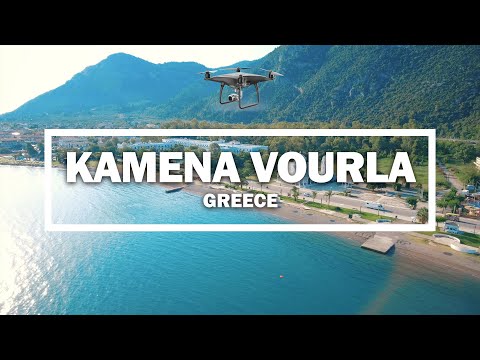
Stop: Coffee on the shore of the Aegean Sea
4
Kamena Vourla → Athens
Drive ~ 2 hours
Return: To the hotel by 18:00–19:00
Day 1 — Argolida
Corinth Canal · Epidaurus · Nafplio · Mycenae
Day 2 — Olympia
Ancient Olympia · Rio-Antirrio · Delphi
Day 3 — Delphi
Archaeological Site · Museum · Kalambaka
Day 4 — Meteora
Monasteries · Thermopylae · Return
~850 km • 8 Stops
Interactive Map
Athens → Argolida → Olympia → Delphi → Meteora → Athens
Open Map
Day 1 — Argolida Day 2 — Olympia Day 3 — Delphi Day 4 — Meteora

Frequently Asked Questions

Short and clear — everything you need to know before a four-day tour of Greece.

Epidaurus (theatre + museum) — 20 €

Mycenae (acropolis + museum) — €20

Olympia (complex + museum) — €20

Delphi (complex + museum) — €20

Meteora Monasteries — €5 per monastery


Children under 18 — free to all archaeological sites

EU citizens under 25 — free to all archaeological sites

For me as a licensed guide my entry is free — you don't need to pay for me!

Up to 3 adults (+ a child) — Škoda Superb, a sedan with a huge cabin. Critically important on long drives: you can cross your legs comfortably.

Up to 7 people — Mercedes Viano. More — a minibus.

Air conditioning Wi-Fi in the car Chilled water

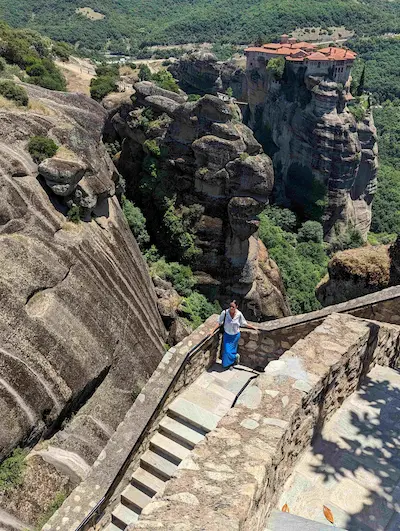
This is not mountaineering, it's a walk. At Epidaurus, Mycenae, Olympia and Delphi — gentle climbs through archaeological zones. At Meteora — an asphalt road with parking leads to every monastery, 3–5 min up stairs with railings.

I adjust the pace to you. Every place is about the experience, not a race.

At Epidaurus, Mycenae, Olympia and Delphi — there is no dress code, wear what you're comfortable in.

A dress code applies only at monasteries Meteora (Day 4):

Women

Skirt below the knees, shoulders covered

Men

Long trousers (no shorts)

Skirts are provided at monasteries, but trousers for men are mandatory — they are not provided.

Yes. Mycenae — the story of Agamemnon and the Trojan War. Olympia — birthplace of the Olympic Games, you can run the stadion in the ancient stadium. Delphi — the story of the Pythia and the oracle. Meteora — literally floating monasteries. Children love it.

The road is broken up with stops, climbs are short — a format comfortable for the whole family. Children under 18 enter all archaeological sites free.

Day 1: Lunch in Nafplio — taverna on the waterfront with a view of Bourtzi fortress.

Day 2: Lunch in Olympia or on the way to Delphi.

Day 3: Lunch in Delphi — traditional mountain cuisine.

Day 4: Lunch at a taverna at the foot of the Meteora rocks or in Kamena Vourla by the sea.

15–25 € per person · Lunch is not included in the price

The tour begins not at the entrance to the archaeological site but already in the car. During drives I tell the story of the places we're heading to — so you arrive prepared and see not just stones but a whole civilisation.

As a licensed tour guide, I enter all archaeological sites with you and conduct full tours on site — Epidaurus, Mycenae, Olympia, Delphi, Meteora.

After each tour — Free time for photos, independent walks and simply soaking up the atmosphere. I always adjust the pace to you.

Night 1: Olympia — a cosy hotel near the archaeological site.

Night 2: Delphi — a hotel overlooking the olive valley and the Gulf of Corinth.

Night 3: Kalambaka — a hotel at the foot of the Meteora rocks. In the evening the illuminated rocks float in the darkness above the town.

I select tried-and-tested hotels with good reviews. Booking is up to you, but I will help with the choice.

Foto
✦ Ask about prices
Contact Alex
For an accurate quote please write: how many people (children count too), when you arrive (at least the month) and which tour interests you.

Tap a button to start a chat — you don't need to save my number first

Подробнее ...
Суббота, 14 февраля 2026 13:45

Delphi — Meteora 2 days

Greece • 2 days • from Athens

Delphi + Meteora: Two-Day Tour

Oracles, cliff-top monasteries and 300 Spartans — two days, after which you will tell entirely different stories about Greece.

Tour Programme Overview

Arachova — mountain village

Arachova — on the way to Delphi, a stone village at 950 metres where morning coffee is served with a view over the bottomless gorge of Parnassus.

Delphi — Sanctuary of Apollo

Delphi — the sacred slope of Parnassus where the Oracle of Apollo determined the fates of kings and entire nations.

Kalambaka at night — view of the Meteora rocks

Kalambaka — overnight beneath the rocks. We arrive in the evening and rest.

Monasteries of Meteora on the cliffs

Meteora — six floating monasteries atop 400-metre cliffs, suspended between sky and earth.

Thermopylae — monument to Leonidas

Thermopylae — the pass where 300 Spartans held back the army of Xerxes for three days.

Kamena Vourla — coffee on the Aegean shore

Kamena Vourla — a coffee stop on the shore of the Aegean Sea on the way home.

Tour Format

I pick you up from your Athens hotel and bring you back. All logistics are on me: route, overnight in a boutique hotel beneath the Meteora rocks, the car throughout the programme. The pace is adapted to you. Both places are about the experience, not the race.

🚗 Up to 4 people — Škoda Superb, a large sedan with a spacious cabin. Critically important on long drives: you can stretch out comfortably.

🚐 Up to 7 people — Mercedes Viano.

🚌 More than 7 — I will arrange a minibus.

We can discuss the details by message — write to me in any convenient way:

how many of you there are (children count too!), which dates suit you, what accommodation — single, double or triple rooms. I will reply with a ready-made itinerary.

There is also a day trip to Delphi and a day trip to Meteora — if two days don't work out.

~850 km • 8 stops
Interactive Map
Athens → Delphi → Meteora → Thermopylae → Athens
Open Map
Delphi Kalambaka Meteora Thermopylae
~400 km • 4 stops
Day 1 — Delphi
Athens → Arachova → Delphi → Kalambaka
More about Day 1
Arachova Delphi Kalambaka
~310 km • 5 stops
Day 2 — Meteora
Meteora → Thermopylae → Kamena Vourla → Athens
More about Day 2
Meteora Thermopylae Kamena Vourla Athens

Why Two Days

Day trips to Delphi or Meteora do exist. But here is what you lose:

  • Without fatigue
    A day trip is 6 hours in the car and 3 on site. Here it's the other way round.
  • Evening in Kalambaka
    Illuminated rocks, a taverna, local wine. This is not a "bonus" — it is half the experience.
  • Morning Meteora
    Without crowds or fatigue. Morning coffee at the hotel — and in 15 minutes we are at Meteora. Day-trippers never see this.
  • Delphi — the Navel of the Earth
    On the way to the top of the world (Meteora) we call at its centre — the sanctuary where the gods spoke with mortals.
Tour Route
☀️ Day 1 — Delphi
1
Athens → Arachova
Drive ~ 2 hours Via the motorway through Boeotia
Stop: Coffee with a view of Parnassus in a stone mountain village
2
Delphi
Drive ~ 15 min from Arachova
On site ~ 3 hours: Sanctuary, Temple of Apollo, theatre, stadium, museum
3
Lunch
Taverna in Delphi
4
Delphi → Kalambaka
Drive ~ 2 hours
Overnight: At the foot of Meteora in a comfortable hotel in Kalambaka with a view of the illuminated cliffs
🏔️ Day 2 — Meteora
1
Meteora
On site ~ 3–4 hours
On site: 1–2–3 monasteries + viewpoints
2
Lunch in Kalambaka
Taverna with a view of the rocks
3
Thermopylae
120 km · ~1 hour from Meteora
Stop: Monument to Leonidas and the 300 Spartans
4
Kamena Vourla
15 km · ~15 min from Thermopylae
Stop: Coffee on the shore of the Aegean Sea
5
Kamena Vourla → Athens
~175 km · ~2 hours
Return: Return to hotel by 18:00–19:00

Frequently Asked Questions

Short and clear — everything you need to know before a two-day trip to Delphi and Meteora.

Delphi (complex + museum) — €20

Monasteries of Meteora — €5 per monastery


Children under 18 — free entry to Delphi

EU citizens under 25 — free entry to Delphi

Me as a licensed guide I enter free — you don't need to pay for me!

Up to 3 adults (+ a child) — Škoda Superb, a sedan with a huge cabin. Critically important on long drives: you can stretch outout comfortably.

Up to 7 people — Mercedes Viano. More — a minibus.

Air conditioning Wi-Fi in the car Water from the fridge

This is not mountaineering, it is a stroll. At Delphi — a gentle ascent through the archaeological site. At Meteora — to each monastery an asphalt road with parking leads, the climb is 3–5 minutes up a staircase with railings.

I adjust the pace to you. Both places are not about rushing — they are about the experience.

Women

Skirt below the knee, shoulders covered

Men

Long trousers (no shorts)

Skirts are provided at the monasteries, but trousers for men are mandatory — they are not provided.

Yes. Delphi is the story of the Oracle and the Pythia — children find it fascinating. Meteora is literally a fairy tale: monasteries atop cliffs, staircases to the sky, views that make even adults forget about their phones.

The drive is broken up by stops, the climbs are short — the format is comfortable for the whole family. Children under 18 enter Delphi free of charge.

Day 1: Lunch in Arachova or Delphi — traditional mountain cuisine.

Day 2: Lunch at a taverna at the foot of the Meteora rocks — moussaka, lamb, fresh salads, local wine.

15–25 € per person · lunch not included

Usually 1–3 monasteries — this is enough for a deep, unhurried impression. The choice depends on your preferences. I will select the optimal combination in advance.

Arachova is a picturesque mountain town on Parnassus. Its name derives from the Slavic Orekhovo. A stop is a must — this is the ideal spot for a photo session with mountain views and for a short rest before Delphi.

Photos
✦ Get Prices

Подробнее ...
Суббота, 14 февраля 2026 13:44

One-Day Cruise

Gallery
1 / 7

|

Cruise Route
Cruise ship
Day itinerary

Three jewels of the Saronic Gulf in a single day — sea, islands, lunch and a folk show on board a three-deck cruise ship. ⛵

Hydra — an island without a single engine, where donkeys serve as taxis and stone mansions recall the admirals of the War of Independence. Poros — a green islet with lemon groves, pine forests and the ruins of the Temple of Poseidon, where Demosthenes took poison. Aegina — the first capital of free Greece, birthplace of Europe's first coin and the finest pistachios in the world.

1
Hotel → Piraeus
07:00–07:30 Transfer from hotel
A bus will collect you directly from your Athens hotel. Ship departs Piraeus at 8:00.
2
Island of Poros
10:30–11:30 ~50 min on the island
First island: An hour's walk along the colourful waterfront, ruins of the Temple of Poseidon, lemon groves.
3
Island of Hydra
13:00–14:30 1.5 hours on the island
Bohemian island without cars: Walks, donkey-taxis, photos against the bastions. Even Angelina Jolie once rode a donkey here.
4
Lunch on board + Island of Aegina
15:00–18:00 Lunch + 2 hours on Aegina
Lunch included: Traditional Greek lunch on board. During the crossing — a cultural programme with live music.
Aegina: A mythical island — pistachios, the Temple of Aphaia, the Monastery of St Nectarios. The longest stop — time to explore and to swim.
5
Piraeus → Hotel
18:00–19:30 Folk show + transfer
Return: Folk show with sirtaki and Greek dancing. Transfer back to your hotel.
Interactive route map
Piraeus → Poros → Hydra → Aegina → Piraeus
with stops, travel times and live weather
Open map
A full-day cruise · ~12 hours
Cruise ship — Saronic Gulf

A three-deck vessel with air-conditioned salons, a spacious sun deck and panoramic windows on every level.

The lower deck houses the restaurant where lunch is served. The middle deck has salons with bars, Wi-Fi, a boutique and a live orchestra that plays from early morning. The upper deck is an open sun deck with a bar and lounging areas, from which all three islands and the Peloponnese coast are visible.

Departure from port at 8:00 · Poros ~50 min · Hydra ~1.5 h · Aegina ~2 h · Return ~19:30

Page navigation
Map button (right) — interactive route map with stops, weather and animation
Menu button (also on the right) — table of contents for quick navigation
Tours Menu (on the left) — other tours from Athens

Below — a detailed look at each island with photos and video.
Enjoy the virtual journey!

Read moreShow less
The Island of Poros
Pine trees down to the water, lemons and the shadow of Poseidon
A tiny green island separated from the Peloponnese by a narrow strait — so close you can almost hear the mainland whisper. ▶ Watch the video presentation
Poros video
Poros
Poros
Read moreShow less
Poros — waterfront and sea

In antiquity the island was called Kalavria and was sacred to Poseidon, god of the seas. On its summit stood a temple, the ruins of which are visible to this day. It was here that the great orator Demosthenes fled, when Macedonian assassins came for him. Taking refuge in the sanctuary, he drank poison — and the Temple of Poseidon became the site of his final words.

Poros — lemon groves

During the Greek uprising of 1821, Poros became the base of the rebel fleet, and after victory — the first naval base of free Greece. On the island rests Captain Frank Hastings — an English philhellene who commanded the Karteria, the first steam-powered warship in world history. After Byron, the most famous foreigner to give his life for the freedom of Greece.

Poros — lemon groves

Today's Poros is pine trees descending to the water's edge, the famous Limonodásos — a grove of 30,000 lemon and orange trees — and a waterfront from which the Peloponnese is visible at arm's length. Climb to the clock tower on the hill: from there the entire island lies before you like a palm, and the strait between Poros and the mainland resembles a river.

The Island of Hydra
The island where time stands still
Not a single car, not a single motorcycle. Only stone mansions, donkeys and the sound of waves against the quay. ▶ Watch the video presentation
Hydra video
Island of Hydra
Island of Hydra
Read moreShow less
Hydra — waterfront and yachts

When the ship enters the harbour of Hydra, you realise — this is not just an island but a film set in which you have been cast as the lead. An amphitheatre of stone mansions rises from the water up the hillside, and every house is a monument to the era when Hydra was "little England." By the early 19th century, so many wealthy shipowners lived on this tiny island that their fleet comprised two-thirds of all the ships in Greece.

Hydra — mansions and architecture

In 1821 those ships went to war. The Hydriots outfitted fire ships — kamikaze vessels that set the Turkish fleet ablaze. Admiral Andreas Miaoulis and Captain Konstantinos Kanaris became national heroes. After victory the island emptied — merchants departed for Piraeus, captains settled in Athens. But what remained were six monasteries, over 300 churches and mansions for which collectors from around the world compete today.

Donkeys on Hydra

The cardinal rule of Hydra — no motors whatsoever. No cars, no motorcycles, not even bicycles. Goods are carried by donkey, and everyone walks — from Hollywood stars to local fishermen. A sightseeing ride on a donkey takes about 50 minutes and is worth every second. Over the years these lanes have been walked by Leonard Cohen, who wrote his finest songs here, Sophia Loren, Brigitte Bardot and Audrey Hepburn.

Hydra — harbour and yachts

It is said that even Angelina Jolie once rode a donkey here — and the donkey was later nicknamed Brad Pitt. Keep an eye on the time — at the quay there are clocks showing the ship's departure time. Hydra does not let go easily, but the ship will not wait.

On Board: Lunch and Sirtaki
Buffet, bouzouki and Greek dancing in the middle of the sea
Between islands the ship becomes a floating festival — live music, dancing and Mediterranean cuisine.
Read moreShow less
Buffet — Mediterranean cuisine

After Hydra, the ship lays out a buffet lunch — already included in the cruise price. Salads with olive oil, moussaka, pastitsio, fresh fish, grilled vegetables, rice, pasta and desserts — everything you need to understand why Mediterranean cuisine is on the UNESCO Intangible Heritage list. Drinks are charged separately: wine, beer, cocktails and coffee can be ordered at bars on every deck.

Live music — bouzouki

From the morning the deck resounds with live bouzouki. Musicians play folk melodies, rebetiko and, of course, that famous Mikis Theodorakis theme from Zorba the Greek. On the return leg the performers go all out — a folk show with dances from different regions of Greece: the Cretan pentozali, the island kalamatianos, the Pontic serra. The climax — a collective sirtaki, when the entire deck links shoulders and dances together.

Dancing on deck — sirtaki

Sirtaki, incidentally, is not an ancient dance at all — it was invented for the 1964 film. Anthony Quinn had broken his leg before filming and could not jump, so choreographer Giorgos Provias composed a dance with sliding steps, which begin slowly and accelerate to a frantic pace. The Greeks so loved this "Hollywood invention" that they made it their own a national symbol. Do not be shy — in sirtaki there are no "right" or "wrong" steps, only kefi — the Greek joy of living.

The Island of Aegina
The first capital, the first coin, the finest pistachios
An island named after Zeus’s beloved, where Europe’s first coins were minted and where pistachios grow that exist nowhere else. ▶ Watch the video presentation
Aegina video
Aegina
Aegina
Read moreShow less
Aegina — panorama

According to myth, Zeus abducted the beautiful nymph Aegina, taking the form of fire, and carried her to this island. Here she bore Aeacus — a future king so just that after death the gods appointed him judge in the realm of the dead. The island was formerly called Oenone, but the nymph's name proved stronger.

Myth of Aegina

The jealous Hera poisoned the island's water and the people of Aegina perished. King Aeacus fell to his knees before the sacred oak of Zeus and prayed: "Grant me as many subjects as there are ants upon this tree." By morning the island was filled with people — the Myrmidons, "ant warriors." The very Myrmidons whom Achilles would later command beneath the walls of Troy.

Aegina — Myth of the Myrmidons

In the 6th century BC Aegina became a trading superpower and the first European polis to mint its own coinage — a silver "tortoise." Despite an eternal rivalry with Athens, in 480 BC Aeginetan triremes stood alongside Athenian ones at the Battle of Salamis and helped rout the fleet of Xerxes. And in 1827 Aegina became the first capital of free Greece — here sat the government of Kapodistrias and the first newspapers of the new state were printed.

Aegina — historical sites

On Aegina two optional excursions are offered (≈20 €). The first — to the Temple of Aphaia, one of the best-preserved Doric temples in Greece, built on a hilltop overlooking three seas after the victory at Salamis. The second — to the Monastery of St Nectarios, one of the largest in Greece, where the head of the saint is kept. Nectarios of Aegina is the most revered Greek saint 20th century.

Aegina — beach and swimming

And finally — pistachios. Aegina pistachios are unlike any other: smaller, more vivid and more fragrant. The trees were brought to the island by St Nectarios himself, and they thrived so successfully that today "Aegina pistachios" are a brand known throughout Greece. Buy a bag on the waterfront — and try not to eat them all before returning to the ship. On Aegina you can also swim — the perfect end to the day before the journey back to Athens.

Frequently Asked Questions

Answers to frequently asked questions about the three-island cruise

Yes, it is included. A bus will collect you directly from your Athens hotel at 7:00–7:30 in the morning. After the cruise, upon return to Piraeus (~19:30), a transfer back to your hotel will be arranged.

Yes, ideal for families. The cruise is extremely popular with families. Everything needed is on board, the programme is varied, and the islands appeal to adults and children alike.

Lunch is included in the price. A buffet is laid out on board with a wide selection of Greek dishes: salads, hot courses, side dishes, desserts. Drinks (wine, beer, cocktails, coffee) are charged separately at bars on every deck.

Yes, there is plenty of time.

Poros: 1 hour — waterfront walk

Hydra: 1.5 hours — donkeys or on foot

Aegina: 2 hours — walking, swimming, excursion

Cruise price

Write to me — I will calculate the price and find a convenient date.

Message me

and a chat will open instantly — no need to save my number first

If you prefer good old Email
And if you still believe phones were made for conversation ?

do bear in mind that roaming charges can bite

© 2026 Alexis Elpiadis — Tour Guide in Athens & Greece
elpiadis.com
✦ Get Prices

Подробнее ...
Суббота, 14 февраля 2026 13:43

Yacht to Paradise (day trip)

Gallery
1 / 7

|

Yacht cruise to Aegina and Moni Island
Cruise Route
Yacht cruise
Cruise Route

A yacht cruise: secluded coves, a seaside village and an uninhabited nature reserve. ⛵

↓ Below — a detailed itinerary with travel times

1
Hotel → Marina
09:00–10:00 Transfer and departure
Transfer from hotel to the marina. Meeting the skipper, a brief safety briefing — and we set sail.
2
Coves of Aegina
11:30–12:30 Swimming and snorkelling
Secluded coves: Swimming and snorkelling in crystal-clear water. Coves accessible only from the sea.
3
Village of Agia Marina
13:00–14:00 Lunch and a walk
Lunch at a taverna: Fresh seafood, salads, wine by the sea. A stroll through the village, the Monastery of St Nectarios.
4
Moni Island — a nature paradise
14:30–16:30 Uninhabited island
Wild animals: Goats, deer, peacocks — accustomed to people and happy to take treats from your hand.
Walking and swimming: Hiking trails with panoramic views, swimming straight off the yacht.
5
Return to Athens
19:30–20:00 Return to Athens
Return: Arrival at the Athens marina by evening.
Interactive route map
Athens → Coves of Aegina → Agia Marina → Moni Island → Athens
with stops, travel times and weather
Open map
A full-day cruise · ~9-10 hours
Yacht cruise

The yacht has cabins for changing, a toilet, fresh water for rinsing, a spacious deck for relaxation, a sun awning, a ladder for entering the water and snorkelling gear. When the wind is favourable, one can sail under canvas.

Departure from the marina at 9–10 AM · Coves of Aegina · Agia Marina · Moni Island · Return ~20:00

Page navigation
Map button (on the right) — interactive route map with stops, weather and animation
Menu button (also on the right) — table of contents for quick navigation
Tours Menu (on the left) — other tours from Athens

Below — a detailed look at each island with photos and video.
Enjoy the virtual journey!

Read moreShow less
The Island of Aegina
Coves, history, myths and pistachios
One of the most ancient centres of Greek history — Europe's first coins, myths of Zeus and bathing in coves accessible only from the sea. ▶ Watch the video presentation
Read moreShow less
Aegina — coves and nature

Aegina is not simply an island. It is one of the most ancient and significant centres of Greek history. In the 7th century BC Aegina became the first Greek polis to mint silver coins. According to myth, Zeus abducted the nymph Aegina and carried her to this island, where she bore Aeacus — one of the judges of the underworld.

Secluded coves of Aegina

The first stop on Aegina is at one of the secluded coves accessible only from the sea. The yacht drops anchor in a calm lagoon: crystal-clear water with visibility all the way to the bottom, pine trees descending to the water’s edge providing natural shade and the scent of resin, smooth rocks ideal for diving, and utter silence — only the lapping of waves and the cry of seagulls.

Village of Agia Marina

After a rest on the water we head to the little village of Agia Marina (“Saint Marina”). White houses alternate with green hills descending to the sea, and the streets are awash with flowers. Lunch at a taverna — fresh seafood, salads, chilled white wine and the sound of the surf. Optionally — the Monastery of Saint Nectarios, one of Greece’s most revered pilgrimage sites.

Aegina — myth of Zeus

According to myth, Zeus abducted the beautiful nymph Aegina, taking the form of fire, and carried her to this island. Here she bore Aeacus — a future king so just that after death the gods appointed him judge in the realm of the dead. The island was formerly called Oenone, but the nymph’s name proved stronger.

Myth of Aegina

The jealous Hera poisoned the island’s water and the people of Aegina perished. King Aeacus fell to his knees before the sacred oak of Zeus and prayed: “Grant me as many subjects as there are ants upon this tree.” By morning the island was filled with people — Myrmidons, “ant warriors.” The very Myrmidons whom Achilles would later command beneath the walls of Troy.

Aegina — history and Myrmidons

In the 6th century BC Aegina became a trading superpower and the first European polis to mint its own coinage — a silver “tortoise.” Despite an eternal rivalry with Athens, in 480 BC Aeginetan triremes stood alongside Athenian ones at the Battle of Salamis and helped rout the fleet of Xerxes. And in 1827 Aegina became the first capital of free Greece — here sat the government of Kapodistrias and the first newspapers of the new state were printed.

The Island of Moni
An uninhabited reserve and paradise
The divine island of Moni — a place you will remember as a trip to paradise. Wild goats, deer and peacocks. ▶ Watch the video presentation
Read moreShow less
Moni Island — panorama

The island’s name, “Moni” translates as “monastery.” It belongs to the Monastery of Chrysoleontissa on Aegina. In Greek the word “monastery” means solitude — and this uninhabited island embodies the very idea of seclusion amid divine nature.

Wild animals on Moni Island

The only permanent inhabitants of this reserve are wild animals and birds: goats roam freely across the island, deer are the graceful inhabitants of the forests, peacocks fan their tails in the sun. They are so accustomed to visitors that they take food straight from your hand. Bring carrots and apples!

Moni Island — nature and beaches

Hiking enthusiasts can climb to the highest point of the island, from which stunning panoramic views open across the entire Saronic Gulf. The trail passes through a pine forest — the walk takes about 40 minutes.

Swimming off the yacht near Moni

The alternative to walking — swimming straight off the yacht in the crystal-clear waters off the shore of Moni. The water is so transparent that the bottom is visible at a depth of several metres. On Moni time flows differently. No cars, no noise, no bustle — only nature, the sea and silence.

The Yacht and Conditions
Comfort on the water and what is included
A sailing yacht, captain, snorkelling gear, drinks — everything for a perfect day on the water. ▶ Watch the video presentation
Read moreShow less
Sailing yacht

The cruise takes place on a sailing yacht of medium size, equipped for a comfortable day on the water. When the wind is favourable, one can sail under canvas — a special pleasure. The yacht has cabins for changing, a toilet, fresh water for rinsing, a spacious deck for relaxation, a sun awning, a ladder for entering the water and snorkelling gear.

Swimming off the yacht

Included in the price: yacht charter with captain/crew, fuel and all port fees, snorkelling gear (masks, snorkels), drinking water and soft drinks, insurance. Lunch in Agia Marina is paid separately — expect €15–25 per person.

On board the yacht

What to bring: swimwear, a towel, sun cream, a hat, comfortable shoes for walking on the island, a camera, cash for lunch and souvenirs. Carrots and apples — for the wild animals on Moni!

Frequently Asked Questions

Answers to hourfrequently asked questions about the yacht cruise

The cruise takes place on a sailing yacht 12–15 metres in length, accommodating 6–10 passengers. On board: a cabin for changing, toilet, fresh water, sun awning, a ladder for entering the water. The captain is licensed and experienced.

Yes, children are usually delighted! They especially enjoy the island of Moni with its wild animals. Life jackets in appropriate sizes are available for children. We recommend recommended age is 6 and above.

Included: drinking water and soft drinks on board. Lunch is paid separately in Agia Marina — expect €15–25 per person. The yacht has a refrigerator.

Yacht cruise price

Write to me with your preferred dates and group size — I will calculate the price and find a convenient date.

Message me

and a chat will open instantly — no need to save my number first

If you prefer good old Email
And if you still believe phones were made for conversation ?

do bear in mind that roaming charges can bite

© 2026 Alexis Elpiadis — Tour Guide in Athens & Greece
elpiadis.com
✦ Get Prices

Подробнее ...
Суббота, 14 февраля 2026 13:42

Olympia

Gallery
1 / 18

|

Tour Route
Corinth Canal
Day itinerary

Ancient Olympia — birthplace Olympic Games — the main destination of this tour. The site where, in 776 BC, a tradition began, that united the entire Greek world. Here, to this day, the Olympic flame is lit.

En route: Corinth Canal — a cut between two seas, 80 metres above turquoise water. At Olympia: archaeological site with the Temple of Zeus and the first Olympic stadium; archaeological museum with unique exhibits, including the original Hermes by Praxiteles. The new motorway (2026) has cut the drive to 2.5–3 hours from the previous 4–5.
1
Athens → Corinth Canal
Transfer ~ 1 hour Along the comfortable motorway
Commentary en route: The Battle of Salamis — the greatest Greek victory over the Persians. We pass the island of Salamis and the district of Eleusis
+ On site: A walk across the pedestrian bridge over the canal — 80 metres above turquoise water, a view where two seas meet, and time for photographs
2
Corinth Canal → Ancient Olympia
Transfer ~ 1,5 hours New motorway across the Peloponnese (2026)
Commentary en route: The history of the Peloponnese — from the ancient Mycenaeans to modern Greece. We cross the centre of the peninsula, past mountain ridges and olive groves
Comfort stop: Halfway — a 15–20 minute break for rest and coffee
3
Ancient Olympia — archaeological site & museum
On site ~ 3 hours Archaeological site + museum with guided tour
Archaeological site: Temple of Zeus (one of the Seven Wonders), the first Olympic stadium, the site where the Olympic flame is lit, gymnasium and palaestra
Museum: Hermes of Praxiteles (original IV c. BC), pediments of the Temple of Zeus, Nike of Paionios — masterpieces of world calibre
4
Lunch at Olympia
Rest ~ 1–1,5 hours Greek taverna with local cuisine
5
Olympia → Athens
Transfer ~ 2.5–3 hours Return to your hotel via the motorway
En route: Comfort stop halfway. On the way back — most passengers doze: the mind is busy digesting Olympia
Tour Route ~580 km
Weather along the route
Athens
...
1Athens
2Corinth Canal
3Olympia
Tap to open interactive map
Duration
11–12 hours

This is a private full-day tour — after each stop you will have free time for photographs and exploring on your own.

The new motorway (2026) has cut the journey to Olympia considerably — the drive now takes 2.5–3 hours instead of the previous 4–5. This is transforms the feel of the day: there is time and energy left for Olympia itself.

The one-hour range (11–12) reflects your free time at Olympia and at lunch. You set the pace — this has no bearing on the tour price.

Below — a closer look at each stop
Read moreShow less
Road to the Corinth Canal
~1 hour along the motorway through history
The Battle of Salamis, the myth of Procrustes and the boundary of two worlds — Attica and the Peloponnese.
BBC: Battle of Salamis
Read moreShow less
Road to the Corinth Canal

Road to the Corinthian Canal — roughly an hour along the comfortable motorway. But this is not merely a transfer — it is a journey through the key waypoints of Greek history. To the left — the Saronic Gulf with the silhouette of the island Salamis. It was here, in 480 BC, that the Greek fleet under Themistocles routed the armada of the Persian king Xerxes. Three hundred Greek triremes against a thousand Persian ships — and a victory that altered the course of world history. Had it not been for Salamis, there would have been neither Plato nor Aristotle, nor the Greece we are on our way to see.

Procrustean bed

Closer to the Canal, we pass the places where, according to myth, there lived Procrustes — the brigand who laid travellers on his bed and "adjusted" them to fit: the tall had their legs lopped off, the short were stretched. He lived on the border of Attica and Corinthia — precisely where we are driving. Theseus killed him by the same method — laid him on his own bed.

The philosophical subtext of the myth runs deeper than it appears: Procrustes is a metaphor for standardisation. Anyone who tries to force living reality into rigid frameworks, sooner or later finds himself on his own bed of standards. The Greeks knew how to package wisdom in stories — and this one remains relevant to this day.

The Corinth Canal
A 19th-century engineering marvel — 6 km, 80 metres deep
6 kilometres, 80 metres deep, 2,500 years of history — from dream to realisation.
Corinth Canal
Corinth Canal
Read moreShow less
Corinth Canal

Corinth Canal — a dream 2,500 years old. The first to conceive it was the tyrant Periander in the 7th century BC, but he retreated before the scale of the undertaking. Julius Caesar planned the construction, Caligula dispatched engineers to survey the site, while Nero in AD 67 personally drove a golden spade into the earth and ordered 6,000 Jewish prisoners to begin the work. But the emperor was murdered within a year, and the project was abandoned. For the next eighteen centuries ships sailed around Peloponnese — an extra 700 kilometres. The modern canal was cut by French engineers in 1881–1893, and it remains one of the narrowest navigable canals in the world: just 25 metres wide at a depth of 8 metres.

View on Corinth Canal

The canal cuts through the Isthmus of Corinth for 6.3 kilometres, and the sheer limestone walls plunge 80 metres — a spectacle at once majestic and vertiginous. Today the canal handles roughly 11,000 vessels a year, but large container ships and tankers cannot fit — its economic significance has given way to the touristic. You can bungee jump here from the bridge at 80 metres, or cruise by boat between walls that seem to close above your head.

Pedestrian bridge over Corinth Canal

We stop at the pedestrian bridge — the only vantage point from which one can stand above the chasm and absorb the scale of what lies below. Beneath your feet — 80 metres of void, turquoise water of the canal and, if luck is with you, a yacht passing below that from this height looks like a toy. Walls of golden limestone stretching into the distance in perfectly parallel lines, and on the horizon the waters of two seas merge — the Aegean and the Ionian. This is the quintessential "postcard" view of Greece, but no photograph conveys the sensation, when you stand on the edge and feel the wind from the gorge. There will be time here to take photographs, breathe the sea air and simply stand in silence above this marvel of engineering.

The Road to Olympia
Along the Corinthian Gulf past the Rio-Antirrio bridge
180 km along the scenic motorway hugging the northern coast of the Peloponnese. En route — Patras and a view of the longest cable-stayed bridge in Europe.
The Rio-Antirrio Bridge
Read moreShow less
Coast of the Corinthian Gulf

From the Corinthian Canal we head west along the A8 motorway, which stretches along the northern coast of the Peloponnese. To the right — the turquoise waters of the Corinthian Gulf, to the left — mountains and olive groves. This is one of the most scenic stretches of the Greek motorway system. The gulf narrows to the west, and the opposite shore — mainland Greece seems ever closer.

The Rio-Antirrio bridge

The Rio-Antirrio bridge — an engineering marvel of the 21st century. 2,883 metres across the sea, four pylons 230 metres tall, seabed depth 65 metres. Built over 7 years (1998–2004), opened for the Athens Olympiad. This is the longest cable-stayed bridge in Europe. We do not cross it (it leads to the mainland), but we pass it by — and the view is breathtaking. The bridge connects the Peloponnese with Western Greece; before it was built, the only crossing was by ferry.

Patras

Patras — the third city of Greece (215 000 inhabitants), the principal port of the western coast. From here, ferries depart for Italy — Bari, Brindisi, Ancona, Venice. In Patras the Apostle Andrew preached, here he was martyred on an X-shaped cross (hence the "St Andrew's Cross").

Road to Elis

After Patras the road turns south into the region of Elis. The landscape changes: gentle hills appear, vineyards, olive and citrus groves. Elis is a fertile plain that since antiquity has fed the participants and spectators of the Olympic Games. Strabo called these lands "blessed".

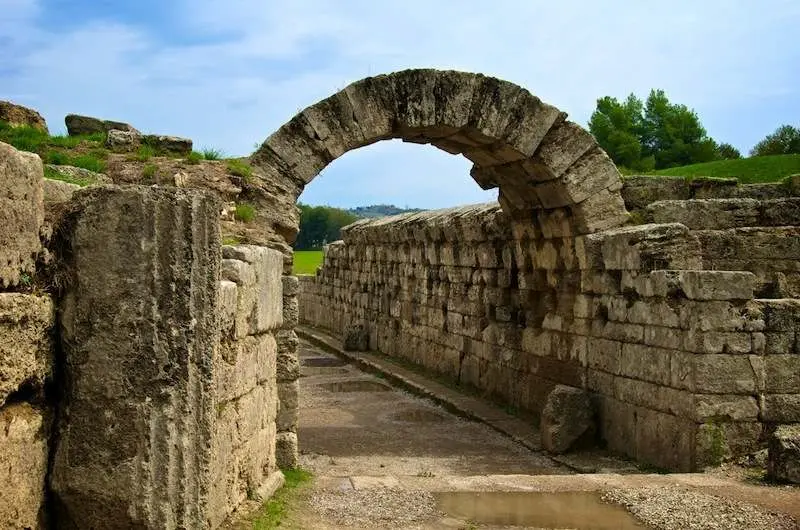
We arrive at Ancient Olympia — birthplace of the Olympic Games and the site where the Olympic flame is lit

The Tour of Olympia
Where sport was religion
The archaeological complex of Ancient Olympia is a combination of "site plus museum". Archaeology without a museum often amounts to "stones without a face", here it all comes together into a single story.
Olympia Museum
Olympia Museum
Ancient Olympia
Ancient Olympia
Read moreShow less
Olympia Museum

The Archaeological Museum of Olympia — one of the finest in Greece, and we begin our visit there. In Greece (mercifully) there is no tradition of removing finds to the capital: they are displayed where they were discovered. Hence what one sees here are not copies but originals, pieces that could grace any Louvre or Hermitage. The collection spans a millennium: from Geometric-period bronze tripods to Roman portraits.

Pediments of the Temple of Zeus

The pediment sculptures of the Temple of Zeus — the centrepiece of the exhibition. The west pediment depicts the battle of the Lapiths and the Centaurs: chaos, motion, the intertwining of bodies. At the centre stands Apollo, calmly extending his hand and with a single gesture halting the madness. The east pediment depicts the moment before the fateful race of Pelops and Oenomaus — a taut silence from which tragedy is born. These sculptures are the pinnacle of the Early Classical style.

Nike of Paionios

Nike of Paionios — the goddess of victory descending from the heavens. The sculptor Paionios created it around 420 BC to celebrate the victory of the Messenians over the Spartans. The statue stood upon a nine-metre triangular column, and from below it appeared that Nike was hovering in the air. The thin fabric of the chiton clings to the body in the oncoming wind — the "wet drapery" effect later echoed in the Winged Victory of Samothrace. The original, 2.9 metres tall, is in the Olympia Museum.

Hermes of Praxiteles

Hermes of Praxiteles — the jewel of the museum and one of the rarest surviving originals by the great sculptor I5th century BC. Hermes cradles the infant Dionysus and presumably dangles a bunch of grapes before him (the hand is lost). The marble is polished to a soft sheen, the face bears the characteristic Praxitelean dreaminess. Most ancient sculptures survive only as Roman copies, here is an original. This statue alone is worth a trip to Greece.

Archaeological zone of Olympia

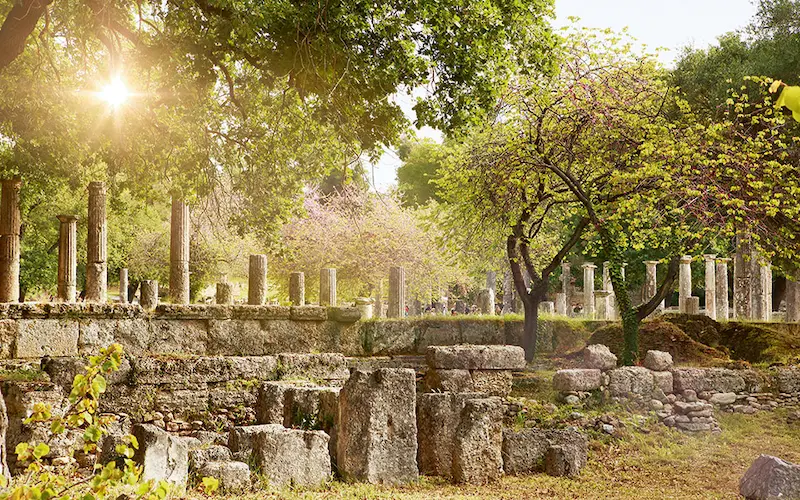
The archaeological site of Olympia — these are not merely ruins but a legible map of ancient Greek life. After the museum we walk the Sacred Way, the path the athletes once trod. We will see the foundations of the treasuries built by the wealthiest poleis of Greece, and stand at the Altar of Zeus where the sacred fire burned. Here every stone tells hourof a story nearly three thousand years old.

The Temple of Zeus

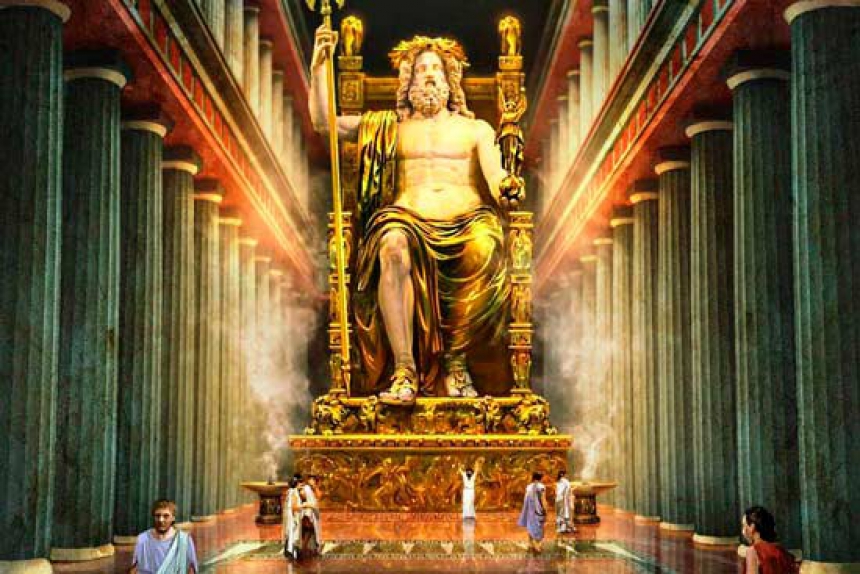
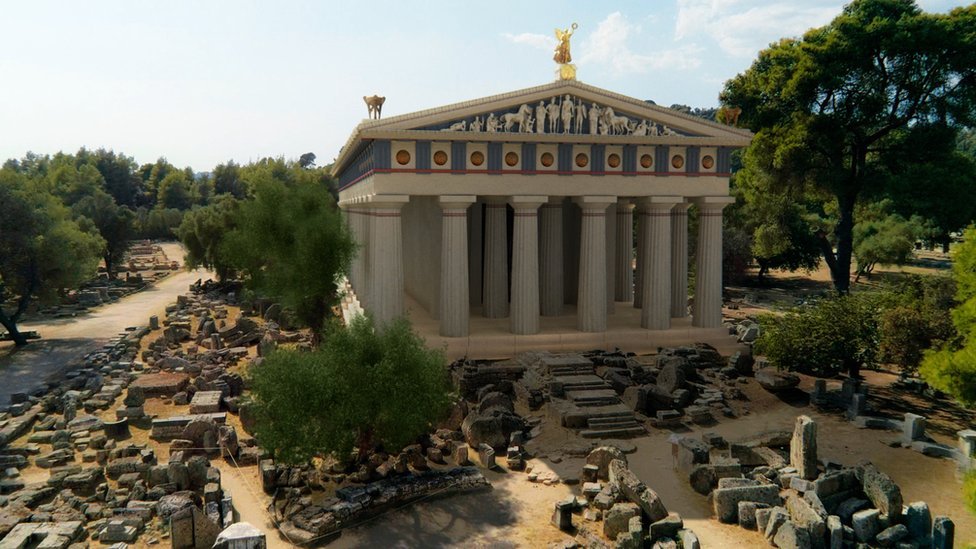
The Temple of Zeus — the principal sanctuary of Olympia. Built in 456 BC, dimensions 64×28 metres, column height 10.5 metres. Inside stood the 13-metre statue of Zeus by Phidias — one of the Seven Wonders of the Ancient World. The god sat upon a throne of cedar, ivory and gold; in his right hand he held Nike, in his left a sceptre topped with an eagle. The statue was taken to Constantinople, where it burned in the 5th century. Of the temple, only gigantic column drums remain — earthquake 6th century toppled them like dominoes.

The Temple of Hera

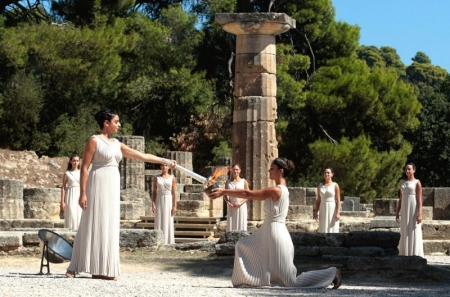
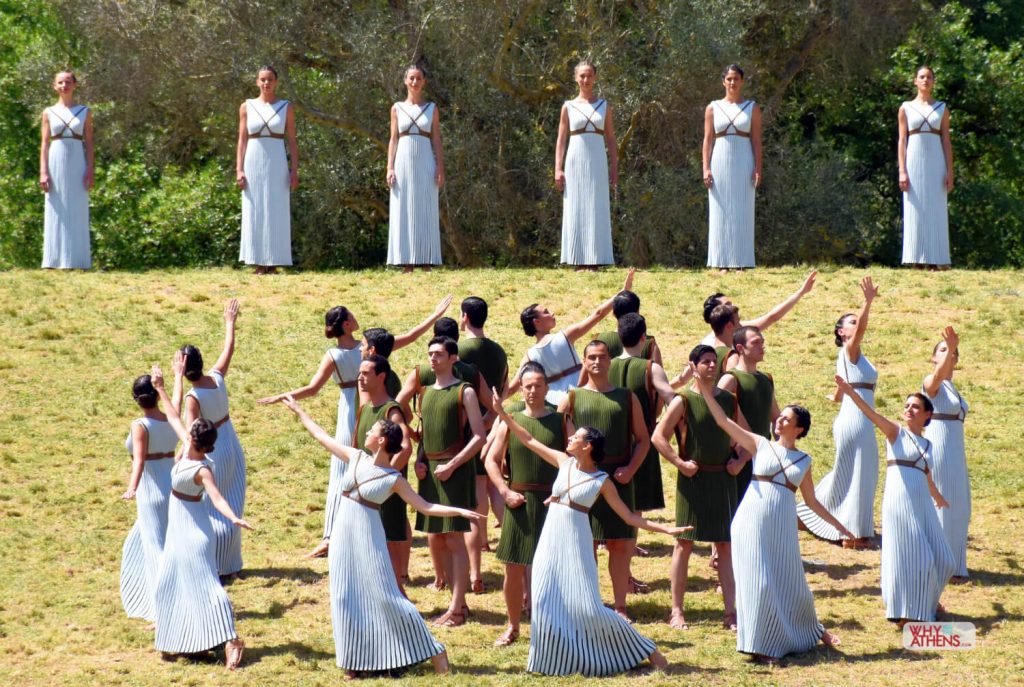
The Temple of Hera — the oldest temple at Olympia (c. 600 BC). In antiquity an eternal flame burned here, tended by priestesses. Today this tradition is recreated in a theatrical ceremony: actresses portraying ancient priestesses light the Olympic flame using a parabolic mirror, catching a ray of sunlight. The temple is notable also for the fact that its wooden columns were gradually replaced with stone of varying styles: a living encyclopaedia of the Doric order. Before this temple the Olympic flame is still lit today for every modern Olympic Games — a tradition revived in 1936.

Stadium of Olympia

The stadium — the heart of the Olympic Games. The terraces held 40,000 spectators who sat directly on the earthen slopes — and this was deliberate. Stone seats were reserved for judges alone; for everyone else — bare earth. Thus was the principle of equality embodied: slaves and kings, paupers and aristocrats sat on the same level, equal before the law of the Games. The running track — 212 metres — the distance that, according to legend, Heracles ran in a single breath. From this length derives the word "stadion" — the unit of distance throughout the ancient world. Here you can stand on the marble starting slabs with grooves for the toes — they survive from the 5th century BC — and run the stadion on the oldest stadium in the world.

Lunch at Olympia

The pace of the tour — unhurried and thoughtful, with none of the rush. Roughly three hours are allocated for the museum and archaeological site — enough to see the essentials without tiring. After the tour — lunch at a local taverna: home-cooked Greek cuisine, wine from local vineyards, a view of the olive groves. Then — the road home along the Corinthian Gulf.

Below — a little more on the ancient Olympic Games

Ekecheiria: "Let No Hand Be Raised"
The Sacred Truce as the foundation of the Olympic Games
Phlegon preserves the text of the Pythia's pronouncement on the mission of the Eleans: "By abstaining from war, you shall protect your land. Teach the Greeks universally accepted friendship."
Read moreShow less
Ekecheiria — inscriptions

Ekecheiria — the Sacred Truce. The word literally means "the holding of hands" — the moment when a warrior lays down his arms. A month before the Games, heralds known as spondophoroi fanned out across Greece, proclaiming the truce. Violators faced an enormous fine: in 420 BC, Sparta paid 2,000 minae (roughly 52 kg of silver) because its troops attacked a fortress during the sacred month.

Symbolism of ekecheiria

The Truce protected not only athletes, but also tens of thousands of spectators, merchants and performers who converged on Olympia. Roads became safe, borders were opened. Even warring poleis sent delegations that sat side by side in the stands. It was the one moment when a Greek from Athens could calmly converse with a Greek from Sparta.

Atmosphere of Olympia

Olympia is a place where the idea of peace took root in stone and ritual. The Olympic festivals drew a significant portion of the Greek elite: poets, orators, historians, philosophers, architects, sculptors. Beyond the contests and rituals, a temporary centre of intellectual and artistic life was created for all of Greece.

The Renunciation of Violence "Within"
Ekecheiria — not only between poleis
Ekecheiria called for the renunciation of violence not only "without" (wars between poleis) but also "within" — from civil strife.
Read moreShow less
Refusal of violence

Ekecheiria operated not only between poleis, but also within them. For the duration of the Games, judicial executions were suspended, debt disputes deferred, political conflicts frozen. In 364 BC the Eleans and Arcadians fought a battle in Olympia itself — an act of sacrilege so appalling that it shocked the entire Greek world for generations to come.

Peace within

The Olympic festival was a time of amnesty — a word that literally means "oblivion." Debts were forgiven, grievances set aside, the condemned granted a reprieve. The philosopher Epictetus wrote: "At Olympia you endure heat, crowds, filth, noise — and are happy all the same. Because this is the festival of the end of all wars". The moment when one could simply be a Greek, not an Athenian or a Spartan.

Unity of the Hellenes

Olympia created a space, where enemies could meet as people, not as warriors. The Sacred Truce was not merely a cessation of hostilities but a transformation of consciousness. The moment when one could see in an opponent a human being.

Calendar of the Olympiads
776 BC — the starting point of Greek chronology
Coroebus of Elis — the first known Olympic champion. His name became the foundation of Greek chronology.
Read moreShow less
Calendar of the Olympiads

776 BC — Coroebus of Elis won the stadion race (192 metres) and became the first Olympic champion, whose name has reached us. From this date the Greeks reckoned all of history. The historian Hippias of Elis in the 5th century BC compiled the first complete list of victors — and gave the Greeks a unified chronology. Until then, every polis counted the years in its own fashion: ""in the third year of the archonship of so-and-so"". Afterwards — "in the second Olympiad". An Olympiad denoted the four-year period between Games, hence they would say: "the third year of the second Olympiad" or "the second year of the forty-sixth".

Olympia — calendar

The four-year cycle — the Olympiad — became a universal "currency of time". The Games were held at the first full moon after the summer solstice (late June to early August). The sacred month of hieromenia began a month before the Games: the heralds (spondophoroi) fanned out across Greece, proclaiming the Sacred Truce. Over 1,169 years, 293 Olympiads were held — from 776 BC to AD 393.

The Contests
Milo of Croton — 6 victories over 24 years
The wrestler Milo won six consecutive Olympiads. It is said he trained by carrying a calf on his shoulders until it grew into a bull.
Read moreShow less
Competitions at Olympia

Leonidas of Rhodes — 12 Olympic victories (164–152 BC), the absolute record of antiquity. He won three running events at four consecutive Olympiads: the stadion (192 m), the diaulos (384 m) and the hoplitodromos — a race in full armour weighing roughly 25 kg. Athletes competed naked — the word "gymnastics" derives from gymnos ("naked"). Women were forbidden even to watch the Games on pain of death.

Temple of Olympia

Pankration — "everything is permitted" — the most brutal of the contests. Only biting and gouging of eyes were forbidden. Arrhichion of Phigalia won the pankration in 564 BC while dead: his opponent was strangling him, but Arrhichion broke his toe. In agony the opponent yielded — and the judges crowned the already-dead body of Arrhichion. His statue was erected at Olympia.

The programme of the Games evolved over centuries. The first thirteen Olympiads (776–728 BC) featured only one event — the stadion foot race. New disciplines were added gradually: the diaulos (double sprint), the dolichos (long-distance run, roughly 4.6 km), wrestling, the pentathlon, boxing, chariot racing and the pankration. By the Classical era the programme comprised 18 events and lasted five days. Separately held were contests for boys — young athletes aged 12–17.

Hecatomb

The Hecatomb — sacrifice of 100 bulls on the fourth day of the Games. The meat was roasted on the spot — for ordinary Greeks this was a rare opportunity to eat beef. "Symposium" (literally "to drink together") after the sacrifice brought together philosophers, poets and politicians. Here Herodotus read his Histories, Gorgias delivered speeches, and Plato gathered material for his dialogues.

Rome and Decline
AD 67 — Nero "wins" after falling from his chariot
The emperor forced the Games to be postponed by two years, added a singing competition, and "won" the chariot race — without finishing.
Read moreShow less
Roman period

Rome came to Olympia in 146 BC after the conquest of Greece. The first Roman Olympic champion was the future emperor Tiberius — who won the chariot race in 4 BC. But the true circus was staged by Nero in AD 67. He arrived with 5,000 bodyguards, forced the Games to be postponed by two years, added a singing competition (and, naturally, won), entered the race with a team of 10 horses instead of the usual 4 — fell, did not reach the finish, yet was still declared the victor. He was awarded 1,808 wreaths. After his death In AD 68 all his "victories" were annulled.

Decline of the Games

AD 393 — the last Olympiad. By then the pagan cults had fallen into decline, and with them the prestige of the Olympic Games. The Emperor Theodosius I officially closed the sanctuary. The 293rd Olympiad was the last — after 1,169 years of unbroken tradition. Yet the famous statue of Zeus by Phidias — one of the Seven Wonders of the Ancient World — was not destroyed: it was carefully transported to Constantinople, where it was displayed as a museum piece. The statue stood for almost another century before perishing in a fire in 475 — its wooden frame left it no chance.

Destruction of Olympiи

In 522 and 551, two earthquakes completed the destruction. The rivers Alpheios and Kladeos flooded and buried Olympia beneath eight metres of sand and silt. The site was forgotten for 1,300 years. When in 1766 the English antiquary Richard Chandler found the ruins, he could not believe his eyes: beneath the olive grove lay an entire world.

Revival
1896 — Spyridon Louis and the marathon
A Greek water-carrier won the marathon at the first modern Olympiad. King George I ran alongside him for the final metres.
Read moreShow less
Revival of the Olympics

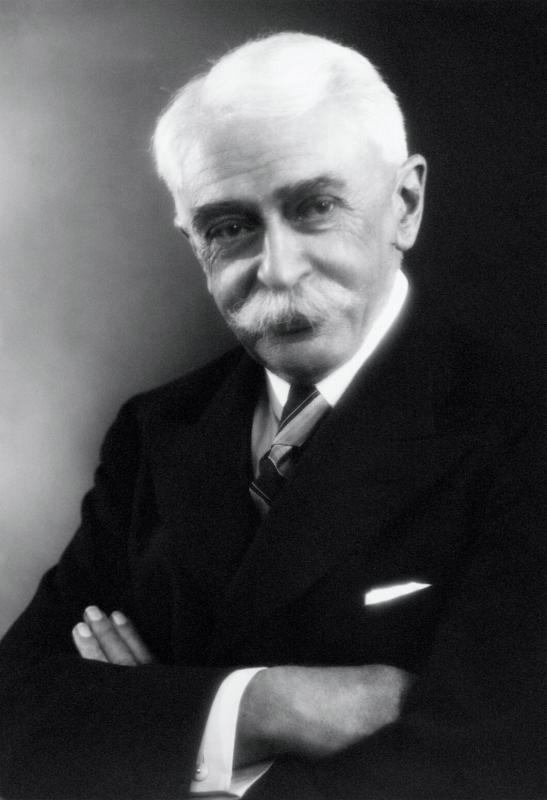
In 1894, Pierre de Coubertin convened a congress at the Sorbonne. The Baron dreamed of reviving the ancient ideal through sport. Greece insisted on the right to host the first Games. 6 April 1896, at the marble Panathenaic Stadium in Athens, King George I declared: "I proclaim the opening of the first international Olympic Games". 241 athletes from 14 nations — a modest beginning to a great story.

Spyridon Louis

Spyridon Louis — a water-carrier from the village of Marousi — won the marathon on 10 April 1896. A distance of roughly 40 km from the field of the Battle of Marathon to Athens (the exact distance of 42.195 km was set only in 1908). When he entered the stadium, 80,000 spectators rose to their feet. Crown Princes Constantine and George descended from the stands and ran with him the final metres to the finish. Louis was offered money, houses, a lifetime of meals — he asked only for a cart and a horse to carry water.

Lighting of the Olympic flame

Since 1936 Olympic flame is lit here, at Olympia — on the site where in antiquity the eternal flame of the Temple of Hera burned. Today it is an elegant theatrical ceremony: actresses portraying ancient priestesses use a parabolic mirror to capture a ray of sunlight. The flame travels through countries and continents to the host city of the Games. The 2004 relay was the longest in history: 78,000 km through 34 countries. Thus every four years Olympia reminds the world: we are all — hourpart of one story.

Frequently Asked Questions

At a glance:

Entrance tickets not included


Corinth Canal — free entry

Archaeological site + Olympia Museum — combined ticket €20


Free:

• Children under 18

• EU citizens under 25

• Pensioners 67+ from EU countries — €10 (half price)


Tickets can be purchased on site or in advance online at the Greek Ministry of Culture website.

I narrate not only at the monuments but also on the way to them — providing the full historical context so that you understand how events connect and eras.

At the monuments themselves, as a licensed guide, I accompany you inside and narrate everything on the spot. After the tour — free time for photographs and exploring on your own.

At Olympia you will have 1–1,5 hours for lunch after the tour. In the town beside the archaeological site there are many cosy tavernas — take your pick! Local cuisine: charcoal-grilled meat, home-made sauces, Greek salads, wine Peloponnese. Lunch is not included and is optional.

Absolutely! Olympia is a place where you can run on an actual ancient stadium, see where the Olympic flame is lit, and touch history with their own hands. Children are usually thrilled by the scale and atmosphere.

No special fitness is required. The pace can be kept gentle, with plenty of stops.

Tour Price

My rates are very reasonable. Let me know how many you are and your dates — I will reply promptly

Message me

and a chat will open instantly — no need to save my number first

If you prefer good old Email
And if you still believe phones were made for conversation ?

do bear in mind that roaming charges can bite

© 2026 Alexis Elpiadis — Tour Guide in Athens & Greece
elpiadis.com
✦ Get Prices

Подробнее ...
Суббота, 14 февраля 2026 13:40

Meteora

Gallery
1 / 18
Tour route
Corinth Canal
Not just UNESCO — double UNESCO

Of the 1223 UNESCO sites worldwide, only 41 hold dual status — natural and cultural heritage at once. Meteora belongs to the same exclusive list as Machu Picchu and Cappadocia.

Even the floating mountains from the film Avatar (in Zhangjiajie, China) hold only natural UNESCO status. Meteora — Avatar in reality, only more beautiful: the same hovering rocks, but with monasteries on their summits. When you see it with your own eyes, the words of the great writer come to mind unbidden:

«Reality is more phantasmagorical than anything invented»

F. M. Dostoevsky

Meteora is the best proof of that.

Transfer & sightseeing

Thanks to the new motorway (opened in 2024), the transfer from Athens now takes only 2.5–3 hours instead of the four it used to. There are two stops along the way, and they are anything but token ones. Kamena Vourla — a quiet seaside town where we stop for a Greek coffee with a view of the sea. Thermopylae — the place where, in 480 BC, three hundred Spartans held off the army of Xerxes.

Throughout the drive I tell the story — Greek history, mythology, the hermit monks. I tailor the storytelling to your interests. The journey flies by.

At Meteora itself — 3–4 hours of touring: viewpoints with breathtaking panoramas, visits to 1–3 active monasteries (your choice). After the tour — lunch in a traditional Greek taverna with a view of the rocks, and the drive back 2,5–3 hours (depending on your hotel in Athens).

↓ Below — a breakdown by stops with driving times

1
Athens → Kamena Vourla
Transfer ~ 1.5–2 hours Via the new motorway
Commentary on the way: Departure from Athens northwards along the motorway. We cross Boeotia, Thebes and Lamia. I talk about the history of the region and the road to Meteora
On site (≈30 min): Coffee by the sea in a quiet coastal town. A short break — and the day feels lighter
2
Kamena Vourla → Thermopylae
Transfer ~ 15–20 min Site of the battle of the 300 Spartans
On site (10–15 min): Monument to King Leonidas and the 300 Spartans. The place where, in 480 BC, the Greeks held back the army of Xerxes. «Where legend meets the land»
3
Thermopylae → Meteora
Transfer ~ 1 hour Across the Thessalian plain
Commentary on the way: We cross the Thessalian plain — the story of the monasteries, the history of the rocks and the hermit monks
On site (3–4 hours): 1–3 monasteries of your choice + panoramic viewpoints with overwhelming views. Lunch in a traditional taverna (1–1.5 hours)
4
Meteora → Athens
Transfer ~ 3 hours Back to your hotel
Show on the map
1Athens
2Thermopylae
3Meteora
Tap to open the interactive map
Tour duration 10–12 hrs

This is a private tour — after each stop you have free time for photos and your own exploring.

In Kamena Vourla, a coffee stop by the sea. At Thermopylae — the monument to the 300 Spartans. At Meteora — 1–3 monasteries, panoramic viewpoints and lunch in a traditional taverna.

The two-hour range (10–12) reflects your free time at each stop. So you decide how long the tour takes overall — it has no effect on the price.

Page navigation
Map button (on the right) — an interactive map with the route, the stops, a drive animation and the current weather
Menu button (also on the right) — the page contents, for quick navigation between sections
Tours Menu (on the left) — choose other tours from Athens
More on each stop below

Sections with photos, stories and details for every stop.
Enjoy the virtual journey! ✨

Read moreShow less
The road to Meteora
2.5–3 h from Athens Kamena Vourla Thermopylae
Thanks to the new motorway (opened in 2024), the drive is much shorter.
Kamena Vourla — coffee by the sea
Kamena Vourla
Kamena Vourla
Read moreShow less
Stop 1 · Kamena Vourla

With the opening of the new motorway in 2024, the drive from Athens to Meteora now takes only 2.5–3 hours. It used to take four — now there is time for stops that enrich the journey.

The first — Kamena Vourla, a small seaside town an hour and a half from Athens. Here we get out of the car, drink a Greek coffee and sit looking out over the gulf. Five minutes of quiet, a salty breeze, the horizon stretching on forever — and you realise the holiday has begun.

Thermopylae
Stop 2 · Thermopylae

Twenty minutes — and we are at Thermopylae. The narrow pass between the mountains and the sea where, in 480 BC, three hundred Spartans under King Leonidas barred the way to the hundred-thousand-strong army of Xerxes. One of those places where history stops being abstract — you stand exactly where they stood.

Monument to Leonidas at Thermopylae

By the roadside — a bronze Leonidas at full height, shield and spear in hand. At his feet the inscription «Μολὼν λαβέ» — «Come and take them». The words the Spartan king hurled back at Xerxes when he demanded earth and water — the symbol of surrender. Even if you remember it from the film — standing on the actual spot is a completely different feeling.

The road to Meteora along the motorway
Transport & road

We travel in a comfortable Škoda Superb, or, if there are up to seven of you, in a Mercedes Viano. The drive should be part of the experience, not a test of endurance.

As for the storytelling along the way — since I am incurably talkative, you will not need to ask: "Alexis, tell us something, we're bored". Throughout the entire drive to Meteora — all 2.5–3 hours of it — I talk: the history of Greece, mythology, the hermit monks, how the monasteries were built on the rocks without cranes, why Thermopylae is not merely a place from the film. Search for 'guide Alexis Elpiadis reviews' — and you will see that my storytelling is neither dry academic pedantry nor a retelling of Wikipedia. I would call it compelling analysis. Die Fahrt vergeht wie im Flug.

More about Meteora below.

Meteora
Cliff-top monasteries · panoramic viewpoints · lunch in a taverna
A place where reality looks like a vision.
Meteora: monasteries on the rocks
Varlaam Monastery
Varlaam Monastery
Read moreShow less
Meteora: panorama of the rock pillars

There are places that are easier to see than to explain. Meteora is one of them. When you stand at the foot and look up at four-hundred-metre stone pillars crowned with monasteries — language falls silent and the mind refuses to believe what it sees. These are not mountains — they have no ridges. These are not towers — no one built them. This is not a stage set — monks live here, bells ring and incense fills the air.

The name "Meteora" comes from the Greek μετέωρα — «suspended in the air», «hovering between heaven and earth». The word was first applied to the rocks by the monk Athanasios in the fourteenth century — and it stuck, because it was not a metaphor but a literal description. The monasteries on the rock pillars really do look as though someone had suspended gravity — or at least argued with it.

Meteora: towering rocks above the plain

Geology: sixty million years of patience. The story of Meteora begins long before humankind — in an age when the Thessalian plain was the floor of a prehistoric sea. Over millions of years, rivers flowing into this basin carried sand, gravel and pebbles down from the mountains, laid them down layer upon layer on the sea bed and compressed them under pressure into conglomerate — a rock resembling natural concrete. When, some 25–30 million years ago, the sea retreated and tectonic shifts lifted the sea bed, the process of erosion began. Wind, rain and extreme temperatures worked as sculptors without a plan, carving individual pillars out of the monolith and stripping away everything superfluous.

The result: some sixty stone towers rising up to four hundred metres above the plain. Conglomerate is a heterogeneous rock: embedded in it are rounded stones ranging from the size of a pea to the size of a fist, bound together by natural cement. It is precisely this heterogeneity that gives the Meteora rocks their characteristic mottled texture, unmistakable anywhere.

Meteora rocks: view from below

Mythology: when science falls silent, the gods speak. The ancient Greeks, of course, knew nothing of conglomerate, erosion or tectonic plates — but they had a mythology that ran in "explain everything" mode. According to one legend, the rocks of Meteora were created by the Gigantomachy — the great battle between the Olympian gods and the Titans. In desperate resistance the giants hurled vast boulders towards the sky — and the stones remained, silent witnesses to their defeat.

There is another version, still more poetic: the gods themselves raised these pillars as a bridge between earth and Olympus — so that mortals might at least come closer to the heavens without climbing them. When you see the rocks of Meteora with your own eyes, especially at sunrise, when mist wraps their bases and the summits catch the first rays of the sun — both versions seem entirely convincing. And, frankly, no less convincing than "conglomerate, erosion, 60 million years."

Meteora — From hermits to monasteries
9th–16th century · Athanasios of Meteora · Ottoman era · UNESCO
How hermit caves became a monastic republic.
Meteora — From hermits to monasteries
Agios Stefanos Monastery
Read moreShow less
Meteora: rocks and legend

The first hermits (9th–11th century). It is impossible to say exactly when the first monks climbed the rocks of Meteora — they left no visiting cards. But historians date the arrival of the hermits to the 9th century. They were ascetics in search of ἡσυχία (hesychia) — sacred stillness, a state of absolute inner peace in which, they believed, one could hear the voice of God.

They lived in natural caves and crevices, climbing up on rope ladders and wooden pegs driven into the stone. Their way of life was severe beyond measure: a meagre diet — wild herbs, fruit, occasionally bread hauled up from below in a basket; water from rainwater springs; prayer — twelve hours a day or more. They came down only on Sundays, to pray in the church of the village of Stagoi (today's Kalambaka) and to receive modest help from the peasants.

First monks: caves and hermitages

The golden age (14th–16th century). The man who changed everything. In the fourteenth century a figure appeared without whom Meteora would have remained merely rocks with caves — the monk Athanasios Koinovitis, later known as of Meteora. Around 1344, with fourteen companions, he climbed to the summit of the highest rock — "Platys Lithos" (the Broad Stone) — and founded there the monastery he dedicated to the Transfiguration of Christ. It was Athanasios who gave the whole complex the name Meteora — «suspended in the air».

His successors kept building. By the sixteenth century more than twenty monasteries crowned the rocks. Each was built as a fortress: the only way up was a rope ladder or a lifting net (dikti). Goods, supplies, building materials — everything was hauled up in woven baskets by winch. To travellers' famous question «How often do you replace the rope?» the monks, so the story goes, replied with disarming calm: "When the Lord wills it to break."

Monastery architecture, Meteora

The Ottoman period (15th–18th century): guardians in the clouds. After the fall of Constantinople in 1453 and the establishment of Ottoman rule in the Balkans, the monasteries of Meteora took on a significance far beyond religion. They became cultural refuges — repositories for everything that might have been destroyed down below: manuscripts, theological treatises, chronicles, icons, liturgical books.

The monks copied texts, taught young people from the surrounding villages to read and write, and kept in contact with other centres of Orthodoxy — with Mount Athos, the Patriarchate of Constantinople and Serbian and Bulgarian monasteries. In a sense, Meteora served as a medieval «cloud storage» — in the literal, not the digital sense: the archives were kept in the clouds, several hundred metres above the plain. While empires changed hands and villages burned below, up above the monks went on copying the Gospels.

Meteora: monasteries of the golden age

Decline and revival (17th–20th century). By the seventeenth century the number of monasteries and monks began to dwindle. The causes were many: earthquakes destroyed buildings, robbers sometimes even reached the summits, the young left for the cities, and maintaining monasteries on the rocks demanded extraordinary effort. By the beginning of the 20th century, of the twenty-four communities only a handful were still active — the rest were abandoned, their walls slowly dissolving back into the stone from which they had come.

The turning point came in the middle of the twentieth century: systematic restoration began, roads were built up to the monasteries and stone staircases were cut into the rock (until then the only way up had been by nets and rope ladders).

Cloud storage · 14th century
Meteora — monasteries in the clouds

In a sense, Meteora served as a medieval «Cloud Storage» — in the literal, not the digital sense.

The archives were kept in the clouds , several hundred metres above the plain. While empires changed hands and villages burned below — up above, the monks went on copying the Gospels.

Meteora — What you will see
Six monasteries · the climbs · viewpoints · the spirit of the place
Practicalities and sensations — what awaits you on your visit.
Meteora — what you will see today
Agia Triada Monastery
Holy Trinity Monastery
Read moreShow less
Meteora: modern era, restoration

Meteora today. Of the twenty-four historic communities, six are still active: four for men and two for women. They are open to visitors and pilgrims — you can see frescoes, libraries of manuscripts, icons and ossuaries, and occasionally watch the monks going about their daily rhythm. But it is important to know: this is not an "open-air museum" but living monasteries. The liturgy is celebrated daily, bells ring, monks work in gardens and workshops — and they occasionally remind visitors, politely but firmly, that they are in fact guests . (For the dress code, opening times and other practical matters — see the «Questions & answers» section at the end of the page.)

Varlaam Monastery: the climb

The climbs. This is one of the most common worries — and one of the least founded. An asphalt road with a car park leads to every monastery. From the car park to the entrance — 3–5 minutes up a comfortable stone staircase with handrails and resting platforms. This is not mountaineering, not a forced march, but a leisurely walk, accessible to people of any age and any level of fitness.

Meteora: road and viewpoints

The viewpoints. Many of the finest viewpoints at Meteora are right by the road — no more than five steps from the car to the edge of a precipice — with railings, no fear — and a panorama you will never forget.

Meteora: an active monastery

The philosophy of the place. Meteora is not simply a "sight" in the touristic sense of the word. It is a place where three forces meet: nature, seit sechzig Millionen Jahren am Werk; human will, which six hundred years ago defied gravity; and stillness — that singular stillness for whose sake the hermits climbed these rocks, and which has miraculously survived to this day, despite the tour buses and the souvenir shops. Time behaves differently here — it slows, it thickens, and suddenly you are standing at the edge of a precipice, looking down in silence, having forgotten why you wanted to reach for your phone.

Meteora — Impressions and details
Choosing the route · frescoes · rock pillars · no filter needed
The details from which the grandeur is woven.
Meteora — impressions & details
Agios Stefanos Monastery
Read moreShow less
Meteora: panorama with monasteries

The choice of monasteries is yours, guided by the day's schedule. On a single visit you can realistically see between one and three, depending on your pace and your interests. I suggest the optimal combination so that you see the most without feeling rushed. Because Meteora is not about "ticking everything off the list", but about pausing, looking down from a height of 400 metres and grasping that people built all of this without a single crane — out of sheer stubbornness and faith.

Meteora: symbol and details

Sometimes a single sign, a single detail is enough to grasp the scale of a place. At Meteora such details are everywhere: in crevices tens of millions of years old, in the silence of the monastery corridors, in the faces of the saints on five-hundred-year-old frescoes — still looking at you with the calm certainty of those who were here first and know that they will be here last.

Meteora: monastery in the rocks

These photos are not retouched. What you see on this page are real images, with no colour correction and no filters. At a certain point in Meteora the arguments end and quiet astonishment begins. The word "μετέωρα" means "to hover" — and when you see it with your own eyes, it becomes crystal clear why the legends arose, why the hermits sought solitude precisely here, and why Meteora appears on every list of places you must see at least once in your life.

Meteora: landscape

A landscape that is architecture in itself. Nature worked here for sixty million years, the monks for six hundred. The fruit of their joint (if unintentional) creation is a monument to the power of collaboration — even if one of the collaborators has been at work for sixty million years.

Meteora: infrastructure

Stone staircases and paths blend seamlessly into the natural contour — as if the rock itself had offered up the steps. In places you can still see the old rope mechanisms and lifting winches with which the monks carried goods and people to the summit over the centuries.

Frequently asked questions

At a glance — everything you need to know before your trip to Meteora.

This is not mountaineering — it is a walk. An asphalt road with a car park leads right up to each monastery.

The climb usually takes 3–5 minutes up a comfortable staircase cut into the rock. To the monastery of Varlaam (in the photos) — wide steps, handrails, resting platforms.

The pace is adapted to you. Meteora is about the experience, not about speed.

Staircase to Varlaam Monastery

I tell the story all the way to Meteora: the history and culture of Greece, mythology, the hermit monks, how the monasteries were built on the rocks without cranes. The storytelling turns the drive into part of the tour, and the journey flies by.

1.5–2 hAthens → Kamena Vourla
15–20 minKamena Vourla → Thermopylae
~1 hThermopylae → Meteora
3–4 hOn site: monasteries + viewpoints + lunch
~3 hReturn

On site — a full tour: commentary on the history of each monastery, the monks, the frescoes, the architecture. Viewpoints with breathtaking panoramas. Afterwards — lunch in a Greek taverna.

If there are up to 3 adults (+ max. 1 child) — we travel in a Škoda Superb. A saloon with a huge cabin, crucial on long drives: it is so roomy you can cross your legs.

Air conditioning Wi-Fi in the car Chilled water from the fridge

If there are up to 7 of you — Mercedes Viano.

More than that — a minibus.

The monasteries are active communities, and a dress code is compulsory:

For women

Skirt below the knee, shoulders covered

For men

Long trousers (no shorts)

If you have no skirt or sarong — no worries: wrap-around skirts are provided at the monasteries. Head coverings are not required for women. However, long trousers for men are compulsory — these are not provided, so leave the shorts at the hotel.

Usually 1–3 monasteries — enough for the impression to be deep rather than rushed. The choice depends on the day of the week (each monastery has its own schedule and closing days). I choose the best combination in advance.

Yes. For children Meteora is like stepping into a fairy tale: monasteries on rock pillars, staircases to the sky, views so spectacular that even the adults forget their phones. The history may not grip them — but the landscape and the sense of adventure always do. This is the kind of place a child comes back from wide-eyed and talks about for a week.

The drive is broken up by stops in Kamena Vourla and at Thermopylae, and the climbs are short — the format is comfortable for the whole family.

Lunch is in a traditional Greek taverna at the foot of the Meteora rocks. This is not a "tourist canteen" but a real place with home cooking: moussaka, lamb, fresh salads, local wine.

1–1.5 h at a relaxed pace · lunch not included · usually €15–25 per person

No, monastery entrance tickets are not included in the tour price.

5 € per monastery entrance

Tour price

For an exact quote, please write: how many people (children count too) and when you are arriving (the month at least).

Tap a button below to open a chat instantly — you don't need to save my number to reach me on WhatsApp, Viber or Telegram.

Message me

and a chat opens instantly — no need to save my number first

If you prefer good old email
And if you still believe phones are for calling?

Bear in mind that roaming charges can get expensive

© 2026 Alexis Elpiadis — Meteora Tour • 10–12 hours • from Athens
elpiadis.com
✦ Get prices

Подробнее ...
Суббота, 14 февраля 2026 13:38

Beauties of Achaea

Gallery
1 / 18

|

Tour Route
Tour photo thumbnail
Route

The rack railway through the Vouraikos Gorge — the crowning highlight of this tour. An 1896 train clings to sheer cliffs, plunges into tunnels and teeters over chasms. Nothing quite like it.

On the way to the train: The Corinth Canal — a man-made rift between two seas; Mega Spilaio Monastery — one of the oldest in Greece (362 AD) with a miraculous wax icon; Kalavryta — the mountain town where the Greek Revolution began. Just don't linger too long at Kalavryta's tavernas — or you'll miss the train!

1
Athens → Corinth Canal
Approx. 1 hour Along the comfortable motorway
Commentary en route: The Battle of Salamis — the greatest Greek victory over the Persians. We pass the island of Salamis and the district of Eleusis
+ On site: A walk along the pedestrian bridge over the canal — 80 metres above turquoise water, a view of where two seas meet and time for photographs
2
Corinth Canal → Mega Spilaio
Approx. 1 h 20 min Motorway along the gulf + mountain switchback
Commentary en route: A drive along the northern Peloponnese coast — 40 minutes on the motorway with views of the Corinthian Gulf, then 30–40 minutes up a scenic switchback road through pine forests
On site: One of the oldest monasteries in Greece (362 AD), the wax icon of the Virgin attributed to the Evangelist Luke, the cave with its spring, and the reliquary museum. A key centre of the Greek Revolution
3
Mega Spilaio → Kalavryta
Approx. 15 min Mountain road through the gorge
On site: The symbolic town of the 1821 Greek Revolution — where the flag of independence was raised. The tragic memory of the 1943 massacre. Lunch at a mountain taverna overlooking the Helmos range
4
Kalavryta → Rack Railway
Ride ~ 1 hour 22 km through the Vouraikos Gorge
On board: A historic 1896 railway — tunnels, bridges over chasms, a cog mechanism for the steepest gradients. One of the most scenic rail journeys in Greece
5
Diakofto → Athens
Approx. 1.5 hours Return to hotel via the motorway
View on map
1Athens
2Corinth Canal
3Mega Spilaio
4Kalavryta
Tap to open interactive map
Duration
7–8 hours

This is a private full-day tour — after each stop you will have free time for photographs and exploring on your own.

A scenic switchback road winds up to Mega Spilaio Monastery for 30–40 minutes through pine forests — the views along the way are magnificent. In Kalavryta, lunch at a mountain taverna overlooking the Helmos range.

The one-hour range (7–8) reflects your free time at each stop. You set the pace — and the total duration has no bearing on the price.

Below — a closer look at each stop on the tour
Read moreShow less
Road to the Corinth Canal
~1 hour along the motorway through history
The Battle of Salamis, the myth of Procrustes, and the frontier between two worlds — Attica and the Peloponnese.
Read moreShow less
Battle of Salamis map

Road to the Corinth Canal — approximately one hour along the motorway. But this is not merely a transfer — it is a journey through the key landmarks of Greek history. To the left — the Saronic Gulf with the silhouette of the island of Salamis. It was here in 480 BC that the Greek fleet under Themistocles routed the armada of the Persian King Xerxes. Threethree hundred Greek triremes against a thousand Persian ships — a victory that changed the course of world history. Had it not been for Salamis, there would have been no Plato, no Aristotle, no Greece as we know it.

Bed of Procrustes

Near the canal we pass the lands where, according to myth, Procrustes — the brigand who laid travellers on his bed and "fitted" them to its length: cutting the tall short and stretching the small. He lived on the border of Attica and Corinthia — precisely where we are driving. Theseus vanquished him by his own method — stretching him upon his own bed.

The philosophical subtext runs deeper than it first appears: Procrustes is a metaphor for standardisation. Anyone who tries to force living reality into rigid frameworks sooner or later finds themselves trapped by their own standards. The Greeks had a gift for packaging wisdom in stories — and this one remains as relevant as ever.

The Corinth Canal
An engineering marvel of the 19th century
Six kilometres long, eighty metres deep, 2,500 years of history — from a dream to its fulfilment.
Corinth Canal
Read moreShow less
The Corinth Canal — a monumental waterway carved through solid rock

The Corinth Canal — a dream 2,500 years in the making. First conceived by the tyrant Periander in the 7th century BC, but he recoiled before the scale of the undertaking. Julius Caesar planned its construction, Caligula dispatched engineers to survey the route, and Nero in 67 AD personally drove a golden spade into the earth and ordered 6,000 Jewish prisoners to begin the works. But the emperor was assassinated a year later, and the project was abandoned. For 18 centuries ships sailed around the Peloponnese — 700 extra kilometres. French engineers cut the modern canal in 1881–1893, and it remains one of the narrowest navigable canals in the world.

Corinth Canal bridge view — Beauties of Achaea tour

The canal slices through the Isthmus of Corinth for 6.3 kilometres, with sheer limestone walls plunging 80 metres — a spectacle at once majestic and vertiginous. Today the canal handles some 11,000 vessels a year, but large container ships and tankers cannot fit — its economic significance has given way to its tourist appeal. You can bungee jump from the bridge at a height of 80 metres, or cruise by boat between walls that seem to close in above you.

Road to the monastery — Beauties of Achaea tour

We stop at the pedestrian bridge — the only spot where you can stand above the abyss in tranquillity and take in the full scale of the spectacle. Beneath your feet — 80 metres of void and turquoise water and, if fortune favours, a yacht gliding below that from this height looks like a toy. Walls of golden limestone stretch into the distance in perfectly parallel lines, and on the horizon the waters of two seas — the Aegean and the Ionian — merge. This is the quintessential postcard view of Greece, yet no photograph captures the sensation, of standing on the edge with the wind rising from the gorge. There will be time to take photographs, breathe the sea air, and stand in silence above this marvel of engineering.

Road to the Monastery
Along the coast and into the mountains
From the Corinth Canal to Mega Spilaio Monastery — 1 hour 20 minutes across the northern Peloponnese.
Road to the Monastery
Read moreShow less
Northern Peloponnese coast — Beauties of Achaea tour

From the Corinth Canal we head west along the northern coast of the Peloponnese. The first 40 minutes follow a comfortable motorway with views of the Corinthian Gulf. To the right — the turquoise waters of the gulf and the mountains of mainland Greece on the opposite shore, to the left — the green slopes of the Peloponnese. This road connects Athens with Patras — the third largest city in Greece.

Then another 40 minutes climbing through a stunning mountain switchback towards the monastery. The road winds upward through pine forests and gorges, with each turn revealing ever more dramatic views of the valley below — a journey that is itself part of the experience.

Mountain switchback road — Beauties of Achaea tour

We drive through Achaea — one of the oldest regions of Greece. It was here in antiquity that the Achaean League held sway — a federation of city-states, that was once the dominant political force of Greece. Modern Achaea is a land of vineyards, olive groves and small fishing villages along the coast. The Corinthian Gulf narrows to the west, and the opposite shore seems ever closer.

We arrive at Mega Spilaio — one of the most ancient sanctuaries in all of Greece

Mountain road
Mega Spilaio Monastery
Mega Spilaio — 17 centuries of history
One of the oldest monasteries in Greece (362 AD), home to a miraculous wax icon of the Virgin Mary attributed to the Evangelist Luke.
Mega Spilaio Monastery
Read moreShow less
Mega Spilaio Monastery

Mega Spilaio Monastery (Μέγα Σπήλαιο — "The Great Cave") — one of the oldest and most revered monasteries in Greece. Founded in 362 AD by the monk-brothers Symeon and Theodore of Thessaloniki. According to tradition, the Virgin Mary appeared to both of them in a dream and bade them go to Achaea to find Her icon. The monastery is built on the cliffs of Mount Helmos at 940 metres; its eight-storey structure rises from a natural cave nearly 30 metres deep.

Mega Spilaio cave interior — Beauties of Achaea tour

The monastery's principal treasure — the unique wax icon of the Virgin Megaspiliotissa (of the Great Cave). According to tradition, it was fashioned by the Evangelist Luke himself, who preached in these lands. The icon is not painted — it is carved from wax and mastic, approximately 45×45 cm. Over 17 centuries the monastery has endured five devastating fires (in 840, 1285, 1400, 1640, and 1934), yet each time the icon miraculously survived unscathed.

Wax icon of the Virgin — Beauties of Achaea tour

Role in the Greek Revolution — Mega Spilaio served as one of the centres of preparation for the 1821 uprising against Ottoman rule. Many of its monks were members of the clandestine the Filiki Eteria. Archbishop Germanos of Patras rallied his forces here before the start of the War of Independence. The monastery museum houses relics of the revolution: battle standards, weapons, and rare documents. The library holds over 3,000 volumes, including illuminated manuscripts and rare Gospels.

Kalavryta town view — Beauties of Achaea tour

The cave and the spring — deep within the monastery lies the very cave, where the brothers discovered the icon. According to legend, they were led here by a pious shepherdess named Euphrosyne, to whom the Virgin Mary appeared in a dream. When they entered the cavern, a great serpent lay coiled at the entrance, but a bolt of lightning burst from the icon and struck the creature down. Inside the cave a spring flows with remarkably pure water — the monks say it possesses healing properties. The relics of many saints are also kept here.

Then — Kalavryta — 15 minutes along a mountain road to the town that symbolises the Greek Revolution

Kalavryta
A town of remembrance and freedom
Birthplace of the Greek Revolution of 1821 and a site of tragic remembrance from the events of 1943.
Kalavryta
Read moreShow less
Kalavryta memorial — Beauties of Achaea tour

The tragedy of 1943 — 13 December, in reprisal for partisan activity, German occupying forces executed nearly the entire male population — more than 700 men and boys over the age of twelve. The town was razed to the ground. The clock on the metropolitan church bell tower is stopped at 14:34 — the moment the executions began. On Kapi Hill, where the massacre took place, stands a white cross and memorial. «The Greek Khatyn" — as Kalavryta has been called ever since.

Kalavryta mountain taverna — Beauties of Achaea tour

Modern Kalavryta — a charming mountain town of cobbled lanes, traditional tavernas and views of the snow-capped peaks of Helmos. In winter it draws skiers — a ski resort operates just 13 km away. In summer it is the perfect escape from the Athens heat. The tavernas serve local mountain dishes: pan-fried cheese, charcoal-grilled meats, and mountain honey.

Vouraikos Gorge scenery — Beauties of Achaea tour

Free time in Kalavryta — you will have 1.5–2 hours to stroll through town and lunch at local tavernas. Kalavryta is renowned for its mountain cuisine: pan-fried cheese, charcoal-grilled meats, home-made sausages, local honey and wine. After lunch we head to the station — and one of the most scenic parts of the journey begins: the descent on the rack railway through the Vouraikos Gorge to the coast.

Then — the rack railway — approximately one hour through the Vouraikos Gorge to the sea

The Rack Railway
Odontotos — an engineering marvel of 1896
22 km through the Vouraikos Gorge: tunnels, bridges spanning chasms, and a cog mechanism for the steepest gradients.
Rack Railway
Read moreShow less
The Vouraikos Gorge

The Vouraikos Gorge — the line follows the river of the same name through one of the most spectacular gorges in Greece. Sheer cliffs rise hundreds of metres, the train plunges into tunnels, emerges onto bridges spanning chasms, hugs the edge of the precipice. The river shifts from right to left — over the course of an hour the line crosses it several times. It is every model-railway enthusiast's dream brought to life at full scale.

Return to Athens — Beauties of Achaea tour

The ride takes about an hour — and every minute is filled with wonder. The train moves slowly enough to savour every detail: limestone cliffs, groves of plane trees and oleanders, and waterfalls after the rains. Midway there is a stop at the village of Kato Zachlorou — from here you can walk to Mega Spilaio Monastery. But we travel in the other direction — from Kalavryta downhill, towards the sea.

Diakofto station

Diakofto — the terminus on the coast of the Corinthian Gulf. Here, by the depot, stands the 1896 steam locomotive "Moutzouris" — a monument to the era when this line was built. While you enjoy the train ride, I drive down to the foot of the range and meet you at the station. From here — approximately 1.5 hours along the motorway along the coast back to Athens. But the impressions of this day will endure: from the turquoise water of the canal to the mountain monasteries and the train teetering over the abyss.

Then — the return to Athens — approximately 1.5 hours along the motorway

Frequently Asked Questions

Short and clear:

Everything is included!


The Corinth Canal — free entry

Mega Spilaio Monastery — free entry

The Rack Railway — ticket included in the tour price


I purchase the train tickets in advance — you need not worry about a thing.

I narrate not only at the sites themselves, but also on the road between them — providing the full historical context so you can appreciate how events and epochs connect.

At each site, as a licensed official guide, I enter with you and deliver the commentary in person. Afterwards — free time for photographs and exploring at your own pace.

In Kalavryta you will have 1.5–2 hours of free time before the train ride. You can enjoy lunch at one of the mountain tavernas overlooking the snow-capped peaks of Helmos — plenty to choose from! Local cuisine: pan-fried cheese, charcoal-grilled meats, mountain honey. Lunch is not included and is optional.

Absolutely! The rack railway is a thrill for children and adults alike. Tunnels, bridges over chasms, mountains flashing past — like stepping into an adventure film. The ever-changing scenery and narrative bring history to life without a hint of tedium.

No special fitness is required. The pace can be kept gentle, with stops whenever you wish.

Tour Price

My rates are very reasonable. To enquire, simply tap the option that suits you best

Message me

and a chat will open instantly — no need to save my number first

If you prefer good old Email
And if you still believe phones were made for conversation?

do bear in mind that roaming charges can bite

© 2026 Alexis Elpiadis — Tour Guide in Athens & Greece
elpiadis.com
✦ Get Prices

Подробнее ...
Суббота, 14 февраля 2026 13:36

Delphi

Gallery
1 / 18

|

Tour Route
Corinth Canal
Route 8–10 hours

Two and a half hours of scenic driving through the heartland of Boeotia — and you find yourself on the slopes of Mount Parnassus, in a place where the fates of nations were decided three thousand years ago. ✨

What awaits you: the mountain town of Arachova, perched high on Parnassus with breathtaking views; the Castalian Spring, whose waters have been revered for millennia as a source of inspiration and renewal; the Sacred Way and the Temple of Apollo, where the legendary Pythia once delivered her enigmatic prophecies; and the Delphi Museum with its celebrated Charioteer — a masterpiece of 5th-century BC bronze casting that alone makes the journey worthwhile.

The drive from Athens to Delphi takes 2 hours through Boeotia. The tour of the site and museum lasts about 3 hours. Return trip — 2.5–3 hours. With a stop in Arachova along the way. Admission to Delphi — €20; visitors under 18 enter free of charge.

↓ Below — a detailed itinerary with travel times

1
Athens → Arachova
Transfer ~ 2–2.5 hours Scenic drive through Boeotia with a rest stop
Commentary en route: We drive through Boeotia — the homeland of Heracles, Oedipus and Pindar. Along the way: the legends of Thebes, the decisive Battle of Chaeronea, and the dawn of Alexander's empire. The road itself becomes a journey through the centuries
On site: A leisurely photo session in one of Greece's most picturesque mountain villages. Arachova is the perfect place for photographs against a backdrop of dramatic peaks, a quiet coffee overlooking the gorge, and an unhurried taste of highland village life
2
Arachova → Delphi
Transfer ~ 15–20 min A winding descent along the slopes of Parnassus
Commentary en route: Sweeping vistas of Mount Parnassus and the Pleistos Valley — one of the most magnificent panoramas in all of Greece
On site (2.5–3 hours): The Castalian Spring, the Sacred Way, the Omphalos (Navel of the Earth), the Temple of Apollo, the ancient theatre and stadium, and the Delphi Museum with its celebrated Charioteer — one of the supreme masterpieces of Greek sculpture
3
Delphi → Athens
Transfer ~ 2.5–3 hours Leisurely return to Athens
View on map
1 Athens
2 Arachova
3 Delphi
Tap to open interactive map
with route, stops & navigation
Tour duration 8–10 h

This is a private, fully personalised tour — after each excursion you'll have free time for photos and exploring on your own.

In Arachova, unlike group tours where the bus barely slows down, you will have time for coffee with a view of Parnassus and an unhurried photo session. And in Delphi, after the guided tour, you'll enjoy ample free time for a leisurely lunch at a traditional taverna overlooking the valley.

The two-hour range (8–10) reflects your free time at each stop. You set the pace — and the total duration has no bearing on the price.

Page Navigation
Map Button (right) — interactive map with route, stops, driving animation and live weather
Menu Button (also right) — page contents for quick navigation between sections
Tours Menu (left) — browse other tours departing from Athens

Detailed descriptions of each tour stop follow below.
Enjoy the virtual journey!

Below — a closer look at each stop on the tour
Read the full storyCollapse
Road to Delphi & Arachova
2.5 hours from Athens · stop in Arachova
A scenic journey through the heart of Boeotia to the mountain village of Arachova on Parnassus.
Arachova on Parnassus
Read the full storyCollapse
Arachova — mountain town on Parnassus

The road from Athens to Delphi threads through the ancient region of Boeotia and takes approximately 2.5–3 hours. Along the way, we pause for a comfort break and a photographic stop in Arachova.

Arachova is a strikingly picturesque mountain village cascading down the southern slopes of Parnassus. It occupies one of the most dramatic settings in all of Greece — a place where snow-dusted peaks meet Mediterranean warmth, and the panoramic views are simply unforgettable.

Arachova in evening lights

The stop in Arachova is an essential part of the experience: this is where you will capture the most memorable photographs of your trip, enjoy a quiet moment of rest, and absorb the timeless atmosphere of the Greek highlands.

The Pythia & the Mythology of Delphi
The Oracle, the prophecies and the myths
How Apollo vanquished the serpent Python, why Delphi became the centre of the world, and the enigma of the Pythia.
Delphi on Parnassus
Read the full storyCollapse
The Pythia — priestess of Apollo at Delphi

People have always yearned to know their future. It is an immutable law of human nature — as is the inability to make wise use of that knowledge once they have it.

The Pythia — the most influential woman in all of antiquity. Not a queen, not a general — a priestess. The sanctuary maintained two Pythias at any given time, with a third held in reserve. She prepared for each prophecy with a three-day fast and ritual bathing in the Castalian Spring. Before each consultation, she would don magnificent robes, place a laurel wreath upon her head, drink from the Kassotis Spring and chew a leaf of sacred laurel.

Kings and generals hung on her every word. Croesus of Lydia asked the Pythia whether he should wage war against Persia. Her response became one of the most famous riddles in all of history: "If you cross the river Halys, you will destroy a great empire." Croesus marched to war — and destroyed an empire indeed. His own.

The Pythia overcome by the vapours of prophecy

Overcome by intoxicating vapours rising from a fissure in the rock, the Pythia would fall into a trance and prophesy. She uttered incoherent words — the priests then shaped them into verse and delivered them in deliberately vague, ambiguous phrases. Hence the expression "speaks like a Pythia" — cryptic, enigmatic, and yet strangely compelling.

Modern geologists have since confirmed that two fault lines do indeed intersect beneath the Temple of Apollo, releasing ethylene and methane gases. So the Pythia's ecstasy had a perfectly rational explanation. But does that make Delphi any less mysterious?

The Omphalos — the Navel of the Earth at Delphi

According to myth, the young god Apollo journeyed here to slay Python — a monstrous serpent born of Gaia. Python guarded the primordial oracle of the Earth Goddess. Apollo felled the beast with his arrows and founded his own sanctuary upon this very ground. The name "Delphi" derives from the word delphis — meaning womb — for this was considered the womb of the world.

Here too stood the "Navel of the Earth" — the Omphalos. Zeus, wishing to determine the exact centre of the world, released two eagles from opposite ends of the cosmos, and they met precisely here, in Delphi. Then again, every great civilisation has fancied itself the centre of creation. We Greeks are certainly no exception.

Navel of the Earth at Delphi

The historical reality of Delphi is no less remarkable than its myths. The sanctuary flourished for over a thousand years — from the 8th century BC to the 4th century AD. In that time, Delphi evolved from a religious centre into the diplomatic capital of the Hellenic world. Peace treaties were signed here, sacred truces proclaimed for the Pythian Games, and rival city-states entrusted their treasuries to its sacred ground.

The Delphic Amphictyony — a league of twelve tribes — was one of the earliest international organisations in the history of civilisation. One might call it a forerunner of the United Nations — only three millennia ahead of its time. The oracle was ultimately silenced by the Roman Emperor Theodosius I in 394 AD, when he outlawed pagan worship. And yet, the spell of this place endures.

The Archaeological Site
The Sacred Way · Temple of Apollo · Theatre · Stadium
A walk among the ruins of the sanctuary where the destinies of nations were sealed.
Sacred Way at Delphi
Read the full storyCollapse
Castalian Spring at Delphi

The tour begins at the Castalian Spring. The waters of this ancient mountain spring still issue from the rock face to this day and, according to legend, possess the power of renewal. For centuries, poets revered it as a wellspring of divine inspiration.

Having drunk from these storied waters, we proceed to the archaeological site itself.

Sacred Way at Delphi

The Sacred Way served as the ancient world's grandest exhibition — a processional avenue lined with treasuries that rival city-states erected to display their wealth and glory before all of Greece. Many of these monuments were built to commemorate pivotal events in Hellenic history — so rather than merely telling you the story of Greece, I shall walk you through it.

Temple of Apollo at Delphi

The Temple of Apollo — the very sanctum where the Pythia sat upon her tripod and delivered her oracles. Its walls once bore the inscribed maxims of Greece's most revered sages, including the celebrated "Know thyself" and "Nothing in excess." Set amphitheatrically among the sheer Phaedriades cliffs, commanding a sweeping panorama of the valley below, the temple commands a presence that has awed visitors for three millennia.

Theatre at Delphi

Higher still, the theatre and stadium await. The Delphi theatre, seating 5,000, continues to astound visitors with its extraordinary acoustics. And the stadium, perched at the very summit of the sanctuary, once hosted the Pythian Games — the most prestigious athletic competition in the ancient world after the Olympics.

If you have even the slightest appreciation for history, Delphi is a place you simply must experience in person.

The Delphi Museum
Among the finest museums in all of Greece
The celebrated Charioteer, exquisite gold jewellery and masterpieces of ancient art.
Delphi Museum
Read the full storyCollapse
Delphi Museum

The Delphi Archaeological Museum ranks among the most significant in the world for the sheer quality of its holdings. Fortunately, Greece has never followed the practice of stripping provincial sites to fill a single centralised repository.

Civilisation in antiquity was inherently decentralised, and modern Greece honours that legacy by keeping artefacts as close to their origins as possible.

Treasures of the Delphi Museum

The museum houses priceless treasures: exquisite gold jewellery, monumental bronze statues, intricately carved treasury reliefs and fragments of temple pediments. Each hall is an immersion into the era when Delphi stood as the spiritual heart of the ancient world.

The Charioteer of Delphi

The crown jewel of the collection is the Charioteer of Delphi — a 5th-century BC bronze of such serene perfection that it could hold its own in any museum on earth. And yet here it stands, on Parnassus, exactly where it has always belonged.

You can read more about this magnificent statue on Wikipedia.

Frequently Asked Questions

Concise and practical — everything you need to know before setting out for Delphi.

Delphi (site + museum) — €20


Children under 18 — free

EU citizens under 25 — also free

EU seniors (67+) — 50% discount

Others — full price


• As a licensed guide, my entry is free — you don't need to pay for me!

The drive from Athens to Delphi takes 2–2.5 hours + a rest stop and a photo stop in Arachova.

Yes, you can. Delphi is a fascinating place for children, especially the story of the Pythia and the Oracle. Transfers are comfortable with stops. Children under 18 enter free with proof of age.

Arachova is a spectacularly beautiful mountain village on Mount Parnassus. The stop here is a highlight in its own right — the perfect place for photographs against a mountain backdrop and a leisurely coffee overlooking the valley.

Tour Price

My rates are very reasonable. To enquire, simply tap the option that suits you best

Message me

a chat will open instantly — no need to save my number beforehand

If you prefer good old Email
And if you still believe phones were made for conversation

just bear in mind that roaming charges may apply

© 2026 Alexis Elpiadis — Private Tour to Delphi from Athens · 8–10 hours
elpiadis.com
✦ Get Prices

Подробнее ...
Суббота, 14 февраля 2026 13:16

Golden Ring of Hellas

Gallery
1 / 18

|

Tour Route
Below you'll find a detailed description of each tour stop — with photos, historical context, and practical tips.
Day Route

In my opinion, this is the most balanced route — a perfect blend of natural beauty, four iconic stops in a single day, and short scenic drives. ✨

What awaits you: Corinth Canal, where you can see two seas at once — the Aegean and the Ionian; the magnificent Theatre of Epidaurus with the legendary acoustics of the ancient world; Mycenae — the citadel of King Agamemnon, from where the Greeks set off for Troy; and romantic Nafplio — the first capital of Greece, where a leisurely lunch by the sea awaits you.

↓ Below — a point-by-point breakdown with travel times

1
Athens → Corinth Canal
Drive ~ 1 hour Stop on the bridge with a view of the canal
On-the-road narration: The Battle of Salamis — the Greeks' supreme victory over the Persians. We drive past the very island where the fate of Western civilisation was decided
2
Corinth Canal → Epidaurus
Drive ~ 40–50 min Scenic road along the sea
On-the-road narration: The Peloponnesian War — the defining conflict of ancient Greece. We pass Kenchreai — where the Apostle Paul set sail, and the legendary Baths of Helen
+ Tour: Ancient theatre with unique acoustics
3
Epidaurus → Nafplio
Drive ~ 30 min The first capital of Greece
On-the-road narration: The birth of modern Greece — from four centuries of Ottoman rule to the first capital. Venetians, the Bavarian King Otto, and the Revolution of 1821
Lunch: Free time to stroll and enjoy Greek cuisine
4
Nafplio → Mycenae
Drive ~ 30 min Through citrus groves
On-the-road narration: The dawn of Europe — Mycenaean civilisation as the first flowering of culture on the continent. From myth to archaeology: Schliemann and his revelations
+ Tour: The Lion Gate, Tomb of Agamemnon
5
Mycenae → Athens
Drive ~ 1.5 hours Return to hotel
Golden Ring of Argolida
1 Corinth Canal
2 Epidaurus
3 Nafplio
4 Mycenae
Tap to open interactive map
with route, stops & navigation
Tour Duration ~ 8–10 hrs

This is a private tour — after each guided visit you'll have time for photos, strolling, and rest.

In Nafplio — unlike group tours where you get fifteen hurried minutes for a photo — we'll have genuine free time to stroll, dine, and simply enjoy the atmosphere.

The two-hour range (8–10 hours total) accounts for your free time to savour la dolce vita in Nafplio.

Page navigation
Map Button (right) — interactive route map with stops, weather, and flyover animation
Contents Button (also right) — page contents for quick navigation to any section
Tour Menu (left) — choose other tours from Athens

Detailed descriptions of each tour stop appear below.
Enjoy the virtual tour!

Read moreCollapse
Corinth Canal
An Engineering Marvel of the 19th Century
6 kilometres, 80 metres deep, 2,500 years of history — from dream to reality.
Corinth Canal
Read moreCollapse
Corinth Canal

Corinth Canal — a 2,500-year-old dream. The tyrant Periander first envisioned it in the 7th century BC, but retreated — construction seemed impossible. Later, Julius Caesar, Caligula, and Nero took up the idea (Nero personally started digging with a golden shovel and brought 6,000 prisoners from Judea). All abandoned it. Only in 1893 did French engineers finish what antiquity could not.

View of the Corinth Canal

The canal cuts through the Isthmus of Corinth for 6.3 kilometres, with sheer limestone walls dropping 80 metres — a sight both awe-inspiring and dizzying. We'll stop on the bridge for photos, and I'll tell the full story — from imperial ambition to the ruinous bankruptcy of the company that finally cut it through.

Road to Epidaurus
40–50 minutes along the sea
A scenic road through Kenchreai, the Baths of Helen of Troy, and a Byzantine monastery.
Read moreCollapse
Road to Epidaurus

The drive to Epidaurus — 40–50 minutes along the sea. After the canal, we pass Kenchreai (the former port of Corinth), from where the Apostle Paul sailed to Ephesus, and the "Baths of Beautiful Helen" — hot springs named after Helen of Troy. Along the way — the story of the Peloponnesian War and how Sparta defeated Athens.

New Epidaurus — bay

A picturesque bay with the village of New Epidaurus — one of those places better witnessed than described. The video above speaks for itself.

Theatre of Epidaurus
Guided tour: 1–1.5 hours
4th century BC, unique acoustics without microphones. Maria Callas and Pavarotti performed here.
Theatre of Epidaurus
Read moreCollapse
Theatre of Epidaurus

Epidaurus is not merely a theatre — it is the greatest healing sanctuary of the ancient world. The sanctuary of Asclepius, god of medicine, flourished for a thousand years, drawing pilgrims from every corner of the Greek world. Incubation, sacred serpents, and the interpretation of dreams — all formed part of its therapeutic practice.

Panorama of the Theatre of Epidaurus

The theatre was built by the architect Polykleitos the Younger around 340–330 BC and seats 14,000 spectators. Its proportions are mathematically perfect — the cross-section of the rows follows the golden ratio.

Acoustics of Epidaurus

The acoustics of Epidaurus have been the subject of scholarly inquiry for over a century. In 2007, researchers at the Georgia Institute of Technology discovered that the limestone seats themselves act as a natural acoustic filter — attenuating low-frequency ambient noise while amplifying the higher frequencies of the human voice.

Epidaurus

Every summer, the Athens Festival is held here — ancient Greek tragedies and comedies performed by the world's finest theatre companies, under the open sky, in the very same theatre where they first echoed 2,400 years ago.

Then — transfer to Nafplio — 20–30 minutes through olive groves

Nafplio
Lunch & stroll — 2 hours
The first capital of independent Greece, a Venetian fortress above the sea, romantic alleys, and lunch with a view.
Nafplio
Read moreCollapse
Nafplio

Nafplio — a city that remembers everything: from its mythical founder Nauplius, son of Poseidon, to the first president of independent Greece, Kapodistrias, assassinated right here, on the church steps.

Nafplio

Palamidi Fortress, towering 216 metres above the city, was built by the Venetians in just three years (1711–1714). 999 steps lead to the top. We won't climb up — we'll admire it from below.

Nafplio

The Venetians ruled Nafplio twice — in 1388–1540 and 1686–1715 — and gave the city its unmistakable character. Narrow alleys, elegant balconies, Syntagma Square with its marble fountain — everything here breathes Venice.

Bourtzi Fortress

Bourtzi Fortress — a miniature Venetian fort on a tiny island in the middle of the Argolid Gulf — one of Greece's most recognizable symbols. Built in 1473 to guard the harbour entrance.

Nafplio Old Town

Today Nafplio is the perfect place for a leisurely stroll and lunch. On the central Syntagma Square — cafés overlooking historic buildings; on the waterfront — seafood restaurants with views of Bourtzi; in the alleys — traditional tavernas. You'll have 2 hours of free time.

Then — transfer to Mycenae — 20–30 minutes through citrus groves

Mycenae
Guided tour: 1–1.5 hours
Homer's "gold-rich Mycenae" — the cradle of Greek civilization, the Lion Gate, the Tomb of Agamemnon.
Mycenae
Read moreCollapse
View from the Mycenae citadel

The Lion Gate — the main entrance to the citadel, built around 1250 BC. It is the oldest example of monumental sculpture in Europe — a monolithic slab weighing 20 tons with two lionesses guarding a symbolic column.

The construction itself is a masterpiece of Bronze Age engineering: a triangular relieving stone above the lintel takes the load off the entrance, while massive walls up to 8 metres thick made the citadel impregnable. As you walk beneath these gates, remember: these same stones were touched by Agamemnon, Clytemnestra, Orestes — heroes whose fates inspired Aeschylus, Sophocles, and Euripides.

Treasury of Atreus

Mycenae — the cradle of European civilization and the centre of the first great culture on the Greek mainland. The city was founded around 1700 BC and reached its peak in 1400–1200 BC, when Rome did not yet exist and Homer would not be born for another five centuries.

Mycenaean civilization gave humanity the first Greek writing — Linear B, deciphered only in 1952 by Michael Ventris. The Mycenaeans built Europe's first monumental palaces, created an advanced bureaucracy, traded from Egypt to Britain, and left behind myths that still define Western culture — from the Iliad to Hollywood blockbusters.

Mycenae — finds

Here ruled Agamemnon — the "king of kings," supreme commander of the Achaeans, who assembled a thousand ships and led the united Greek forces against Troy.

This bloody family saga — the curse of the House of Atreus — began even earlier: Agamemnon's grandfather Tantalus fed the gods the flesh of his own son, his father Atreus served his brother Thyestes a dish made from his children. Blood called for blood, until Agamemnon's son Orestes slew his own mother and was acquitted by the court of Athens on the Areopagus — the first trial by jury in recorded history.

Lion Gate of Mycenae

Treasury of Atreus (or Tomb of Agamemnon) — the greatest domed structure of antiquity before the Roman Pantheon. The dome is 13.5 m high and 14.5 m in diameter — without mortar, using the most precise stonework.

The dromos — a corridor 36 metres long — leads to a monumental entrance 5.4 metres high. The lintel above the door weighs 120 tons — the heaviest stone ever raised in antiquity. Inside, the tomb was lined with bronze rosettes, and the walls decorated with red and green patterns. Unfortunately, the tomb was looted in antiquity — but the architecture itself remains a monument to the engineering genius of the Bronze Age.

Mycenae

In 1876, self-taught German archaeologist Heinrich Schliemann, already famous for excavating Troy, began searching for Mycenae. And he found it: five shaft graves with golden masks, jewellery, and weapons. Upon seeing the golden mask, he telegraphed the king: "I have gazed upon the face of Agamemnon." The mask turned out to be 300 years older than the Trojan War — but that only added to its value.

Modern scholars date the famous golden mask to the 16th century BC — three centuries before the Trojan War. But this does not diminish its significance: the mask remains the symbol of the Mycenaean era and is kept in the National Archaeological Museum of Athens as the crown jewel of the collection.

View of the Argolid Plain from Mycenae

From the top of the citadel, you can see the entire Argolid Plain — the very "gold-rich Mycenae" of Homer. From here you can see the mountains, the sea, and the road along which, 3,200 years ago, Agamemnon's ships departed for Troy.

Lion Gate — relief detail

Mycenaean civilization perished around 1100 BC — during the Bronze Age collapse that destroyed all the great powers of the Eastern Mediterranean. The so-called Dark Ages followed. Yet the memory endured in myth — and millennia later, Schliemann proved that the myths had not lied.

Return to Athens — approximately 1.5 hours along a scenic coastal road

Frequently Asked Questions

Frequently asked questions about the Argolida tour

I narrate not only at the monuments themselves but also on the way there — providing the full historical context so you understand how events and eras connect.

At the sites, as a licensed guide, I enter with you and explain everything on the spot. After each visit — free time for photos and exploring on your own.

Mycenae — 20 €

Epidaurus — €20


Children under 18 — free

EU citizens under 25 — also free (yes, in the EU, youth discounts — one of the finer perks of the European Union)

EU seniors (67+) — 50% discount

Others — full price


For me as a licensed guide, entry is free — you don't have to pay for me!

Lunch optional — in Nafplio you'll have about 2 hours for lunch and a stroll. On the old town waterfront — seafood restaurants with fresh catch and sea views. In the alleys — traditional Greek tavernas. The choice is yours!

Yes. The format is easily adaptable: regular breaks, changing scenery, and history told as a living narrative rather than a lecture.

No particular fitness is required. We keep a comfortable pace with rest stops along the way.

Tour Price

Get in touch — I'll prepare a quote for your dates and group size.

Send a message

a chat will open instantly — no need to save my number first

If you prefer good old Email
And if you're one of those who still remembers that a phone is for calling ?

just bear in mind that roaming charges may apply

© 2026 Alexis Elpiadis — Tour Guide in Athens & Greece
elpiadis.com
✦ Get Prices

Подробнее ...
Суббота, 14 февраля 2026 13:12

Beauties of Corinthia

Gallery
1 / 18
Tour Route
Corinth Canal
Day Route

The perfect route for your first experience of Greece beyond Athens — or for those who appreciate beauty without a marathon. In 4–5 hours you'll see an engineering marvel, a classic resort town, and a mountain sanctuary with a view that stays in your memory for a long time.

Three stops — three different impressions: Corinth Canal, where you can see two seas in a single glance; Loutraki — a resort at the foot of the mountains along the gulf; and Monastery of St. Patapios at 700 meters altitude — with a panorama that makes you want to just stand and stare.

↓ Below — breakdown by stops with travel times

1
Athens → Corinth Canal
Transfer ~ 1 hour Via comfortable highway
Commentary en route: The Battle of Salamis — the greatest Greek victory over the Persians. We pass by Salamis island and the Eleusis area
+ On site: Walk on the pedestrian bridge over the canal — 80 meters above turquoise water, views of two seas merging, and time for photos
2
Corinth Canal → Loutraki
Transfer ~ 5 min Near the canal
Commentary en route: The myth of Theseus and the Procrustean bed — a story that lives on in our language to this day
3
Loutraki → Monastery of St. Patapios
Transfer ~ 30 min Scenic serpentine into the mountains
On site: Panorama of the Corinthian isthmus, cave with 13th-century frescoes, relics of St. Patapios
4
Monastery → Athens
Transfer ~ 1.5 hours Return to hotel
Corinthia
1 Athens
2 Corinth Canal
3 Loutraki
4 Monastery
Tap to open interactive map
with route, stops & navigation
Duration
4–5 hours

This is a private tour — after each stop you'll have free time for photos and exploring on your own.

A scenic serpentine road leads to the Monastery of St. Patapios — about 15–20 minutes, not a rally, but the views are worth it.

The difference in time (4–5 hours) is your free time at each stop. You set the pace — it doesn't affect the tour price.

Page Navigation
Map button (right side) — interactive route map with stops, weather, and directions
Menu button (also right) — table of contents for quick navigation
Tour Menu (left side) — choose other tours from Athens
Detailed sections about each tour stop are below.
Enjoy the virtual journey!
Read moreCollapse
Road to the Corinth Canal
~1 hour via highway through history
The Battle of Salamis, the myth of Procrustes, and the border between two worlds — Attica and the Peloponnese.
Read moreCollapse
Map of the Battle of Salamis

The road to the Corinth Canal takes about an hour along a comfortable highway. But this is not just a transfer — it's a journey through key moments of Greek history. To the left — the Saronic Gulf with the silhouette of Salamis island. It was here in 480 BC that the Greek fleet under Themistocles destroyed the armada of Persian King Xerxes. Three hundred Greek triremes against a thousand Persian ships — a victory that changed the course of world history. Without Salamis, there would have been no Plato, no Aristotle, nor the Greece we are going to see.

Procrustean bed

As we approach the canal, we pass through places where, according to myth, Procrustes once lived — a bandit who laid travelers on his bed and "adjusted" them to fit: cutting the legs of the tall ones, stretching the short ones. He lived on the border of Attica and Corinthia — exactly where we are driving. Theseus killed him the same way — laid him on his own bed.

The philosophical meaning of the myth runs deeper than it seems: Procrustes is a metaphor for standardization. Anyone who tries to force living reality into rigid frameworks will sooner or later end up on their own bed of standards. The Greeks knew how to package wisdom into stories — and this story remains relevant to this day.

Corinth Canal
Engineering marvel of the 19th century
6 kilometers, 80 meters deep, 2,500 years of history — from dream to reality.
Corinth Canal video
Read moreCollapse
Corinth Canal

The Corinth Canal is a dream 2,500 years in the making. Tyrant Periander first conceived it in the 7th century BC but retreated before the scale of the task. Julius Caesar planned construction, Caligula sent engineers to survey, and Nero in 67 AD personally thrust a golden shovel into the ground and ordered 6,000 Jewish prisoners to begin work. But the emperor was killed a year later and the project was abandoned. For the next 18 centuries, ships sailed around the Peloponnese — an extra 700 kilometers. The modern canal was cut by French engineers in 1881–1893 and remains one of the narrowest navigable canals in the world: just 25 meters wide with a depth of 8 meters.

View of the Corinth Canal

The canal cuts through the Corinthian isthmus for 6.3 kilometers, and the sheer limestone walls plunge 80 meters down — a sight both majestic and dizzying. Today the canal handles about 11,000 vessels per year, but large container ships and tankers cannot fit — its economic significance has given way to tourism. However, you can bungee jump from the bridge at 80 meters or sail through on a boat between walls that seem to close in overhead.

Pedestrian bridge over the Corinth Canal

We'll stop at the pedestrian bridge — the only place where you can stand calmly over the abyss and take in the scale of what you see. Below your feet — 80 meters of void, the turquoise water of the canal and, if you're lucky, a passing yacht that looks like a toy from this height. Walls of golden limestone stretch into the distance in perfectly parallel lines, and on the horizon the waters of two seas merge — the Aegean and the Ionian. This is that iconic "postcard" view of Greece, but no photograph conveys the feeling of standing on the edge and feeling the wind from the gorge. There will be time here to take photos, breathe the sea air, and simply stand in silence above this engineering marvel.

Loutraki
A classic resort at the foot of the mountains
Thermal springs, mineral water, and a promenade along the Corinthian Gulf.
Read moreCollapse
Loutraki

Loutraki — the name comes from the Greek "loutra" (λουτρά), meaning "baths." And for good reason: thermal springs have been flowing here since antiquity. Ancient Greeks believed the mineral-rich hot waters possessed healing powers — and came here to treat everything from rheumatism to heartbreak. Romans built a bathhouse complex, remnants of which archaeologists still uncover. The modern resort grew around those same springs: water rises from 700 meters depth at 30–37°C, rich in chlorides and sodium.

Loutraki promenade

"Loutraki" mineral water is famous well beyond Greece — it's exported to dozens of countries. But locals know: the best-tasting water comes from the free drinking fountains along the promenade. The promenade itself stretches for several kilometers along the Corinthian Gulf — with palm trees, cafés, and views of the mountains on the opposite shore. It's the perfect spot for a short stroll and a cup of Greek coffee before the mountain ascent to the monastery.

Loutraki Casino

Loutraki is home to Greece's largest casino — Club Hotel Casino Loutraki. But the town's appeal lies not in gambling but in the atmosphere of an authentic Greek resort: no tourist crowds, with tavernas cooking for locals, and that special Mediterranean rhythm of life where nobody rushes anywhere. Here you can see retirees playing backgammon in the square, fishermen mending nets in the harbor, and families with children on the evening "volta" — the traditional promenade stroll.

Gerania Mountains above Loutraki

The Gerania mountain range rises above the town, reaching 1,350 meters. That's where the road leads to the Monastery of St. Patapios — the next stop on our route. The serpentine ascent takes about 30 minutes, but the views become increasingly breathtaking with every turn: the Corinthian Gulf recedes below, and endless mountain panoramas open up ahead.

Then — the ascent to the Monastery of St. Patapios — 30 minutes along a scenic serpentine road

Monastery of St. Patapios
The spiritual pinnacle of the route — 1 hour
A women's monastery at 700 meters altitude with a panorama of the entire Corinthian isthmus and the relics of the saint.
Monastery of St. Patapios video
Read moreCollapse
Monastery of St. Patapios

The Monastery of St. Patapios is an active women's monastery clinging to a cliff at 700 meters above sea level. Founded in 1952 around a cave where the Venerable Patapios of Egypt practiced asceticism in the 10th century. The cave itself with 13th-century frescoes is preserved in its original state — a narrow passage leads to where the incorrupt relics of the saint were discovered.

View from the monastery

The monastery's greatest treasure is the panorama. From the terrace, you can see the entire Corinthian isthmus: to the left — the Corinthian Gulf, to the right — the Saronic, and between them a narrow strip of land with a thread of canal. On clear days you can see Athens, the islands of the Saronic Gulf, and the mountains of the Peloponnese. This is one of those views that cannot be captured in a photograph — you only grasp the scale standing at the edge of the cliff.

Isthmus panorama

The monastery is a place of pilgrimage but also welcomes regular tourists. The nuns offer guests loukoumi and cold water, and the monastery shop sells honey, herbal teas, and hand-painted icons. The dress code is relaxed: women are offered skirts at the entrance, men just need long trousers. The atmosphere is serene — after the bustle of Athens, this place feels like another dimension.

Gerania Mountains

The road to the monastery is an experience in itself. The serpentine climbs from Loutraki through pine forests and emerges onto open slopes with breathtaking views. On the way back we descend the same road — but the views are completely different, because you're looking down at the gulf and the town at the foot of the mountains.

Then — return to Athens — approximately 1.5 hours via highway

Frequently Asked Questions

In short:

No tickets needed!


Corinth Canal — free entry

Monastery of St. Patapios — free entry


This is one of the advantages of this route — no ticket queues and no additional entry fees.

I narrate not only at the sites themselves but also on the way to them — providing the full historical context so you understand the connections between events and eras.

At the sites, as a legally licensed guide, I enter with you and explain everything on the spot. After the tour — free time for photos and independent exploration.

Since this is a half-day tour (4–5 hours), lunch is not originally included. But if you wish, we can set aside time for a snack in Loutraki — there are cafés and tavernas on the promenade with views of the Corinthian Gulf.

Yes. The format is easily adapted: pauses, changing locations, views, "history without boredom."

No special preparation needed. The pace can be kept relaxed, with stops along the way.

Tour Pricing

My prices are quite reasonable. Finding out is easy: just click the button that works best for you

Send a message

and a chat will open right away — no need to save my number first

If you prefer good old Email
If you're one of those who still remember phones are for calling ?

just remember that roaming charges can sting

© 2026 Alexey Elpiadis — Private Guide in Athens & Greece
elpiadis.com
✦ Get Prices

Подробнее ...
Страница 13 из 32